Pecan pie

IMG_9087

I made this Thanksgiving pie the year before last and lots of times before then, but haven’t found the time (in the busy period between Thanksgiving and Christmas) to blog about it. So here it is, in January, but it’s still worth making it – apart from being a Thanksgiving staple dessert it’s also a wonderful winter pie.

The recipe is courtesy of The Hummingbird Bakery Cookbook (the bakery’s first, and in my opinion also the best, cookbook).

Pecan pie, serves 10-12

Adapted from The Hummingbird Bakery Cookbook.

Pie crust:

260 g plain flour

1/2 teaspoon salt

110g (unsalted) butter

Grease a 23cm pie dish. Put the flour, salt and butter in an electric mixer with a paddle attachment and beat on slow speed until you get a sandy consistency and everything is combined. )

Add 1 tbsp water and beat until well-mixed. Add a second tbsp water and beat until you have a smooth dough. Wrap in clingfilm and leave to rest for an hour.

Roll out on a floured surface and line the pie dish, trimming the edges. No need to blind bake. 

Filling:

200 g caster sugar

250 ml dark corn syrup (golden syrup works well)

1/2 tsp salt

3 eggs

60 unsalted butter, cubed

1/4 tsp vanilla 

100 g shelled pecans + extra for decoration

Save the 10-12 nicest pecans for decoration. Chop the rest.

Preheat the oven to 170C. 

Add sugar, syrup and salt in a large saucepan and place on medium heat. Bring to the boil, then remove from heat and let cool slightly. 

Beat the eggs in a bowl. Add the warm (not hot) sugar mixture and stir it in swiftly (to avoid scrambling the eggs). Add butter and vanilla and stir until the butter has melted and been incorporated. 

Place the chopped pecans in the pie case and pour in the sugar mixture. Arrange the saved pecans carefully on top. Bake for 50-60 minutes, until a dark golden colour and slightly crunchy on top. Leave to cool and serve while it’s slightly warm with vanilla ice cream or whipped cream.


Kale soup with pork quenelles

IMG_2445

This, dear fellow foodies, is old-fashioned Swedish peasant food. In a good way. Perfect for this cold time of year this soup is warming and nourishing and so are the pork quenelles, which are basically meatballs cooked in stock instead of pan-fried.

Please note that the quenelles takes longer to make than the soup, so do start with these. If you think the quenelles are strange or you don’t eat meat, garnish your soup with medium-boiled eggs instead. Cut them in half and put them in the soup – it’s also delicious and another common way to eat the soup.

Kale soup, serves 4

Adapted from Hannu Sarenström’s recipe in the book Vinterkalas.

ca 375 g chopped fresh kale

2 tbsp butter

2 tbsp plain flour

1 litre chicken or vegetable stock

100 ml cream

salt, black pepper

Melt the butter in a large saucepan, stir in the flour and add the stock little by little while stirring. Add the kale and let simmer for 10 minutes. Mix with a stick  blender and add the cream. Bring to the boil and season to taste. 

Pork quenelles, serves 4-6

500 g pork mince

1 egg

100 ml breadcrumbs

1-2 tbsp water

salt, white pepper

1 onion, finely chopped

1,5 litre chicken stock (from a cube is fine)

Break the egg into a bowl and stir in breadcrumbs. Add salt (more than you think) and white pepper. Let the mixture swell for a few minutes. If the mixture is thick add 1-2 tbsp water to loosen it. Stir in the chopped onions and the mince. Mix well and roll the mince into 2 cm thick balls. Rinse your hands in between rolling to make it easier. 

Bring the stock to the boil in a large saucepan and let it simmer. Add the quenelles and let them simmer for approx 15 minutes (check with a knife that they’re cooked through, i.e. not pink in the middle). Remove with a slotted spoon and add to the soup bowls. Fill up with kale soup and serve. 

Revisiting Kurobuta, Chelsea

ku1

A Saturday a looong time ago now, Caroline and I met up for dinner in Chelsea. We hadn’t booked anywhere but wanted Japanese and when we tried Kurobuta they luckily had space for us at the communal table.

I’d only been to Kurobuta once before this, when it was still a pop-up at a different location on the Kings Road, but the permanent space is so much better. The ambiance feels more restaurant-y and the food is just as good – if not even better!

A group at our communal table were eating the tempura prawns when we arrived, they looked really good so it was the first thing we ordered. They were nice and crispy on the outside but the prawn within was still nice and juicy and the onions and chilli worked well with the prawns and the delicious mayo. The fried white shreds underneath the prawns were not that nice, but at least it looked nice!

ku4

Our next dish was these a-ma-zing wagyu beef sliders with steamed buns, crispy onion, pickled cucumber and umami mayo. Sooo good and my favourite dish this evening!

ku9

The wellowtail sashimi was nice but a little too wet for my liking as it was resting in a pool of yuzu and soy.

ku11

Also the maki roll with spicy tuna was a bit of a let down. It was lacking a bit in flavour and all the spice came from the sauce on top, not from the roll itself..

ku15

But we absolutely loved the grilled miso chicken! Nice charred flavour from the grill and it was perfectly cooked.

Despite not finding all the dishes perfect, I do really enjoy coming here. The food is always good and some dishes are excellent. And compared tp many other restaurants offering Japanese small dishes or Asian fusion this is one of the better! Just promise me you try the Wagyu slider, and you’ll see what I mean!

Kurobuta, 312 Kings Road, London SW3 5UH 

Brownies with dulce de leche frosting

IMG_7437.JPG


This frosting feels like magic. Despite the fact that it contains dulce de leche, full fat cream cheese and whipped cream it makes these dense brownies appear lighter than they are without any frosting.

Plus the killer combination of heavy chocolate and sweet but not sickly dulce de leche is just delicious! But you had probably figured that out already.

I’ve made these bad boys twice now and they went down a storm both times. At work they couldn’t believe they felt as light as they did and when I made them at a brunch for my friends in Sweden I got asked for the recipe straight away.

The idea for the combination of flavours and the frosting recipe is entirely my own creation, but I used my go-to brownie recipe courtesy of The Hummingbird Bakery. There is no point trying to come up with a perfect brownie recipe when it already exists.

Brownies, makes 18-20

Adapted from The Hummingbird Bakery’s wonderful recipe.

5 eggs

500 g caster sugar

100 g cocoa

120 g plain flour

250 g melted butter

50 g roughly chopped dark chocolate 

Beat eggs and sugar fluffy and white. Add flour and cocoa, then the butter. Mix thoroughly. Fold in the nuts and chocolate and pour into a lined baking tray. Bake for 30-35 mins in 170C. Leave to cool completely.

Dulce de leche frosting, enough for one batch of brownies

200 g (half a tin) dulce de leche 

200 g Philadelphia

300 ml whipping cream

Mix dulce de leche and Philadelphia in a bowl. Whip the cream in another bowl and mix into the dulce de leche mixture. Whip the mixture with an electric mixer to make it even fluffier. Place a spoonful of the frosting on each brownie. Decorate with a dusting of cocoa. 

New Years Eve 2015

IMG_7740

New Year’s Eve. A bit like Marmite – some people hate it, some people like it. I’m definitely in the latter category. I like all the cosiness Christmas brings, but I’m not a fan of the stodgy food that we traditionally eat in Scandinavia, so New Year’s is for me the perfect opportunity to cook and eat food I really like. Food worthy to end the year.

The last few years I’ve spent the evening with my closest friends and we have worked out the perfect New Year’s Eve menu, for us at least.
IMG_7752

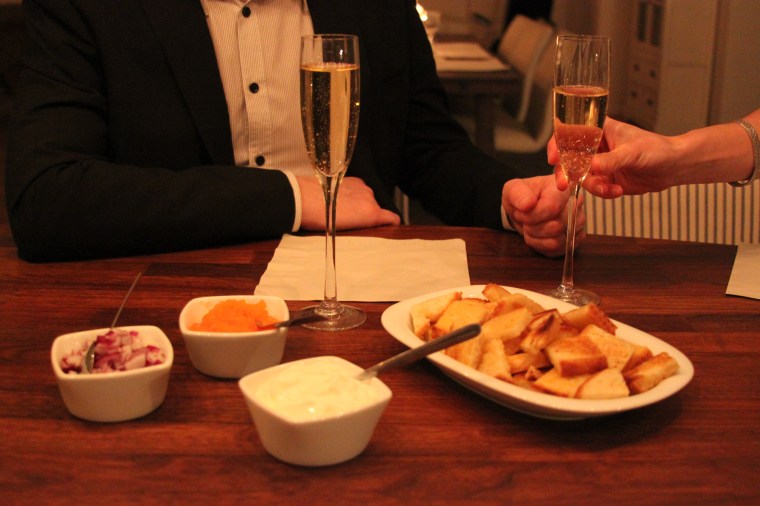
We start off with champagne, Swedish Kalix (bleak) roe, butter-fried bread, creme fraiche and chopped red onion., with champagne. It’s the most simple thing – yet incredibly delicious (and very Scandi!).

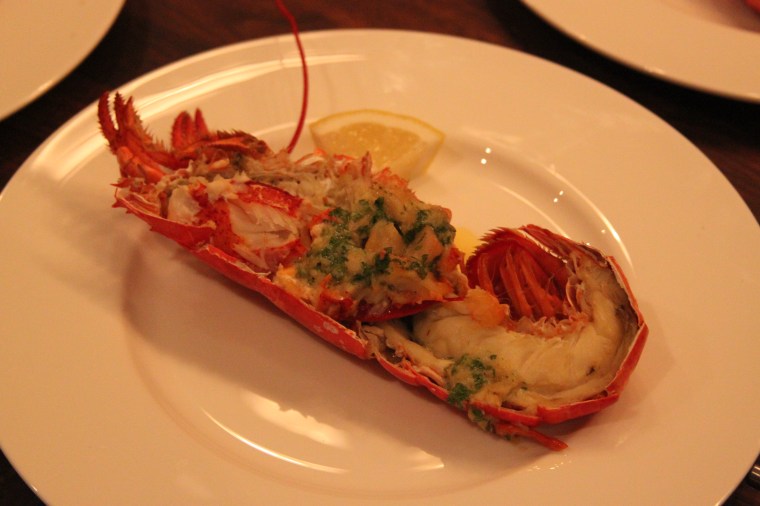
Next we have lobster, usually with melted garlic butter, and this year I opted for caramelised garlic butter – another simple and delicious dish!
IMG_7771

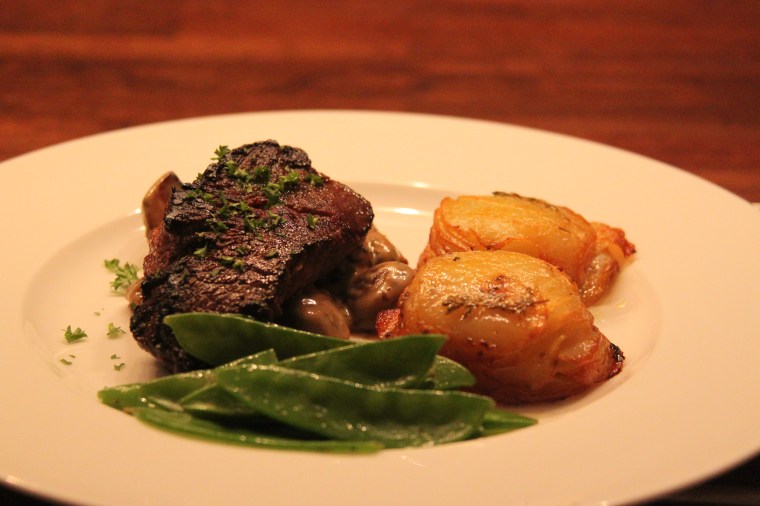
For mains we usually have fillet of beef, with potatoes and greens. This year the beef fillet was served with mini Pommes Anna (made in a muffin tin), mange tout and a mushroom sauce with Dijon mustard.

IMG_7810

For pudding we had individual chocolate pavlovas with chocolate crème and creme fraiche (whipped cream would be better but I forgot it), decorated with daim and Noblesse chocolate thins. A jug of chocolate sauce was put on the table so everyone could help themselves.

Lobster with caramelized garlic butter, serve 4

2 lobsters, cooked 

1 whole garlic

100 g salted butter, at room temperature

a bunch of parsley 

1 slice of lemon, cut into 4

4 slices of baguette

The day before (or at least a few hours ahead of) serving: Wrap the garlic in tin foil and bake for 40 mins in 180C oven (until soft). Leave to cool.

Mix the butter with as much caramelized garlic you like. It’s sweeter and not as strong as fresh garlic, so I thought 5 cloves was a good amount. Chop the parsley and mix in. Add pepper too. Roll into a roll and cover with cling. Place in the fridge to set. 

To serve: Cut the lobsters in half lengthways, remove the gooey bits in the head and the bowel string. Rinse the shell with the meat still inside. Crack the claws and get the meat out. Place in the shells and place the shells in an ovenproof dish. Cut the butter into thick slices and distribute on the lobster halves. Place in 180C oven for approx 10 mins until the lobsters are hot and the butter has melted. Serve immediately with a piece of lemon and a slice of baguette. 

Mini Pommes Anna with thyme, serve 4

Adapted from Bon Appetit’s recipe.

850 g potato of a firm variety (Maris Piper works well)

100 g butter

a bunch of fresh thyme 

salt, black pepper

Preheat oven to 180°C . Melt butter in a small saucepan over medium heat. Brush 8-10 wholes in the muffin tin all over with butter. Line bottoms with parchment-paper rounds. Arrange 1-2 small thyme sprigs in center of each round. Drizzle 1/2 teaspoon butter into bottom of each cup.


Add chopped thyme and garlic to remaining butter in saucepan. Stir over medium-low heat until fragrant, about 2 minutes. Remove from heat.


Using food processor, moulinex or mandoline, slice potatoes crosswise into very thin rounds , placing them in a large bowl as you work. Pour herb butter over and season with salt and pepper; toss to coat well.


Divide potato slices among muffin cups, layering overlapping slices to create a circular pattern. Lightly press center of each to make compact. Drizzle any remaining butter and seasoning from bowl over.


Cover muffin pan tightly with foil and place in the oven. Bake until potatoes can be pierced easily with the tip of a knife and are golden brown, about 35 minutes.
Remove foil; invert a rimmed baking sheet over pan. Turn, lightly tapping on counter, releasing potatoes onto sheet. Rearrange any slices that may have fallen out. Discard parchment.
Individual chocolate pavlovas, served 4

Translated from and Adapted after Roy Fares’ recipe.

Chocolate crème:

50 g dark chocolate

30 g (3) egg yolks

37,5 g caster sugar

15 g maizena corn starch

1/2 tsp vanilla

175 ml milk

10 g butter

Pavlovas:

37,5 g dark chocolate

70 g (2) egg whites

110 g caster sugar

4 g maizena corn starch

1/2 tsp white wine vinegar 

Chocolate sauce:

50 ml caster sugar

50 ml cocoa

50 ml cream

15 g butter

To decorate:

300 ml lightly whipped cream

1/2 packet daim balls (or a chocolate bar, chopped)

12 Noblesse chocolate thins or similar 

4 sparklers

Chocolate cream: Chop the chocolate and place in a bowl. Mix egg yolks, sugar, corn starch and vanilla in another bowl. Bring the milk to the boil in a saucepan and mix it into the egg yolk mixture (little by little as to not scramble the eggs). Pour the egg yolk milk mixture into the saucepan on medium heat, stirring constantly, until the mixture has thickened. Cook for another 2 minutes, on low heat, to get rid of the corn starch flavour. Pour the custard over the chocolate, add the butter and mix until the chocolate has melted. Cover with cling and place in fridge until cold. 

Pavlovas: Chop the chocolate and place in a bowl, melt either over boiling water or in the microwave. Pre-heat oven to 150C. 

Beat the egg whites until foamy and add the sugar bit by it while beating until stiff and glossy. Add the corn flour and vinegar and mix carefully with a spatula. Drizzle with the melted chocolate and create a marbled effect by folding the mixture 2-3 times with a spatula. Divide the meringue mixture into four small rounds on a lined baking tray. 

Bake in the middle of the oven for 60 minutes. Turn the oven off and leave the meringues in the oven while cooling. Let the meringue discs cool completely. 

Chocolate sauce: Mix sugar, cocoa and cream in a saucepan. Bring to the boil. Let the mixture simmer for 3-5 minutes. Leave to cool completely. 

Assembling: Place a meringue disc on each plate. Fill up with the crème and top with whipped cream. Decorate with daim, noblesse and sparklers. Heat up the sauce and serve it in a jug on the side.  


Christmas Eve 2015


collage jul

In Sweden Christmas Eve is the big day. Christmas day is for going clubbing (no thanks!), early sales (again, no thanks!) and just chilling (much better).

In my family we open the stockings on Christmas Eve morning. Christmas stockings are not a Swedish tradition, but my family thinks it’s nice and cosy. But we only open a few presents in the morning as Father Christmas always comes by in the evening with a sack full of gifts (no chimney action in Sweden).

Then at 3pm, the whole country is glued to the television watching Donald Duck and other Disney cartoons. It sounds silly, but it’s one of the fundamentals of a Swedish Christmas Eve.

Then in the evening, probably after coffee and cake while watching Donald Duck and then glögg and gingerbread a bit later, it’s time for dinner. In most families this comprises a julbord; a smorgasbord with lots of  Christmas food, like herring, smoked salmon, cooked ham, meatballs, sausages, cabbage, sprouts, Janssons temptation, patés, ribs etc etc).

We took an alternative route this year, stepping away from the traditional heavy food, and instead enjoying, a still festive, and a little Christmas-y, menu.

IMG_7632

IMG_7638

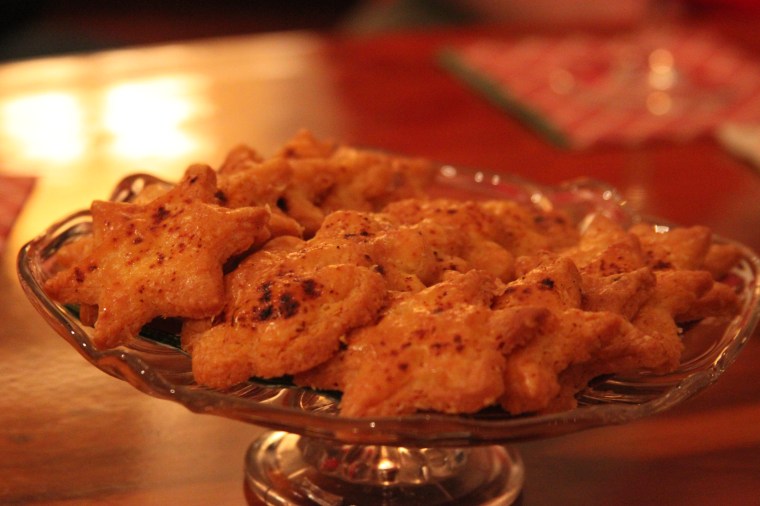
Our evening began with prosecco and these lovely parmesan biscuits, then Toast Skagen as a starter followed by halibut and boiled potatoes, cooked peas and the most heavenly sauce for fish for mains.

IMG_7648

IMG_7668

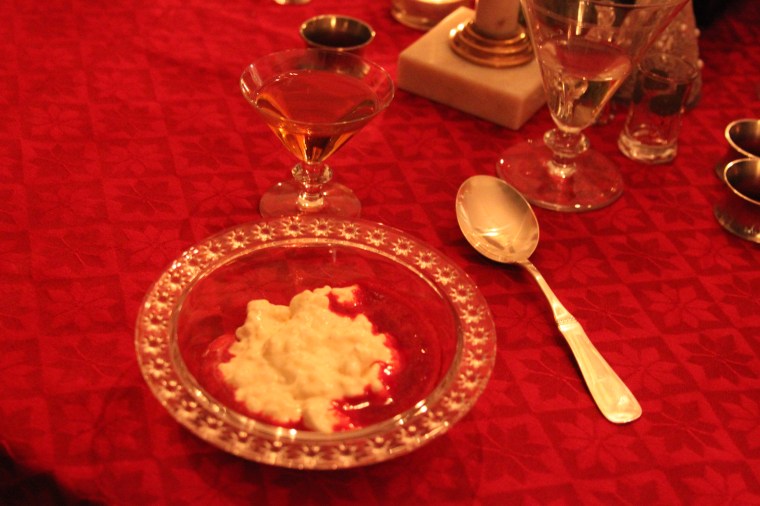
For pudding we had the same as we do on Christmas Eve; Ris a’la Malta. A cold rice porridge with a lot of whipped cream folded in, served with a berry sauce, but as this dessert is seriously rich we served it in individual bowls. (It’s usually served in a large bowl it an almond hidden in the porridge and you try to eat as much as possible to secure the almons and receive a gift. )

IMG_7676

This alternative approach to the Christmas dinner suited my family perfectly. It felt festive (more festive than ham, cabbage and meatballs actually) and even though the food was still on the heavy side it’s nothing compared to the julbord. 


New year, new recipes

Hello dear readers,

Happy New Year!

IMG_7517

I hope you haven’t missed me too much the last couple of weeks. I went home to Sweden for Christmas and needed a proper break, seeing friends and family and not sitting in front of a computer.

But I still cooked and ate a lot, so I have lots of new things (and some things from the autumn and even summer of last year!) to blog about.

If you want to see what I get up to outside of the blof, then follow me on Instagram where I am the most active (my username is @scandelights, and there is a link in the right hand margin).

Wishing you all a prosperous new year!

Hanna

This year’s Christmas drinks party

IMG_7440

I had some of the girls over for Christmas drinks the first Saturday in December and it was so much fun! Last year I had a larger gathering with both girls and boys, but this year I just didn’t have enough time or energy to prepare something big, but rather than not organising anything at all I preferred to scale it down. I do hope I have more time and energy last year for a proper Christmas party with lots of canapés, but I’m not making any promises.

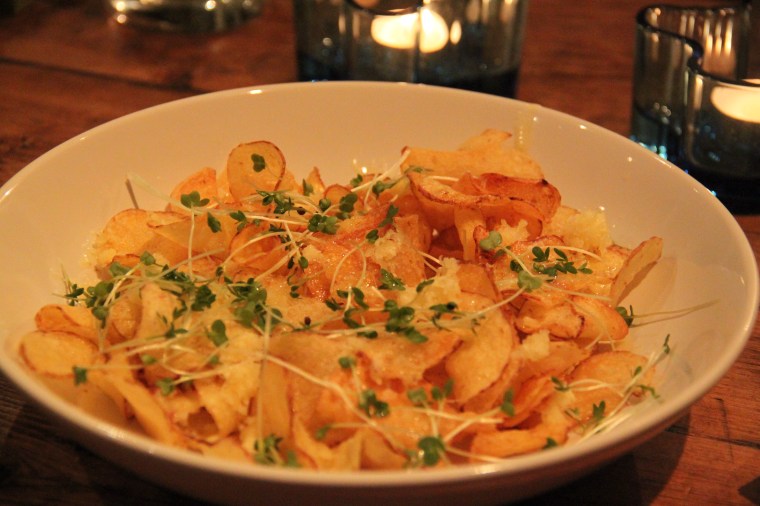
To start with we had prosecco (and quite a lot of it!) and savoury canapés, starting with warm crisps with browned butter, grated comté, lemon juice and cress. I love these so so much! I know it’s making crisps even unhealthier, but it is so worth it. I mentioned the browned butter right?!

IMG_7448

Thereafter I put out a little DIY project with crostinis. I had a large bag filled with crostinis and three jars on a silver tray with different spreads to put on top; bean spread with sage, hot smoked salmon spread (the girls favourite!) and a new version of chicken liver parfait (recipe to follow soon) and cornichons.

IMG_7455

After that I passed around a board of prosciutto parcels filled with cream cheese mixed with chopped sunblush tomatoes. It’s the easiest recipe ever (three ingredients!) but always goes down well.

IMG_7461

We then moved on to the hot food. First up were these puff pastry squares with mushrooms, grated cheese, creme fraiche and parsley. IMG_7468

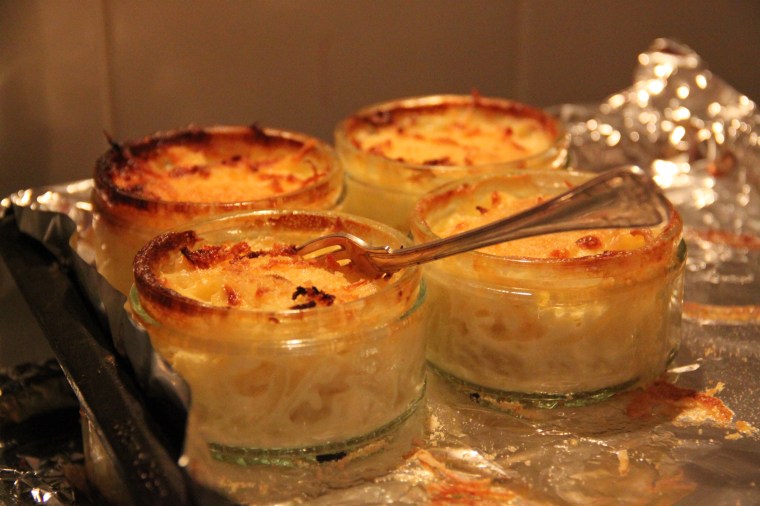
Then the mini Janssons frestelse that all my London friends adore! Janssons frestelse is like a creamy potato bake (with grated potato) with anchovies. It sounds rather odd I know, but everyone who’s ever tried it loves it, I promise!

IMG_7480

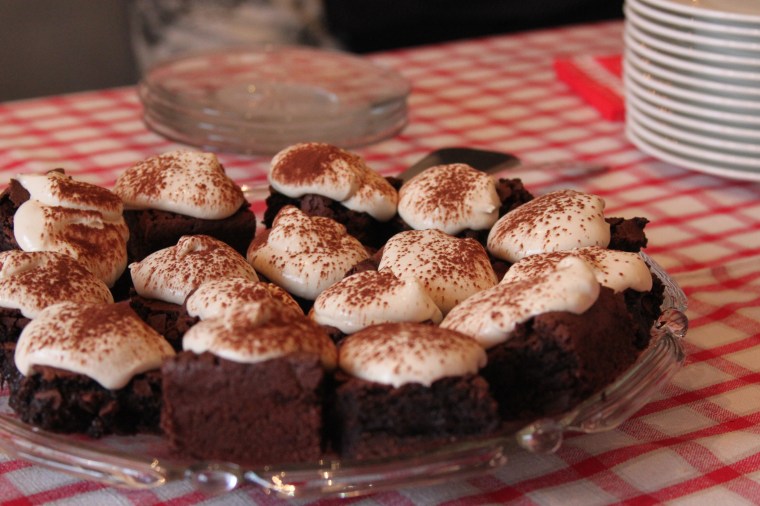
Having finished the savoury canapés it was time for the sweets and glögg! I put it all out on the table at once to people cook pick and choose. The rocky road I made this year is probably the best one yet (recipe to follow), mainly because it has honeycomb in it and it really works!! I also tried to pretty them pieces up with snowflakes (which I tend to use on everything this time of year!) and edible glitter.

IMG_7484

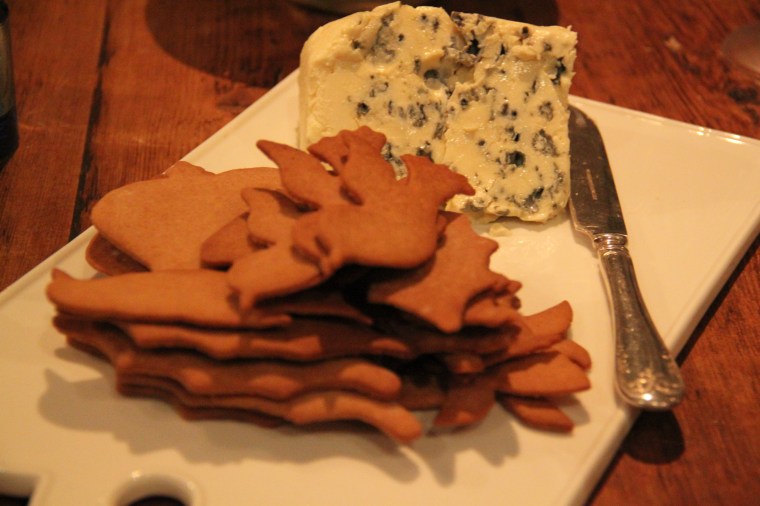
I also served gingerbread with blue cheese, but this time I substituted Stilton for St Agur, which works even better.

IMG_7489

I also made these mini saffron pannacottas that I like to make every year – I’m so lucky my friends are happy to eat! 


Japanese lunch at Roka, Aldwych

ro1

At Taste of London this year Caroline and I got a voucher for 25% off food at Roka Aldwych, which we used shortly after. In August I believe. Where does the time go?!?

Anyway, it was a lovely sunny day and we had time for a long lunch. Those were the days…

The first thing on the menu that caught my eye was the scallop sashimi, and I remembered the fab version I had at Berns in Stockholm, and just had to order it here too. Sadly it was nowhere near as nice as the one in Stockholm, it was fresh but not as nice tasting. The yellow tail tartar was also a little plain, but from here on the lunch only got better and better.

ro2

The softshell crab and kimchi maki roll was really nice, and I like the fact the sauce was served on the side instead of all on top of the sushi.

ro6

The beef gyozas were also nice, not wow but nice. The filling was OK but the pastry was perfect.

ro7

This sticky deliciousness that is grilled aubergine was just amazing! I would come back just to have that. Yum…

ro9

And these beef and shosito pepper skewers were top notch too!

The level of the cooking was a bit up and down but the dishes got (seriously) better towards the end of the meal, so maybe they’re best at the cooked dishes here.

Roka Aldwych, 71 Aldwych, London WC2B 4HN

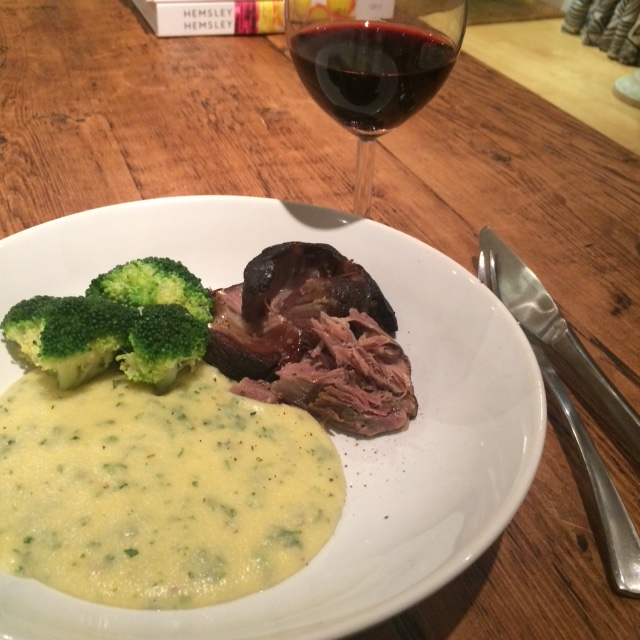
Slow cooked lamb shank with herb polenta

IMG_8673

This autumn is the strangest I’ve ever experienced, weather-wise. Apart from the dip in temperature at the beginning of this week it’s been very warm for November. Not that I’m complaining (I hate the cold!), it just feels strange not having to wear gloves when Christmas is just around the corner!

The warmth outside hasn’t really put me in the mood for warming soups and hearty stews, in fact this recipe of slow cooked lamb shank is the most autumnal dish I have accomplished the last few months.

The recipe for herb polenta is courtesy of my Swedish food blogger colleague Annika and works with all sorts of tender meats.

IMG_8689

Slow cooked lamb shank, serves 2

1 lamb shank

a knob of butter

1 onion, unpeeled, cut into wedges

1 carrot, cut into chunks

2 bay leaves

salt, pepper

1/2 bottle red wine

Pre-heat the oven to 150C. Melt a knob of butter in an oven-proof casserole dish with a lid. Brown the meat on all sides and season. Remove from the pan and add the onion and carrot pieces. Fry for a few minutes then remove from the heat. Put the lamb shank back into the casserole dish and add the wine and bay leaves. Put the lid on and place in the oven for 2 1/1 hours; you want the meat to be very tender and fall off the bone. Check on the meat every half an hour. Add more liquid if needed and turn the shank once in a while. To serve, take the meat off the bone and serve in chunks with polenta and vegetables.

Creamy herb polenta, serves 3

Translated from and adapted after Annika’s recipe (which I have halved)

700 ml vegetable stock

50 g butter

300 ml polenta

a handful finely chopped mixed herbs (rosemary, oregano, sage etc)

150 ml finely grated parmesan 

Bring the stock to simmer (not boil) in a large saucepan. Add the polenta while whisking. Add butter. Whisk until the polenta starts to boil. Whisk regularly while the polenta cooks for another 15-20 minutes. Add the herbs but save some for decoration. Add more stock if needed. The polenta needs to be thinner than you think as the parmesan will thicken it. Add the parmesan when the polenta is cooked. Season to taste and maybe add another knob of butter. Serve immediately.