Recipe: Crisps with bleak roe, creme fraiche and red onions

lojrom

In Sweden, coming up with new yummy ways to serve bleak roe, is almost a sport. And when I saw this genius idea on Foodetc’s instagram; serving bleak roe and it’s best friends creme fraiche and finely chopped red onions on crisps I just had to try it.

And it turns out crisps are a great vehicle for the bleak roe. They’re crispy and light and has the same effect as rösti and butter-fried bread. So good!

Crisps with bleak roe, creme fraiche and red onions, serves 6 as a canapé

1/2 bag lightly salted good quality crisps

1/2 jar bleak roe

100 ml fat creme fraiche

1/2 red onion, finely chopped

Find the prettiest crisps in the bag and put them on a nice plate/platter. Top with small dollops of creme fraiche, add bleak roe and lastly finely chopped red onions. 

Recipe: gravadlax (cured salmon) with apple and dijon crème

ks.jpg

I served this lovely canapé at the crayfish party in September, but you can make it any time of year; in Sweden we eat gravad lax all year round. We have it at Christmas, for Easter, Midsummer and in between.

I liked the idea of serving a canapé on forks, especially as I knew the guests would mingle around the garden, but I just couldn’t bring myself to use plastic ones (they’re hideous, bad for the environment and usually break), and the wooden ones don’t taste nice. Instead I bought silver plated vintage forks on eBay and Etsy; much better quality and much more me.

I cured the salmon according to this recipe, but the mustard crème and the general recipe idea is courtesy of Pytte and her lovely (Swedish) book Bjud hem!

Cured salmon with apple and dijon crème, approx 30 canapés

400 g cured salmon

2 apples, cut into small cubes

Dijon crème:

100 ml creme fraiche

1 tbsp dijon

2 tsp runny honey

salt and pepper

To decorate:

extra dill, chopped

Mix the ingredients for the crème, season to taste and leave in a cool place until serving. Slice the salmon and put on forks. Place the forks on a serving tray or platter and top with apple cubes, dijon crème and maybe some extra dill. 

Recipe: Toast Lingstrom

IMG_7229.JPG

You’re probably familiar with Toast Skagen; the iconic Scandinavian starter consisting of butter-fried bread (oh yeah!) topped with a mixture of prawns and dill in mayonnaise?! It’s a true classic that will never go out of style. And so very delicious. My mother serves it at dinner parties and so do I, and sometimes I make one for myself just because I feel like it.

But this thing of placing things on top of butter-fried bread is bigger than just this one dish. It’s a whole food category. And I’m pleased to say I have discovered yet another recipe to add to my repertoire; this wonderful Toast Lingström with ham, named after its inventor, chef Christer Lingström.

FullSizeRender55.jpg

The combination of smoked (or cooked) ham, creamy mayonnaise and a little tartness from the creme fraiche really works with the heat from the horseradish. It’s such a great little starter. Or nibble, in which case the recipe below is enough for 8 nibbles. Just cut the bread slices in half.

Toast Lingström, serves 4

Adapted from Christer Lingström’s recipe.

150 g cooked or smoked ham

100 ml crème fraiche

50 ml mayonnaise

2 tbsp finely chopped chives

1 tbsp grated horseradish 

salt and pepper

4 slices white tin loaf

3 tbsp butter

Slice or dice the ham and mix with creme fraiche, mayo, chives and horseradish. Season to taste. Cut the crusts off the bread slices and fry in butter until golden. Drain the excess fat on kitchen towel. Divide the mixture between the four bread slices, garnish with some more chopped chives, if you like, and serve.  

Sweet potato rounds with feta, pomegranate and parsley

IMG_5243.JPG


I made these colourful nibbles for a party in the summer, when the sun was shining and children were splashing in the pool. But they work as well lighting up the December darkness or brightening up an October day.

They’re both easy to make and really lovely to eat, so it’s a good idea to make a few extra.

Sweet potato rounds with feta, pomegranate and parsley, makes 30

3 medium sweet potatoes, peeled

2/3 packet feta

1 packet pomegranate seeds or a whole pomegranate (seeds only) 

1 bunch parsley, chopped

mild oil

salt and pepper

Slice the sweet potato in 1/2 cm thick slices. Place on a parchment paper covered baking sheet and drizzle with oil. Sprinkle with salt and pepper. Roast in a 200C oven until soft but not mushy, approx 10-15 minutes. Leave to cool. 

Top all the rounds with crumbled feta, pomegranate seeds chopped parsley.

Dill-y hummus and pitta chips

IMG_5733.JPG

Dill works really well in hummus, I discovered this summer when I thought of trying it for a dinner party. It went down really well with my friends and especially with my best friend Emma who liked it so much she urged me to make it again a few days later when cooking at her house.

Dill-y hummus, serves 4-6

1 can (400 g) good quality chickpeas

100-150 ml nice olive oil

1 1/2 – 2 tbsp tahini

1/2 -1 lemon, the juice only

1 medium garlic clove

1 pot or a large bunch dill

plenty of salt and black pepper

Rinse the chickpeas and pour into a food processor bowl. Add 100 ml olive oil, 1 1/2 tbsp tahini, the garlic and the juice of 1/2 lemon. Mix for a good while until you have a smooth paste. Add salt and pepper and taste. Add more oil, tahini, lemon juice, salt and pepper – whatever you think is needed. Add the dill and mix again. Season to taste and adjust the flavours once more if needed. Place in fridge until serving. Keeps for 5 days in the fridge.  

Pitta chips, serves 4

5 pitta bread

olive oil

salt, black pepper

Cut the pitta breads into smaller pieces using a pair of scissors. Place on a parchment lined baking tray and drizzle with olive oil. Add salt and pepper (and any other seasoning you might like) and place in 200C oven for approx 10 minutes (until golden and crispy). Serve immediately.

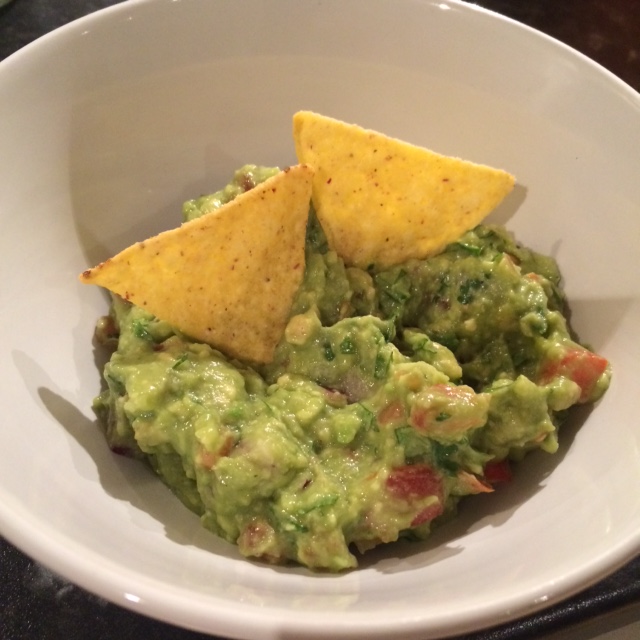
Proper guacamole

IMG_0500

My go-to guacamole recipe has always been my own concoction from when I was younger and tacos became the staple Friday dinner for all Swedish families. It’s very nice (my best friend can testify to that), but as it contains creme fraiche it’s far from a proper guacamole. So a few weeks ago when I found the best tortilla chips ever in my local Whole Foods (oh, how I love saying that!) I thought it was about time to try a slightly more authentic version of guacamole.

And the result was amazing! It’s so easy to make, and quite healthy (if you don’t count the tortilla chips) and it has become my new obsession.

Proper guacamole, serves 4

2 perfectly ripe medium Hass avocados, 

1/2 medium red onion, finely chopped

1 small tomato, chopped

1 bunch coriander

Tabasco (the red one)

1 lime

Worchestershire sauce

salt, black pepper

Spoon the avocados into a bowl and mush up with a fork. Add the chopped tomatoes and onions. Add lime juice (start with the juice from half a lime, add more to taste), a few drops of Tabasco and Worchestershire sauce. Add salt and pepper and mix well.  Chop the coriander and add to the guacemole. Check the seasoning and adjust if needed. Serve with tortilla chips or with any Mexican or Tex Mex dish. 

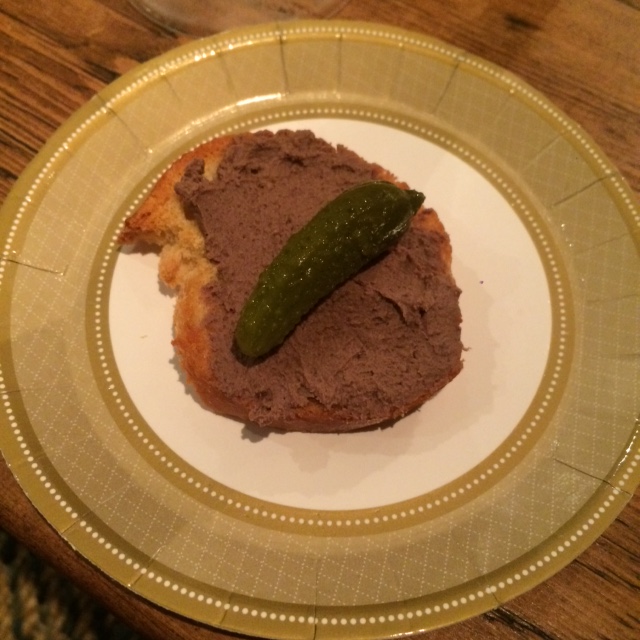
Chicken liver mousse with white wine and rosemary

IMG_7448

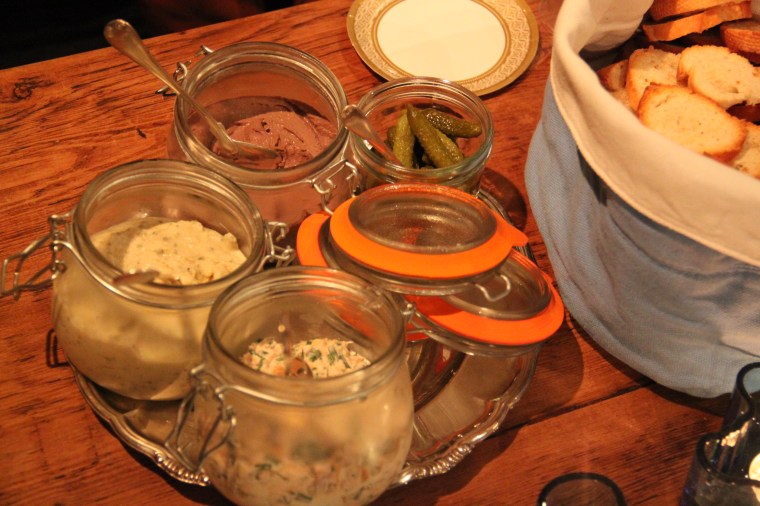
I like some DIY action when I host parties, like the blini table I had one year, and the crostinis with different spreads in jars in December.

Not surprisingly, my friends loved the smoked salmon spread (this is like the essence of Scandinavia, Hanna – oh yes!), whereas I prefer the deeper, more complex flavours of the chicken liver mousse. But when my friends had overcome the hurdle of the brown dull colour and tasted it, they also really enjoyed it!

IMG_0732

Chicken liver mousse with white wine and rosemary 

400 g chicken liver (approx 375 g with tendons removed)

1 shallots, finely chopped

1 clove of garlic, chopped

1 tbsp chopped rosemary

100 ml dry white wine

4 anchovies from a tin

100 ml homemade chicken stock

50-100 ml cream


Remove all tendons and chop the liver coarsely. Fry the onion until soft in butter and oil on medium heat. Add the garlic and rosemary, making sure the garlic does not burn. Add the wine and let some of it evaporate. Add the anchovies and let them melt. Turn up the heat and add the liver and fry until cooked through. Add the stock and let some evaporate but still keeping a good amount of liquid in the pan. 

Mix until smooth in a food processor. Add the cream little by little until desired consistency. Push through a fine sieve. Leave to cool and refrigerate. 

New Years Eve 2015

IMG_7740

New Year’s Eve. A bit like Marmite – some people hate it, some people like it. I’m definitely in the latter category. I like all the cosiness Christmas brings, but I’m not a fan of the stodgy food that we traditionally eat in Scandinavia, so New Year’s is for me the perfect opportunity to cook and eat food I really like. Food worthy to end the year.

The last few years I’ve spent the evening with my closest friends and we have worked out the perfect New Year’s Eve menu, for us at least.
IMG_7752

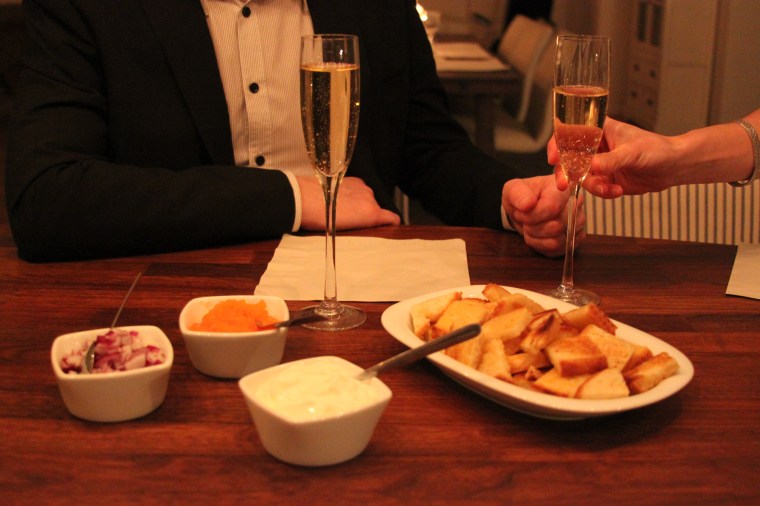
We start off with champagne, Swedish Kalix (bleak) roe, butter-fried bread, creme fraiche and chopped red onion., with champagne. It’s the most simple thing – yet incredibly delicious (and very Scandi!).

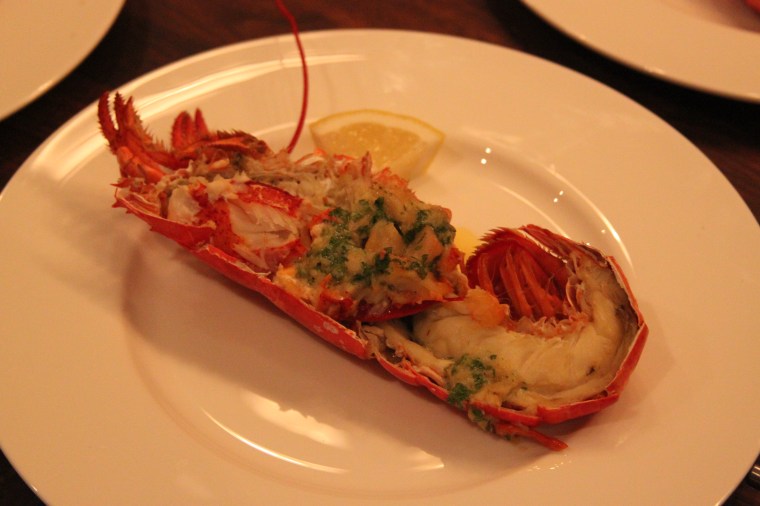
Next we have lobster, usually with melted garlic butter, and this year I opted for caramelised garlic butter – another simple and delicious dish!
IMG_7771

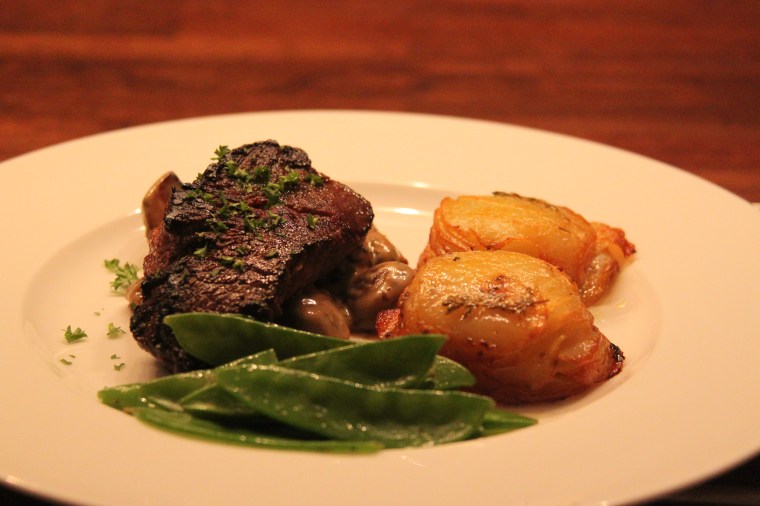
For mains we usually have fillet of beef, with potatoes and greens. This year the beef fillet was served with mini Pommes Anna (made in a muffin tin), mange tout and a mushroom sauce with Dijon mustard.

IMG_7810

For pudding we had individual chocolate pavlovas with chocolate crème and creme fraiche (whipped cream would be better but I forgot it), decorated with daim and Noblesse chocolate thins. A jug of chocolate sauce was put on the table so everyone could help themselves.

Lobster with caramelized garlic butter, serve 4

2 lobsters, cooked 

1 whole garlic

100 g salted butter, at room temperature

a bunch of parsley 

1 slice of lemon, cut into 4

4 slices of baguette

The day before (or at least a few hours ahead of) serving: Wrap the garlic in tin foil and bake for 40 mins in 180C oven (until soft). Leave to cool.

Mix the butter with as much caramelized garlic you like. It’s sweeter and not as strong as fresh garlic, so I thought 5 cloves was a good amount. Chop the parsley and mix in. Add pepper too. Roll into a roll and cover with cling. Place in the fridge to set. 

To serve: Cut the lobsters in half lengthways, remove the gooey bits in the head and the bowel string. Rinse the shell with the meat still inside. Crack the claws and get the meat out. Place in the shells and place the shells in an ovenproof dish. Cut the butter into thick slices and distribute on the lobster halves. Place in 180C oven for approx 10 mins until the lobsters are hot and the butter has melted. Serve immediately with a piece of lemon and a slice of baguette. 

Mini Pommes Anna with thyme, serve 4

Adapted from Bon Appetit’s recipe.

850 g potato of a firm variety (Maris Piper works well)

100 g butter

a bunch of fresh thyme 

salt, black pepper

Preheat oven to 180°C . Melt butter in a small saucepan over medium heat. Brush 8-10 wholes in the muffin tin all over with butter. Line bottoms with parchment-paper rounds. Arrange 1-2 small thyme sprigs in center of each round. Drizzle 1/2 teaspoon butter into bottom of each cup.


Add chopped thyme and garlic to remaining butter in saucepan. Stir over medium-low heat until fragrant, about 2 minutes. Remove from heat.


Using food processor, moulinex or mandoline, slice potatoes crosswise into very thin rounds , placing them in a large bowl as you work. Pour herb butter over and season with salt and pepper; toss to coat well.


Divide potato slices among muffin cups, layering overlapping slices to create a circular pattern. Lightly press center of each to make compact. Drizzle any remaining butter and seasoning from bowl over.


Cover muffin pan tightly with foil and place in the oven. Bake until potatoes can be pierced easily with the tip of a knife and are golden brown, about 35 minutes.
Remove foil; invert a rimmed baking sheet over pan. Turn, lightly tapping on counter, releasing potatoes onto sheet. Rearrange any slices that may have fallen out. Discard parchment.
Individual chocolate pavlovas, served 4

Translated from and Adapted after Roy Fares’ recipe.

Chocolate crème:

50 g dark chocolate

30 g (3) egg yolks

37,5 g caster sugar

15 g maizena corn starch

1/2 tsp vanilla

175 ml milk

10 g butter

Pavlovas:

37,5 g dark chocolate

70 g (2) egg whites

110 g caster sugar

4 g maizena corn starch

1/2 tsp white wine vinegar 

Chocolate sauce:

50 ml caster sugar

50 ml cocoa

50 ml cream

15 g butter

To decorate:

300 ml lightly whipped cream

1/2 packet daim balls (or a chocolate bar, chopped)

12 Noblesse chocolate thins or similar 

4 sparklers

Chocolate cream: Chop the chocolate and place in a bowl. Mix egg yolks, sugar, corn starch and vanilla in another bowl. Bring the milk to the boil in a saucepan and mix it into the egg yolk mixture (little by little as to not scramble the eggs). Pour the egg yolk milk mixture into the saucepan on medium heat, stirring constantly, until the mixture has thickened. Cook for another 2 minutes, on low heat, to get rid of the corn starch flavour. Pour the custard over the chocolate, add the butter and mix until the chocolate has melted. Cover with cling and place in fridge until cold. 

Pavlovas: Chop the chocolate and place in a bowl, melt either over boiling water or in the microwave. Pre-heat oven to 150C. 

Beat the egg whites until foamy and add the sugar bit by it while beating until stiff and glossy. Add the corn flour and vinegar and mix carefully with a spatula. Drizzle with the melted chocolate and create a marbled effect by folding the mixture 2-3 times with a spatula. Divide the meringue mixture into four small rounds on a lined baking tray. 

Bake in the middle of the oven for 60 minutes. Turn the oven off and leave the meringues in the oven while cooling. Let the meringue discs cool completely. 

Chocolate sauce: Mix sugar, cocoa and cream in a saucepan. Bring to the boil. Let the mixture simmer for 3-5 minutes. Leave to cool completely. 

Assembling: Place a meringue disc on each plate. Fill up with the crème and top with whipped cream. Decorate with daim, noblesse and sparklers. Heat up the sauce and serve it in a jug on the side.  


This year’s Christmas drinks party

IMG_7440

I had some of the girls over for Christmas drinks the first Saturday in December and it was so much fun! Last year I had a larger gathering with both girls and boys, but this year I just didn’t have enough time or energy to prepare something big, but rather than not organising anything at all I preferred to scale it down. I do hope I have more time and energy last year for a proper Christmas party with lots of canapés, but I’m not making any promises.

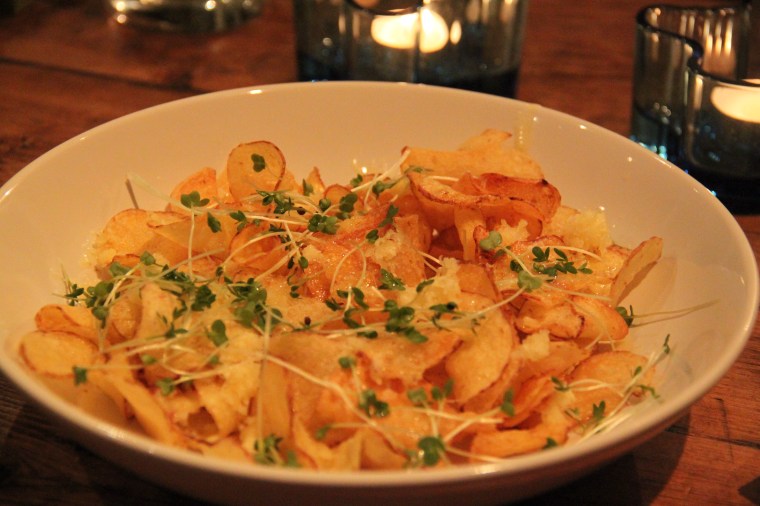
To start with we had prosecco (and quite a lot of it!) and savoury canapés, starting with warm crisps with browned butter, grated comté, lemon juice and cress. I love these so so much! I know it’s making crisps even unhealthier, but it is so worth it. I mentioned the browned butter right?!

IMG_7448

Thereafter I put out a little DIY project with crostinis. I had a large bag filled with crostinis and three jars on a silver tray with different spreads to put on top; bean spread with sage, hot smoked salmon spread (the girls favourite!) and a new version of chicken liver parfait (recipe to follow soon) and cornichons.

IMG_7455

After that I passed around a board of prosciutto parcels filled with cream cheese mixed with chopped sunblush tomatoes. It’s the easiest recipe ever (three ingredients!) but always goes down well.

IMG_7461

We then moved on to the hot food. First up were these puff pastry squares with mushrooms, grated cheese, creme fraiche and parsley. IMG_7468

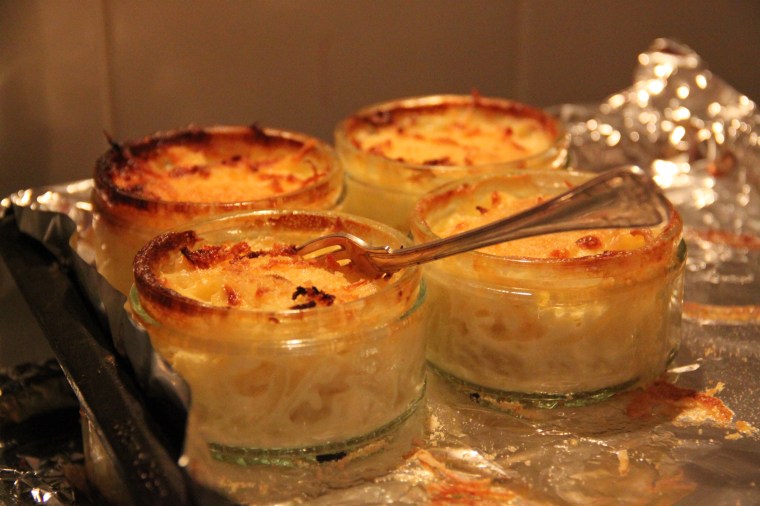
Then the mini Janssons frestelse that all my London friends adore! Janssons frestelse is like a creamy potato bake (with grated potato) with anchovies. It sounds rather odd I know, but everyone who’s ever tried it loves it, I promise!

IMG_7480

Having finished the savoury canapés it was time for the sweets and glögg! I put it all out on the table at once to people cook pick and choose. The rocky road I made this year is probably the best one yet (recipe to follow), mainly because it has honeycomb in it and it really works!! I also tried to pretty them pieces up with snowflakes (which I tend to use on everything this time of year!) and edible glitter.

IMG_7484

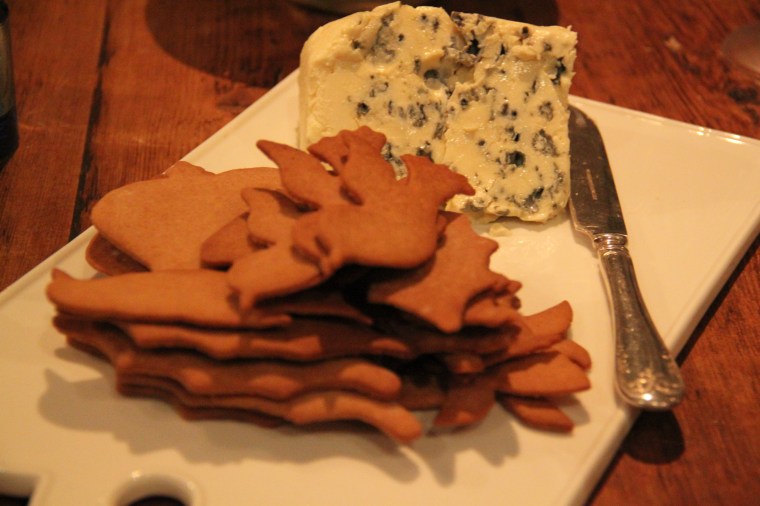
I also served gingerbread with blue cheese, but this time I substituted Stilton for St Agur, which works even better.

IMG_7489

I also made these mini saffron pannacottas that I like to make every year – I’m so lucky my friends are happy to eat! 


More tapas: Croquetas de jamon

IMG_6688

I really wanted to make croquetas de jamon (Spanish ham croquettes) when I made the other tapas dishes, but sadly didn’t have time. But that didn’t stop me. Instead I made them the day after when I had more time on my hands and served them appropriately as a starter snack with a nice bottle of cava.

IMG_6694

It was the first time I made croquetas and it wasn’t difficult at all. Much easier than I expected actually, and lots of fun! But it does take a while to make them. About 45 minutes to make the bechamel, three hours to rest and then another 30 minutes to fry them. But it’s completely worth it.

I halved the recipe from the book Tapas Revolution by Omar Allibhoy, making 12 instead of 24 croquetas, but they are quite large so you could easily make 16 from the recipe.

Croquetas de Jamon, makes 12-16

Adapted from Tapas Revolution by Omar Allibhoy.

25 g butter

1/4 onion, finely chopped

35 g cured ham, preferably Spanish Jamon Iberico, chopped

400 ml whole milk

30 plain flour 

grated nutmeg

1 tsp salt

a pinch white pepper

1 egg

breadcrumbs 

500 ml neutral oil for frying

Melt the butter in a nonstick pan over medium heat. Add the chopped onion and ham. Cook for a few minutes until the onion turns translucent but not coloured. Meanwhile, in a separate pan, bring the milk almost to the boil and set aside. 

Add the flour to the onions and cook for 5 minutes, stirring, until the flour has toasted a bit. Add the hot milk little by little, whisking all the time, to make a thick roux. Keep going until you have added all the milk and you have a smooth and silky bechamel. When it comes to the boil reduce the heat to low and add nutmeg, salt and pepper. Leave to simmer for about 40 minutes, whisking to make sure it doesn’t stick to the bottom of the pan. 

Line the bottom of a baking tray with baking parchment and then pour the bechamel into the baking tray. Spread it out and then immediately place a layer of cling film directly on top, making sure the cling is touching the surface of the bechamel as this will stop a skin from forming. Transfer to the fridge and chill completely. 

After three hours the bechamel should be firm enough to handle. Peel off the cling film, turn the bechamel out on to a floured surface and carefully peel away the baking parchment. Sprinkle with more flour and use a knife to cut the bechamel into 12-16 equal squares. Dust hands with flour and roll the squares into balls between your hands.

Beat the egg in a bowl and pour the breadcrumbs out onto a plate. Dip each ball in the egg and then roll in the breadcrumbs.

Heat up the oil in a large deep pan until it reaches 180C. Fry the croquetas in small batches until golden and crisp (takes about 1 1/2 minutes). Remove with a slotted spoon and drain on kitchen towel before serving.