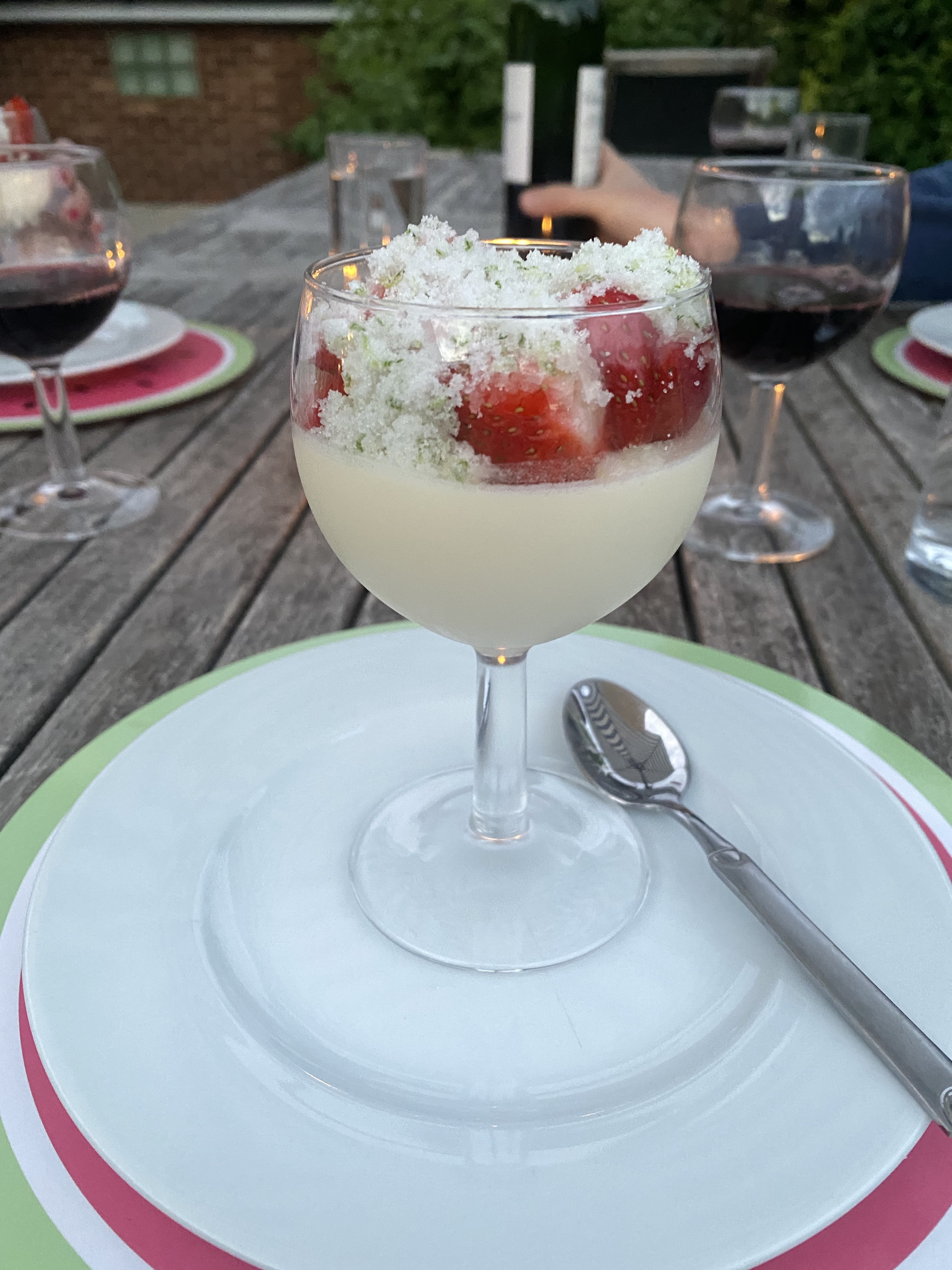
This little pudding is such a good one. Flavours that we know and love (hello strawberries and cream) but with a little unexpected addition of lime. The textures are fun too; velvety pannacotta, and crunchy sugar on top of the berries.
It’s also easy to make in advance – you can make the pannacotta the day before and finish off with the strawberries and sugar just before serving.
Vanilla pannacotta with strawberries and lime sugar, serves 4
500 ml double cream
1 vanilla pod
50 ml caster sugar
2 gelatin leaves
Topping:
1 punnet strawberries, washed, trimmed and quartered
4 tbsp caster sugar
1 lime, the zest
Put the gelatin in a bowl with cold water to soak. Cut the vanilla pod in half and place it in a saucepan. Add cream and sugar. Bring to the boil and simmer for a few minutes while stirring with a whisk. Remove from heat and divide into four footed glasses. Leave to cool then refrigerate for at least three hours. Cover when starting to set.
Before serving, prepare the strawberries. In a little bowl mix sugar and lime zest. Spoon the strawberries on top of the pannacottas and spoon the lime sugar on top.Serve immediately.
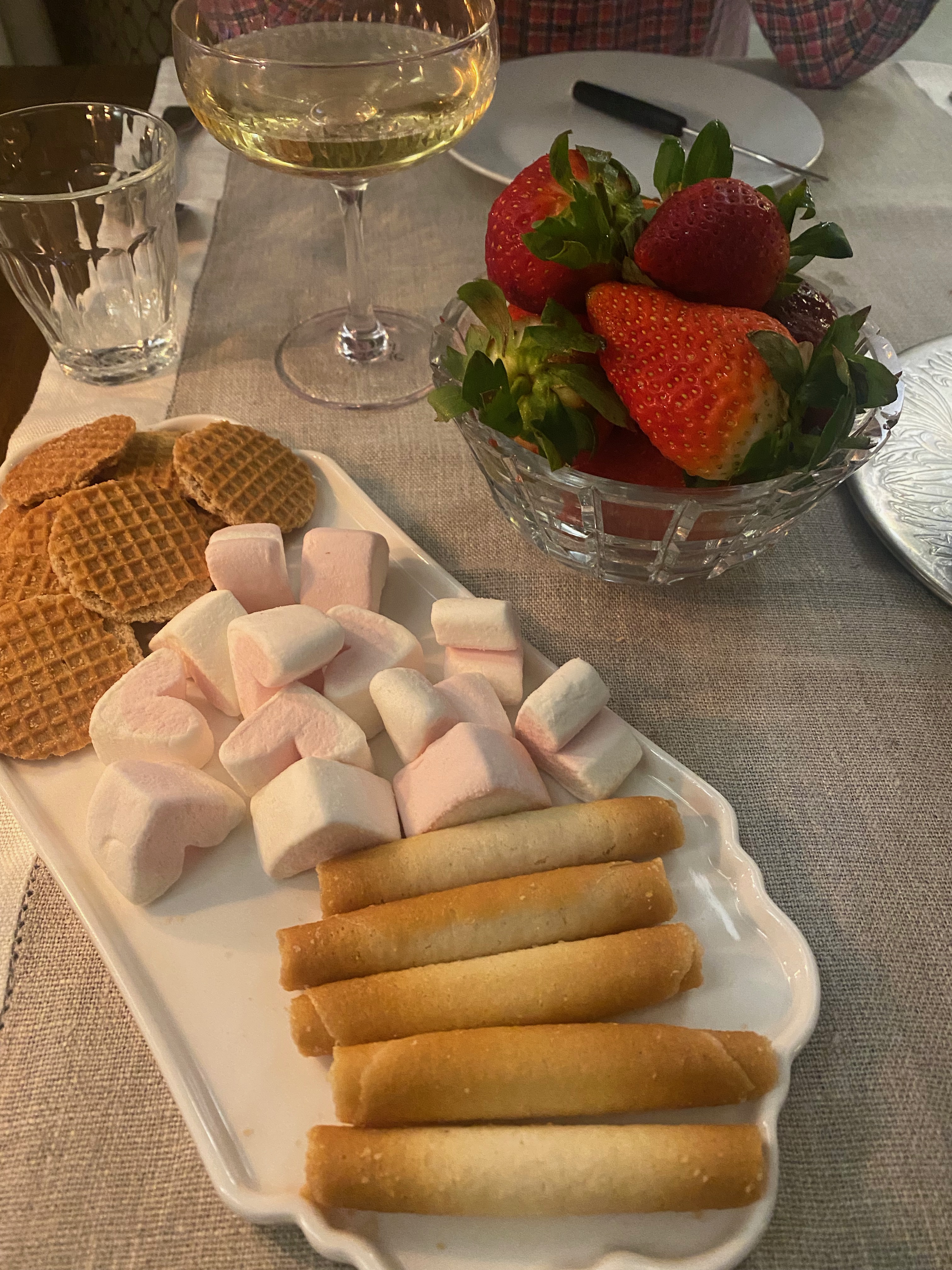
Even before my boyfriend and I lived together I would spend most weekends at his flat and obviously cook a lot in his kitchen. One day looking through the cupboards for something useful I spotted a chocolate fondue set, complete with chocolate and marshmallows. It had never been used but he knew it had been there a long time so I made sure to use fresh chocolate and marshmallows for our first chocolate fondue. I also added some crispy things like little waffles and wafer rolls to dip, and of course strawberries.
We’ve made it a few times since, and I thought it was the perfect pudding on Valentine’s Day with heart shaped marshmallows (yes, I’m a sucker for things like that)!
It’s actually vey easy to make the chocolate sauce, and as to what to dip – you decide, but I recommend a few different textures and flavours, and definitely something fruity and sharp to cut through all the sweetness. I have listed the dippers we had below and although I love them all I highly recommend the butter crisps.
Chocolate fondue, serves 4
150 g dark chocolate (approx 60% cacao), roughly chopped
50 g milk chocolate, roughly chopped
125 ml single cream
a tiny pinch of sea salt
To dip:
strawberries, rinsed
marshmallows
Jules Destooper butter crisp waffles
wafer curls
Heat up the cream until almost boiling in a non-stick saucepan. Once hot, take it off the hob and add the chocolate. Leave it for a minute or so to melt before stirring well. Add the salt and mix again. Pour into a chocolate fondue pot and serve straight away with a selection of things to dip.
I write about comfort food a lot. The kind of food that feels like a hug and that’s sometimes needed after a tough day, on a cold day or when you just feel a little delicate. Comfort food for me is a lot about texture, I often want something soft or creamy, ideally with melted cheese. A creamy pasta dish fits the comfort food brief for me and so does anything with creamy mashed potatoes.
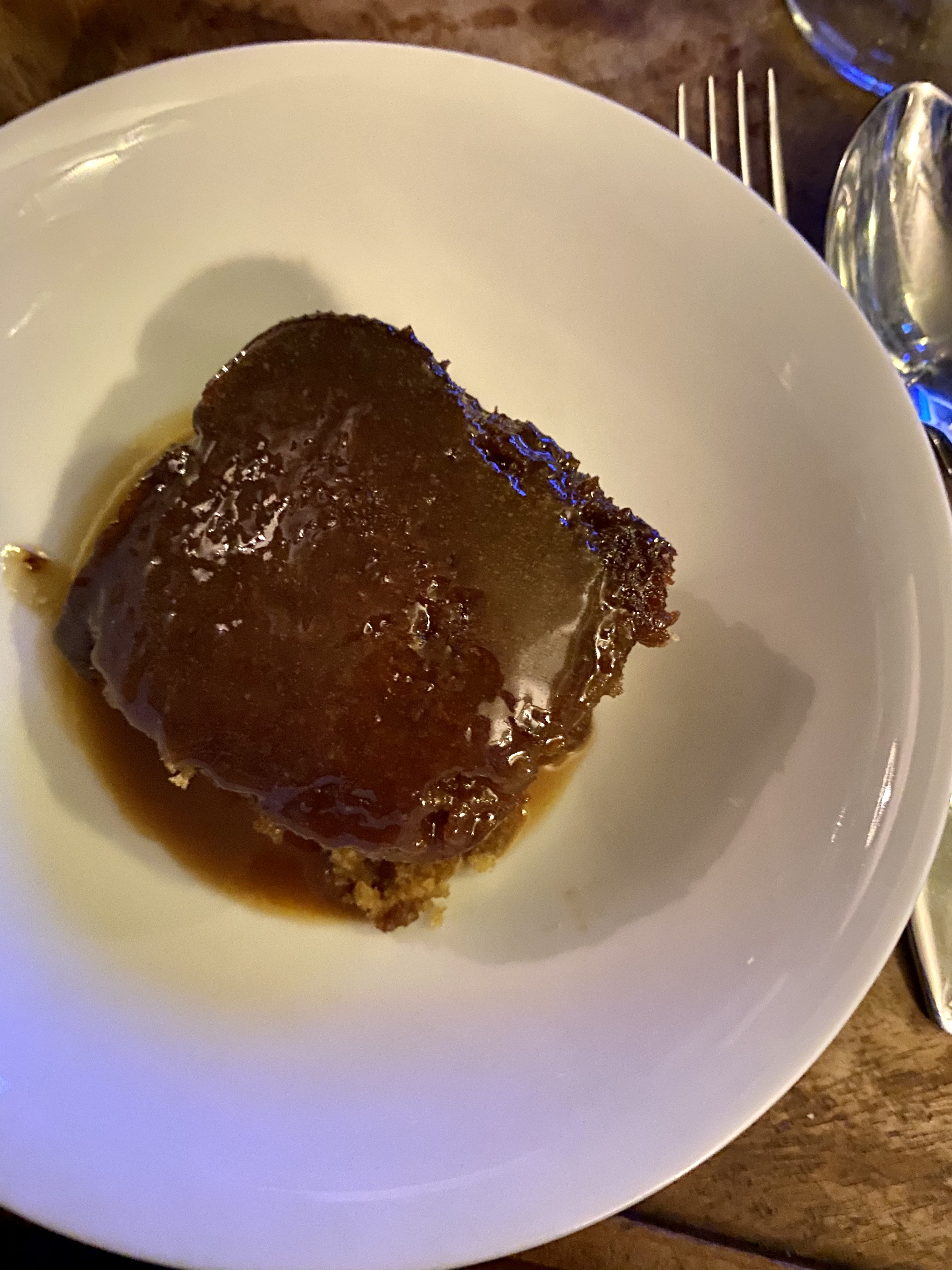
But recently I have discovered comfort food in the form of pudding too, something I actually hadn’t thought about until I made this sticky toffee pudding. I think find it comforting because it’s soft and warm and silky. It feels like a wonderfully warm hug and that is desperately needed these days, isn’t it?!
The original recipe is by baking queen Mary Berry but I have altered it a little to fit the ingredients I had at home. If you prefer to use the original recipe you’ll find it here. I also halved the recipe as I didn’t have enough butter to hand for the full batch when I first made it, but then realised that the halved recipe was the ideal size for me. It was enough for 4-6 servings which I find is plenty for such a decadent pudding.
Preheat the oven to 180C/160C Fan. Butter a shallow ovenproof dish.
Put the butter, sugar, eggs, flour, baking powder, bicarbonate of soda and golden syrup into a mixing bowl. Beat using an electric whisk for about 30 seconds or until combined. Pour in the milk gradually and whisk again until smooth. Pour into the prepared dish. Bake for 30–35 minutes or until well risen and springy in the centre.
To make the sauce, put all the ingredients into a saucepan and stir over a low heat until the sugar has dissolved and the butter has melted. Bring to the boil, stirring for a minute.
To serve, pour half the sauce over the pudding in the baking dish. Pour the other half into a jug to serve along side the pouring cream. Eat warm.
It’s great fun hosting dinner parties together with mamma, because that means we share the cooking! At a dinner party at home in early January I made two types of crostini to start off with it. The main course (which mamma was in charge of) was rather substantial so we opted for nibbles and bubbles on the sofa instead of a starter at the table. Mammas slow-cooked was absolutely wonderful and this very classic pudding was a perfect end to our dinner. I made the vanilla creme brûlée I’ve made for years, but I realised it was quite hard to find on the blog, so wanted to highlight it again.
The original recipe, courtesy of Swedish chef Tina Nordström, had cardamom in it, which I removed but in essence this is her recipe and the only one you will ever need for creme brûlée. I have adapted it a few times too, here is a delicious Amarula Cream version and here is a summery elderflower adaptation.
Vanilla creme brûlée, serves 4-6
5 egg yolks
100 ml caster sugar
350 ml double cream
150 ml whole milk
1 vanilla pod
2 tbsp caster sugarto sprinkle on top
Preheat the oven to 110C. Bring the cream and milk to a boil in a saucepan. Cut the vanilla pod in half lengthways and add it to the cream mixture. Stir the egg yolks and the sugar together in a bowl – no beating required. Pour the cream mixture into the egg mixture and stir (don’t beat or whisk) until the sugar has dissolved. Remove the vanilla pod.
Pour the mixture into crème brûlée dishes and bake for 35-40 min (my oven needed about 1 hour). Remove from oven and let cool in room temperature. Sprinkle the caster sugar on top and caramelise it using a blow torch just before serving.
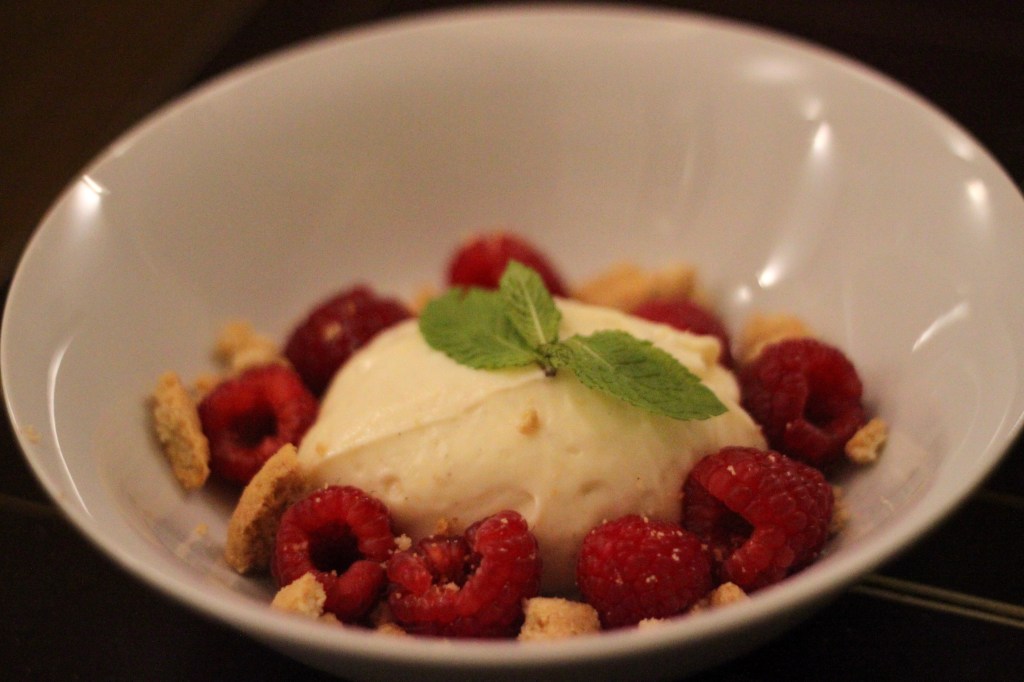
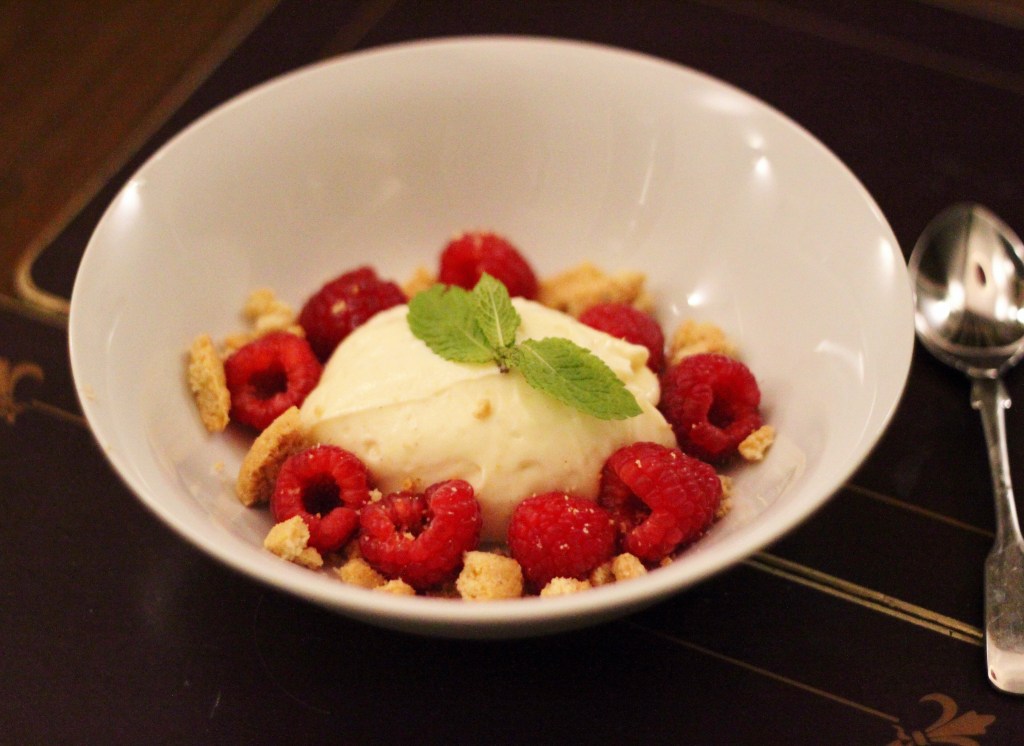
This pudding is probably the easiest there is. Consisting of only two (!) ingredients this white chocolate crème is a breeze to make but also a total joy to eat. The acidity in the soured cream makes the crème feel less rich and the raspberries serve the same purpose while also adding a fruity freshness. The biscuit crumbs can be omitted but add a nice crunch.
White chocolate crème with raspberries and biscuit crumbs, serves 4
Melt the chocolate (over a Bain Marie or in the microwave), mix in the soured cream and stir until glossy and smooth. Pour into a cold bowl and refrigerate for 30 minutes. Shape to quenelles and place in bowls. Decorate with raspberries, biscuit crumbs and mint.
If you love a creme brûlée but don’t always have the patience to make it, then this is for you. This Spanish cousin of the creme brûlée is much easier to make as it doesn’t need the water bath oven time, but it still offers that caramelised lovely sugar on top of the vanilla crème.
Crema Catalana, serves 6
100 ml (80 g) caster sugar
300 ml cream
1 tbsp corn flour
5 egg yolks
250 ml milk
1 tsp vanilla
1 pinch of sugar per bowl for serving
Whisk ety yolks, corn flour and sugar until fluffy in a bowl. Bring milk, cream and vanilla almost to the boil. Remove from heat and pour little by little into the egg yolk mixture while whisking. Pour the milk mixture back into the pan and let it thicken on low heat while stirring. Pour into bowls when it has thickened and leave to cool. Refrigerate until serving.
Scatter the bowls with a little sugar and blow torch until golden (or in lieu of a blow torch use the grill on the oven to caramelise the sugar). Serve with berries.
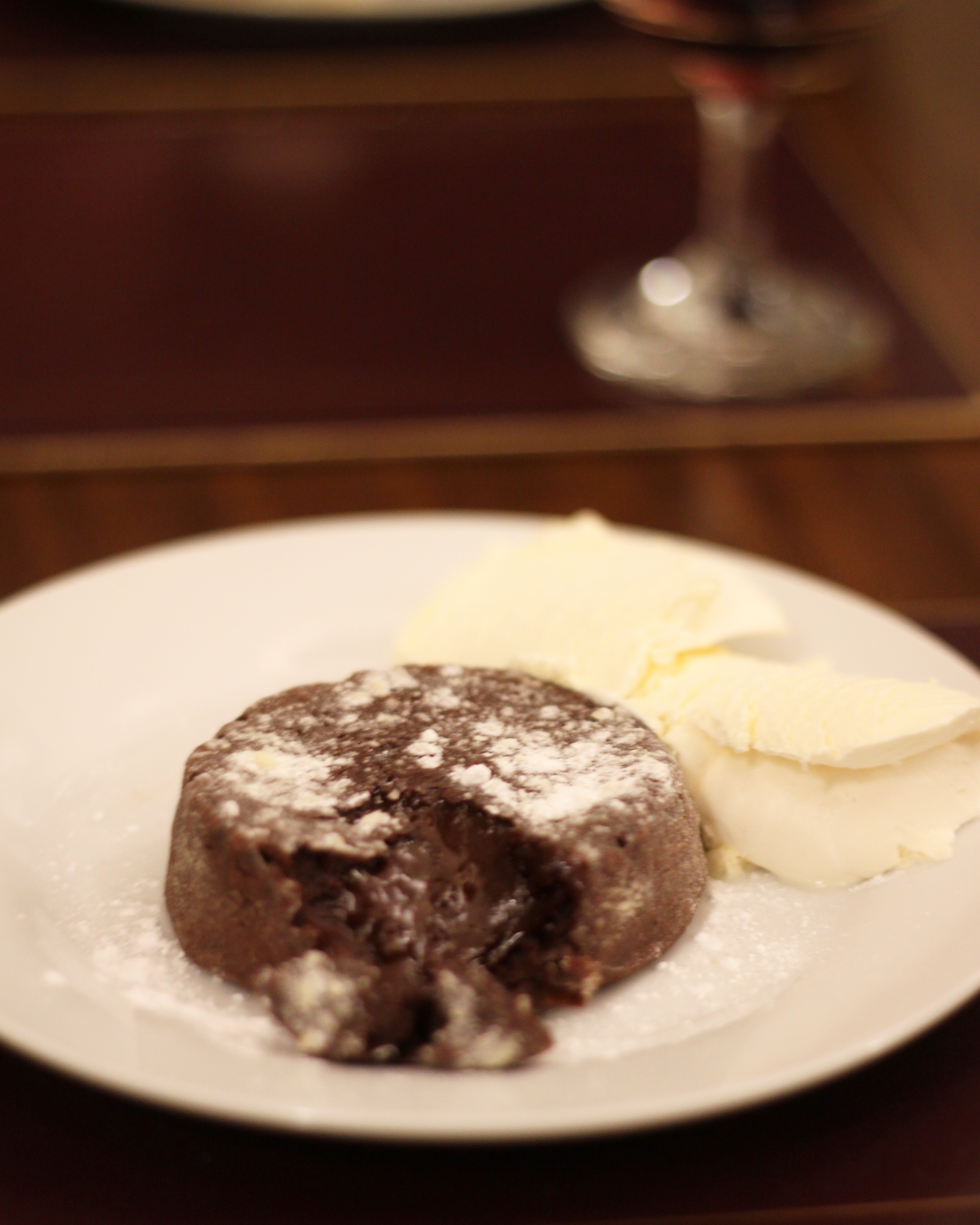
This classic of a pudding is still a favourite of mine. There is something so comforting about a warm and gooey chocolate pudding that it makes me really happy. I already have a recipe for this on the blog, but I must say that this recipe is even better hence why I’m blogging about it again!
I prefer to serve my molten chocolate cakes with vanilla ice cream as I love the contrast between the warm cake and the cold ice cream but you whipped cream and berries works just as well.
Pre-heat the oven to 230C. Butter two regular sized ramekins and cover with a think coating of cocoa.
Break the chocolate in smaller pieces and place in a bowl together with the butter. Melt the chocolate and butter until 2/3 melted either over a Bain Marie or in a microwave. Beat until it has all melted. Add sugar and salt. Lastly add the egg and egg yolk and beat an extra 20-30 times extra (important) until a glossy mixture. Add the cocoa and mix it in.
Divide the batter between the ramekins. Bake for 7-9 minutes and leave to cool for a minute. Turn onto plates (use pot holders!) and powder with cocoa. Serve with vanilla ice cream and eat immediately.
This is a perfect Friday night pudding as it’s quick to whip up (don’t let the Italian meringue scare you, I promise it’s easy!) and feels really fresh after a pizza or whatever Friday night cravings you may have.
Use any (seasonal) fruit and berries you like – they don’t get warm even if you use the grill to brown the meringue, but it’s even easier with a creme brûlée torch, and then you could also put the fruit in a glass so you can see it. Very pretty!
Italian meringue covered fruit, serves 2
Mixed fruit, cut into pieces and berries (enough to almost fill the vessels you’re using), such as:
1 blood orange
1 apple
blueberries
raspberries
Italian meringue:
1 egg white
75 ml caster sugar
75 ml water
50 ml caster sugar
To serve:
lightly whipped cream
Divide the fruit between two ramekins (or glasses if not using the oven) – they should be almost full.
Pour 75 ml caster sugar and 75 ml water into a saucepan and bring it almost to the boil. Once the sugar has melted the syrup is done. Remove from heat. Meanwhile beat the egg white until fluffy with an electric whisk. Pour in some of the remaining sugar and beat some more. Pour in the syrup while beating continuously. Then add the remaining sugar and beat until you have a glossy meringue that is set enough that you can turn the bowl upside down without it sliding out.
Use a spatula to cover the ramekins with the meringue. Put the grill on the oven to 250C and place the ramekins underneath it. Keep the door open and an eye on the ramekins as the meringue browns quickly and you don’t want it going too dark. Remove with mittens as the ramekins go warm (but the fruit inside doesn’t). Or skip this step all together and use a creme brûlée torch to brown the meringue. Serve with lightly whipped cream.
The base recipe for this parfait I’ve known since childhood, so full credit for it goes to mamma. It’s delicious on its own, and so much easier to make than ice cream. And it’s infinitely adaptable.
I’ve made it with elderflower before, and when I was at home in Sweden at the end of May mamma and I came up with this rhubarb version together. We wanted to keep the fresh acidity from the rhubarb while still keeping the sweetness of the custard-tasting parfait and I think we managed to do just that. It’s sweet but not too sweet with a hint of acidity for balance and freshness.
Rhubarb parfait, serves 4
3 egg yolks
80 g caster sugar
300 ml whipping or double cream
Rhubarb filling:
300-400 g rhubarb
approx 2 tbsp caster sugar
Rinse and slice the rhubarb. Mix with sugar and place in a pyrex dish. Place in a 180C oven and bake for approx 20 minutes until the rhubarb has softened and most of the liquid has evaporated. Leave to cool completely.
Beat egg yolkd and sugar until fluffy in a mixing bowl. Whip the cream in a separate bowl and add to the egg mixture.
Line a bread tin with cling film and place a 1 cm wide line of rhubarb compote in the middle of the tin lenghtways. Mix the rest of the rhubarb with the cream mixture and pour into the bread tin. Cover with cling and put in the freezer for at least 5 hours, but preferably over night. Serve with oat thins, berries, more rhubarb, whipped cream or as is.
We have a good thing going in my family. We all like mayonnaise and bearnaise sauce A LOT so we use a lot of egg yolks. Not wanting to waste food the egg whites go into little containers in the fridge (they keep for weeks!). But conveniently my dad loves everything meringue-y so we get to use up the egg whites quite frequently too.
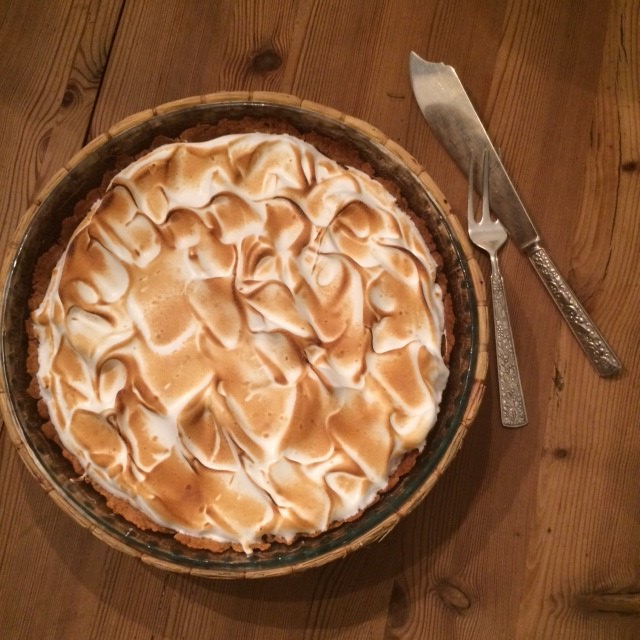
The whole little family (there’s only three of us; mother, father and me) loved this rhubarb meringue pie. It still has the tang of a lemon meringue pie but is slightly less heavy as no butter or egg yolk in the rhubarb filling.
The pie on the pictures had approx 500 g rhubarb in the filling which was fine taste wise but looked a little silly with all that meringue, so in the recipe below I’ve adjusted the recipe to 800 g rhubarb. It cooks down a lot in the oven, so I promise it’s not too much.
Also, when making the meringue, please note that it needs a lot of beating with an electric whisk and that it’s important the syrup boils and reaches (or almost reaches) 118C.
Rhubarb meringue pie, serves 8
Pastry:
180 g plain flour
100 g softened butter
2 1/2 tbsp cream or water
Rhubarb filling:
800 g frozen rhubarb pieces
3 tbsp potato flour (starch)
4-5 tbsp caster sugar
Italian meringue:
4 egg whites
120 g caster sugar
Syrup:
120 g caster sugar
100 ml water
Mix all the ingredients to the dough in a bowl or using a food processor. Press into a Ø 20 cm pie dish. Bake in a low oven using baking beads at 180C, for approx 10-15 minutes or until golden and baked through. Leave to cool.
Place the defrosted rhubarb pieces in an ovenproof dish and scatter with potato flour and sugar. If using fresh rhubarb I would start off by using less potato flour adding more if needed. Place in a 200 C oven for approx 20 minuter. The mixture should be bubbling, almost caramelised and thickened. Leave to cool.
Make the meringue: Add egg whites and sugar to a clean bowl and beat for 10 minutes with an electric whisk. Meanwhile make the syrup by adding water and sugar to a saucepan and bring to the boil (don’t stir). Remove when 118C (the boiling point for sugar). Add the hot syrup to the meringue and beat for a further 15 minutes, until you have a thick and glossy meringue.
Assemble: Add the rhubarb mixture to the pie crust once both are cool. Spread the meringue on top and burn the edges with a brulee torch. Serve with lightly whipped cream.













 Scandelights