Salt Yard

The London food scene is ever changing and expanding, but last week I decided to visit a restaurant that has been around longer than I have lived in London. Salt Yard opened in 2005 already, and is still going strong. The restaurant has one several awards, is mentioned in the Michelin guide and Time Out and it was definitely about time I paid the tapas restaurant a visit.

Last week I had dinner here with my fellow Swede Kristin. We like to meet up and chat over some nice food and wine. I have been to the Salt Yard Group’s newest edition, Opera Tavern a few times and I really like it, so I wanted to try the original thing as well.

Compared to Opera Tavern Salt Yard offers more traditional tapas like jamon croquetas and goat’s cheese stuffed courgette flowers with honey, where as Opera Tavern is mostly known for their scrumptious pork mini burgers with foie gras. There was nothing as exciting on Salt Yard’s menu to excite us, but we still had a lovely meal.
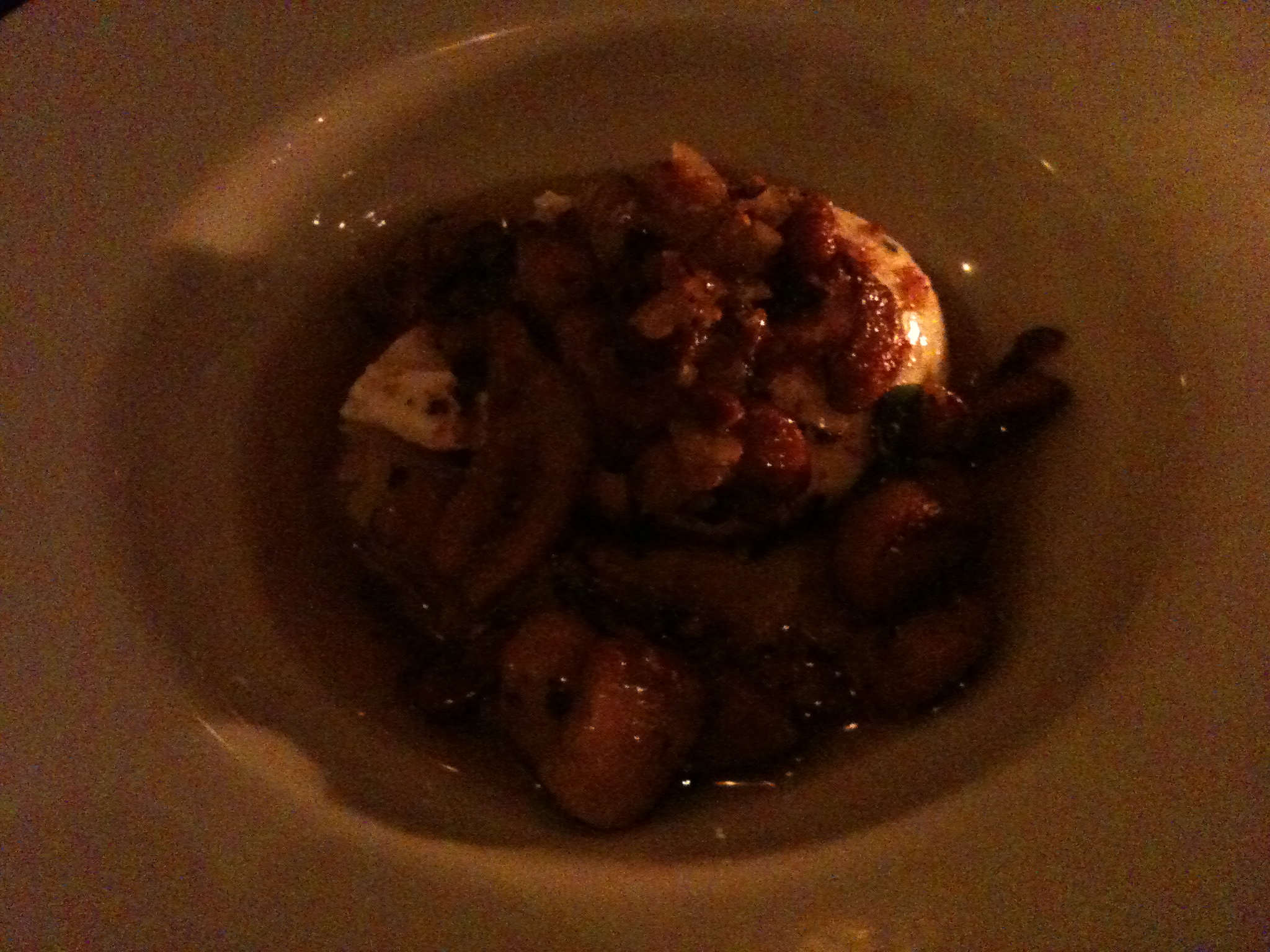
Some dishes were better balanced than others, and we both really enjoyed the gorgeous Jerusalem artichoke purée with buttered girolle and poached egg. Divine.

Also the traditional tapas dishes, we had both the croquetas and stuffed courgette flowers, were well prepared and delicious.

Deepfried squid with chorizo and broad beans was a great combination and cod cheeks with beans, bacon and carrots was equally palatable.

We also had some cheese; a truffle pecorino, which was rather disappointing actually. But all in all it was a great meal. Together with a bottle of £35 Gavi our bill ended on £~85 which feels reasonable (including service charge).

Ambiance wise I think I prefer the more spacious Opera Tavern, but they have done what they can to open up the dining room at Salt Yard with white chairs. Also more space around the bar upstairs would be good, but the reason to go here is actually the food, although I see it as less adventurous than Opera Tavern, and that is a shame. There are enough dishes on the menu for the kitchen to change it up a little.

Please note: the photos are blurry because I used my iPhone camera that doesn’t work well in the dark.

Macaroni and cheese

When I grew up in the rural countryside in Sweden in the 1980s and 1990s, most series on teve were American. In my youth I watched the likes of Beverly Hills 90210 and Baywatch and grew acustomed to a few American traits. Like eating icecream straight out of a paper tub, when icecream in Sweden only came in a plastic tub or a brick shaped paper carton. Not at all the same as the Ben & Jerry’s you could get in the States. Anyway, I have had plenty of icecream the American way since, and now you can get the American brands of icecream (with the right packaging) in Sweden too.

But there were other foods that seemed just as intriguing. Like a proper burger form a diner or mac ‘n cheese, the ultimate comfort food.

It has taken me until now to make an American version of the mac ‘n cheese, using The Pioneerwoman‘s recipe. And I truly understand now, why this is such a popular dish especially when in need of something comforting.

This recipe contains lots and lots of cheese, but the top layer is the best with the crusty cheese on top. I thought I used a lot of seasoning in this dish, but it needs a little more than you expect.

We ate this with chorizo style sausages

Macaroni and cheese, serves 3

Adapted from The Pioneerwoman’s recipe.

475 ml macaroni (2 cups)

1 beaten egg

4 tbsp butter (1/4 cup)

4 tbsp plain flour (1/4 cup)l

235 ml milk (1 1/4 cup)

1 tsp Colman’s mustard

225 g grated cheese (1/2 lb) for the mixture + extra for the topping

1/2 tsp salt

1/4 tsp black pepper

1/4 tsp cayenne pepper

Cook macaroni until very firm. Drain.

In a small bowl, beat egg.

In a large pot, melt butter and sprinkle in flour. Whisk together over medium-low heat. Cook mixture for five minutes, whisking constantly.

Pour in milk, add mustard, and whisk until smooth. Cook for five minutes until very thick. Reduce heat to low.

Take a few spoonfuls of the sauce and pour it into beaten egg, whisking constantly. Whisk together till smooth.Pour egg mixture into sauce, whisking constantly. Stir until smooth. Add in cheese and stir to melt. Add salt and pepper. Taste sauce and add more salt and seasoned salt as needed.

Pour in drained, cooked macaroni and stir to combine. Pour into a buttered baking dish, top with extra cheese, and bake for 20 to 25 minutes in 200C oven or until bubbly and golden on top.

Lemon cake with raspberry curd

This cake looks a bit old fashioned with the piped cream on top, and that was not really the way I had pictured it in my head. The reason for the piped cream is to hide the grated lemon zest in the frosting, because it made it a bit grainy.

Apart from that, I really liked this cake. And you can easily make a higher cake by adding another sponge and double the frosting recipe.

The frosting, although lovely and tart from the lemon zest but sweet at the same time, tasted lovely, but would work even better on the cupcakes it was intended for. The recipe is courtesy of the HUmmingbird Bakery and it is from their first cookbook.

Lemon sponge, serves 8

175 g plain flour

1 tsp baking powder

3 eggs at room temperature

175 g softened butter

175 g caster sugar

1/2 tsp vanilla essence

the zest from 1/2 a lemon + 1 tbsp lemon juice

Sieve the flour into a mixing bowl. Add the remaining ingredients. Beat with an electric whisk. Pour the batter into one or two round cake tins. If you make one it might need longer in the oven, and you need to cut it in half to assemble the cake. Bake in 175C for 35 minutes. Leave the oven closed the first 30 minutes, so the cake won’t fall flat. Leave to cool completely before assembling the cake.

RAspberry curd, makes 1/2 litre

170 g raspberries

100 g butter

200 g caster sugar

zest from 1 lemon

150 ml fresh lemon juice (about 3-4 lemons)

3 eggs

Purée the raspberries and eggs in a blender.

Pour sugar, butter, lemon zest and juice into a sauce pan. Heat up until it has melted into one uniform mixture. Leave to cool for a bit. Sieve in the raspberry and egg mixture. Heat up the mixture gently while stirring as it thickens to the consistency or whipped cream. When thick, remove from heat and pour into a bowl. Leave to cool completely before using in the cake. Cover and keep it for a week in the fridge.

Lemon frosting, for 1 small cake

From The Hummingbird Bakery cookbook.

250 g icing sugar

80 g softened butter

2 tbsp lemon zest

25 ml milk

1 drop yellow food colouring

Pour everything but the colouring in a large bowl. Beat with an electric whisk until you have a smooth and glossy frosting. Add the colouring and mix thorouhly.

Cake assembly

Make sure you have two sponges; either because you baked two or because you cut a large one in half. Place one on a cake plate and spread with 100 ml raspberry curd. Place the other sponge on top. Cover and coat with the lemon frosting using a spatula. Decorate with whipped cream and butterfly sprinkles or other decorations of your choice. 

Ducksoup, Soho

This little restaurant, on Dean Street in bustling Soho has been around for a few months, but I only heard of it recently. So had Caroline at work, so we decided to go there for lunch together.

The place is quite small and there are only a few tables (of which all were booked when we arrived) but there were available places around the big bar, and considering the amount of food we ordered we were better off sitting at the large counter top at the bar than the small tables behind us.

The menu came on a hand written note and consisted of a few sections; bar food, small plates, large plates and dessert.

We ordered a little bit of everything, and it arrived when it was ready – tapas style.

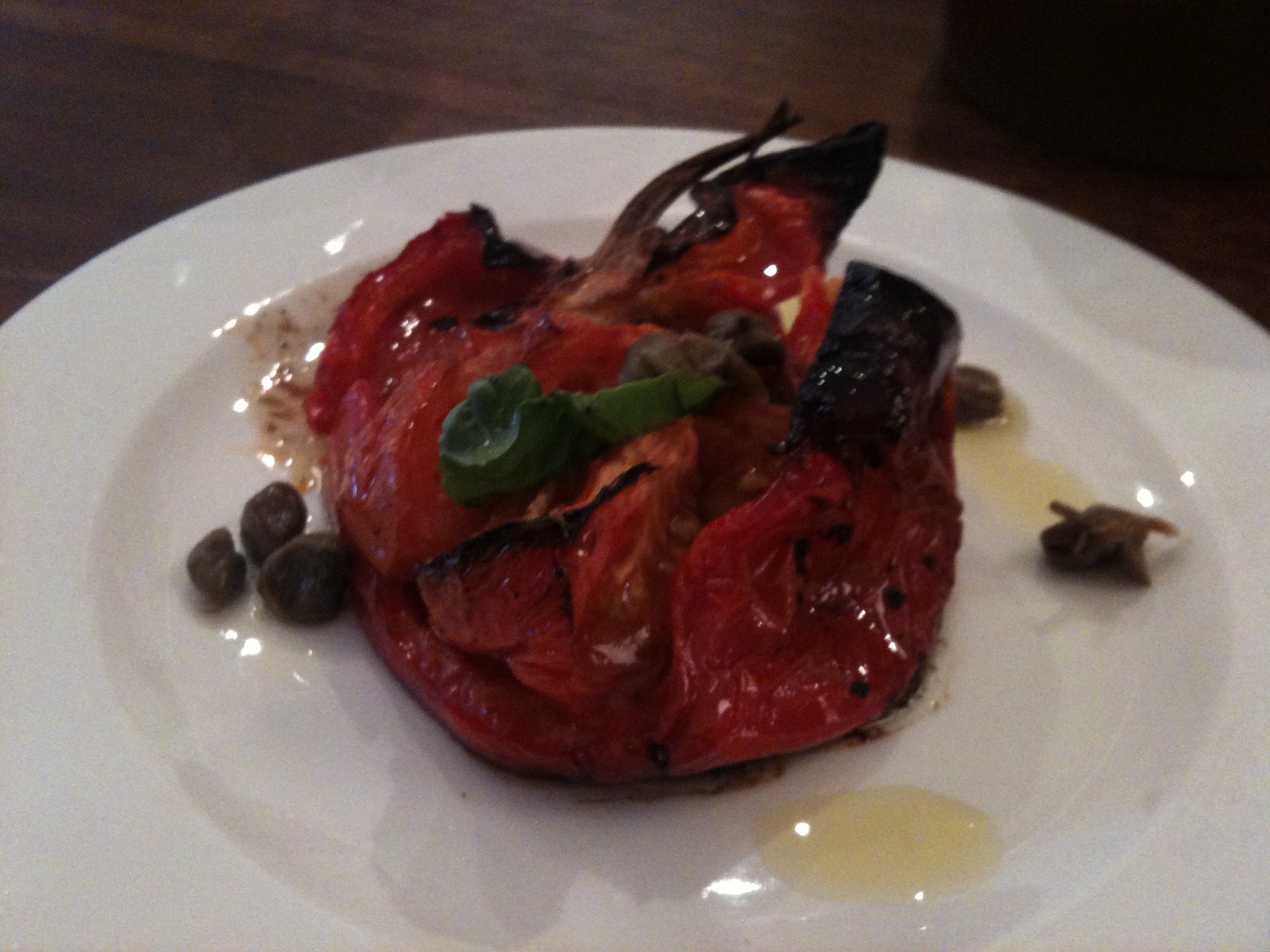
The first dish that appeared was the grilled pepper with some grilled tomato wedges and capers. Simple and lovely.

Then came the bread, which was great together with the cod roe, which was a bit too salty on its own.

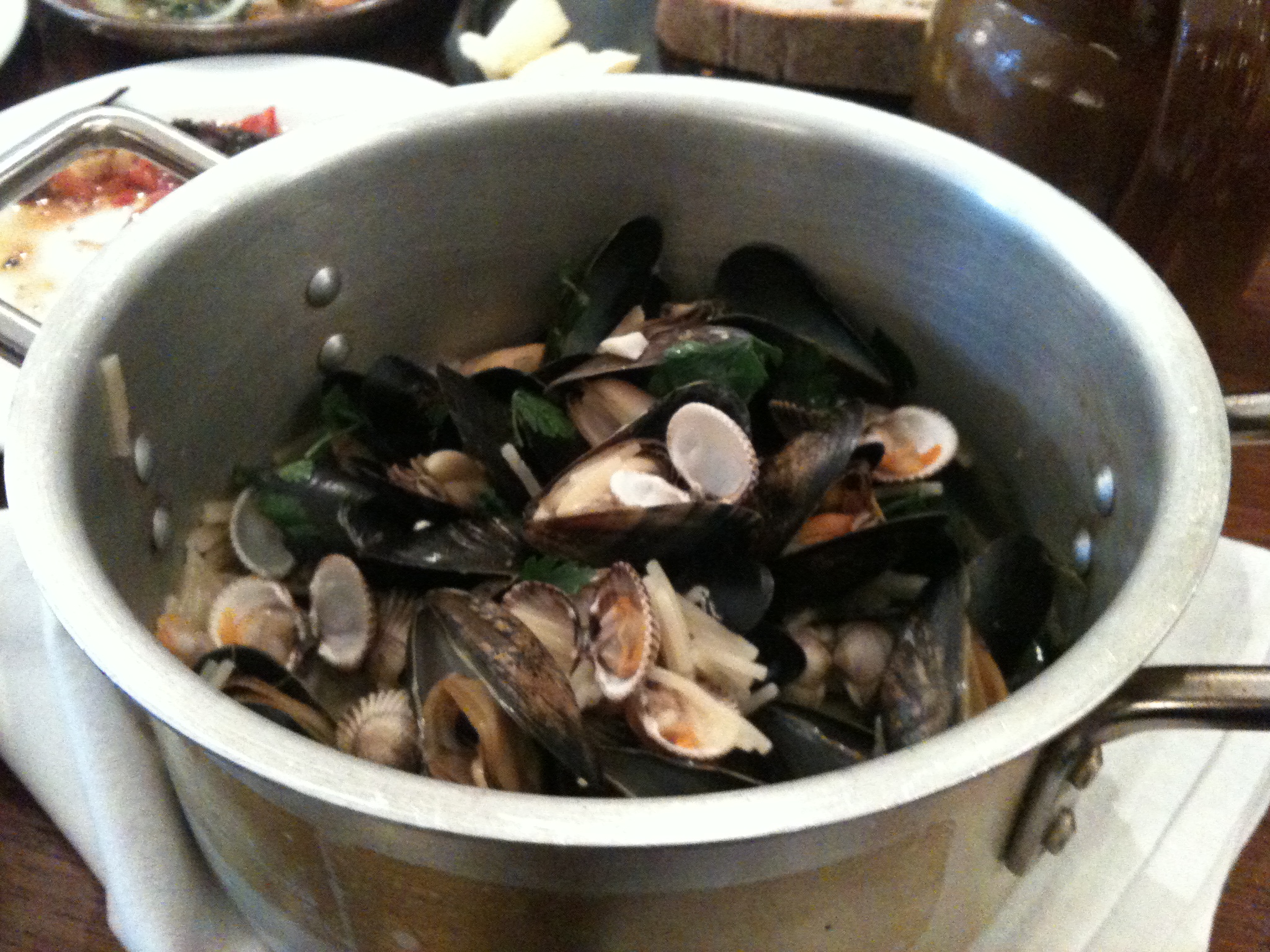
The rest all appeared at once, but we started off eating the mussles and clams in a traditional white wine sauce, but with the clever addition of small spaghetti strands to soak up the juices. This was lovely and the portion very generous!

Next we tucked in to the grilled octopus with its gremolata looking topping. It was really nice and the fresh herbs made all the difference.

The finale was a whole grilled mackerel, almost blackened on the skin and absolutely delicious. It was seasoned with sumac and came with a burnt lemon which goes so well with seafood.

We loved this, and for me, this was the best part of the meal. The fish was so lovely in its flavour, and the skin really crisp, so we ended up eating that too.

We also had a glass of wine each, which the waitress had to recommend as neither of us knew anything about the wines on the black board.

The bill came to a little above £50 for the two of us, which was very reasonable. The food is simple, but has that little extra something a meal out for me requires. There is nothing worse than feeling that you could cook it better yourself. I certainly didn’t feel like that in Ducksoup and we will definitely go back for more.

Ducksoup, 41 Dean Street, London W1D 4PY

http://www.ducksoupsoho.co.uk/Ducksoup.html

Panko and parmesan coated lamb racks with mashed potato and red wine sauce

Lamb is not the most traditional Scandinavian food, although it is definitely available. But in the south where I am from, the land is used more to grow crops than keep cattle on, and further up cows and pigs seem to be the way more represented than lamb. It’s not like in England where you see the while little things on every empty part of land.

This recipe is an adaptation from this Nigella recipe, so now it is perfect to me. Using panko breadcrumbs make the coating very crusty and as long as you have good quality meat this dish is a winner. I prefer to eat my lamb racks rare, and that is the method described in the recipe below. If you prefer yours pink or well done even, just heat up the oil a bit less and cook the meat for longer.

Panko and parmesan coates lamb racks, serves 2

5-6 lamb rack cutlets

2 eggs

200 ml panko

50 ml grated parmesan

salt, black pepper, 1 tsp dried Italian herbs

500 ml vegetable oil

Beat the eggs in a bowl. Mix panko, parmesan and spices in another bowl. Cut the large line of fat off each cutlet. Pour the oil into a sauté pan and heat it up until very hot. Dip the meat, one at the time, in first the beaten egg than the panko mixture to coat it all around. Place two or so at the time in the pan. FRy for about 40 seconds to a minute on each side. Turn when it is nice in colour and crisp. Leave on kitchen towel to drain from excess fat.

Mashed potatoes, serves 2

500 g potatoes like Maris Piper or King Edward

50-100 ml milk

70 g butter

salt, white pepper

Peel the potatoes and cut into smallish pieces (smaller pieces equal less cooking time). Cover with water (just about) add salt and bring to the boil. Once boiling lower the heat to medium heat and cook with the lid half on until very soft. Drain from water and mash with a masher. Add milk (start with the lower amount) and butter. Season. Mash properly to avoid lumps.

Red wine sauce, serves 2

200 ml red wine

2 tbsp balsamic vinegar

150 ml cream

1 garlic clove, pressed

1 tbsp soy sauce

salt, white pepper

2 tsp sugar or a mild chilli sauce for sweetness

colouring agent

Add wine and vinegar to a sauce pan and bring to the boil. Reduce for about 10 minutes. Add cream, soy , garlic and the something sweet. Bring to the boil and season with salt and pepper. Colour a light brown.

Simple yet delicious chocolate cake with white chocolate truffle

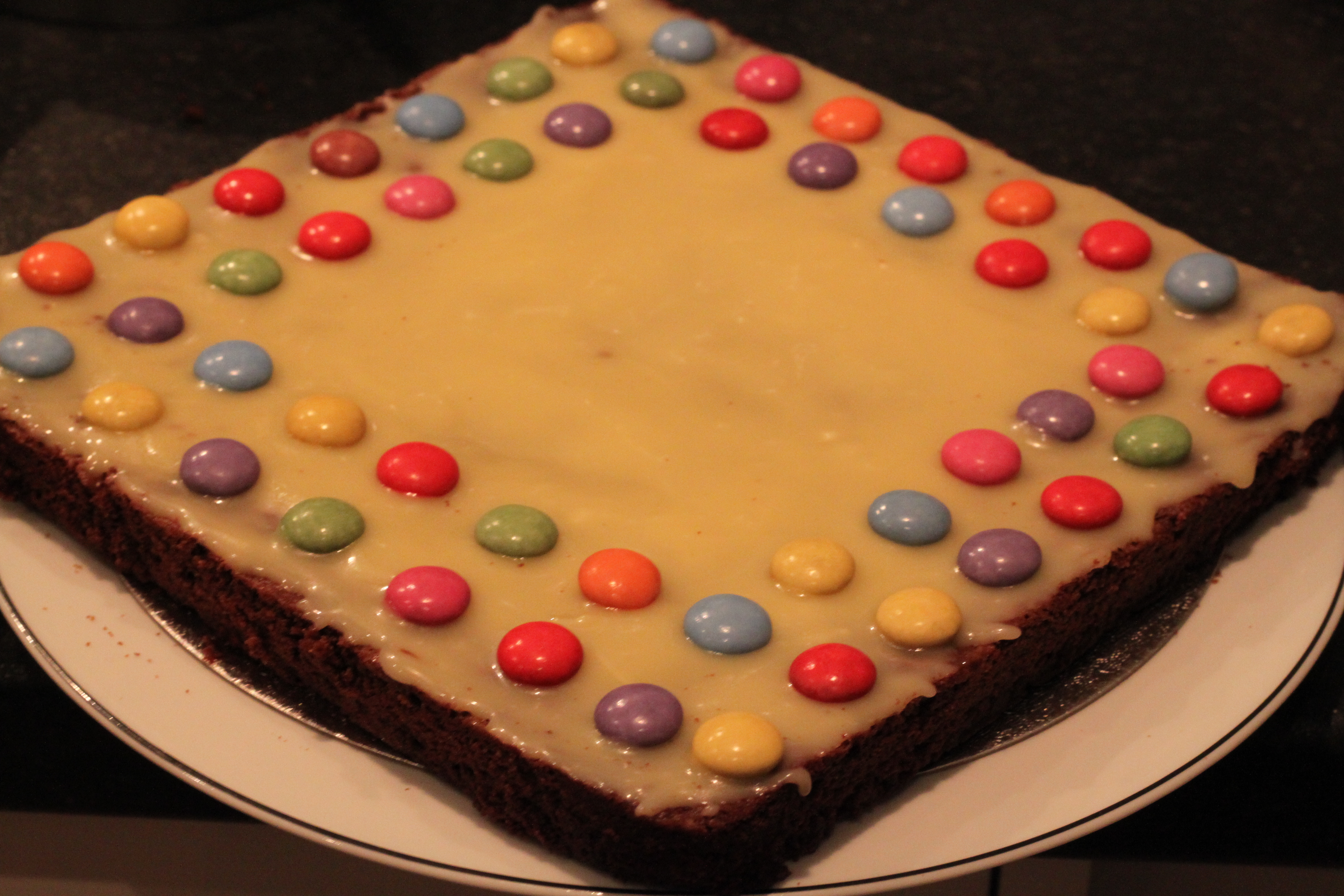
The second cake I made for work was this darling above. A dense, sweet chocolate cake with white chocolate pieced hidden inside, topped with decadent white chocolate truffle and decorated with non stop.

This went down a treat, and I hope you see why. It is even more wonderful than it looks.

The cake is easy to make, and what makes it stand out among other chocolate caked out there is the use of light brown sugar instead of caster sugar. This gives the cake a fuller flavour, more eathy and autumnal in its appearence.

The white chocolate truffle on top is so simple to make. Just heat up cream in a sauce pan and when it is hot, let the white chocolate melt in the cream. Let it cool and set, then spread it onto the cake with a spatula. Easy, peasy. Non? Just make sure you have good quality white chocolate on hand. I used Waitrose own brand Belgian white chocolate which worked very well and tastes lovely.

This recipe is courtesy of Annika at the blog smaskens.nu. Her blog is in Swedish, and I have therefore translated the recipe for you. I didn’t change anything in the recipe, so this is a pure translation. You fint the original recipe here.

Chocolate cake with white chocolate truffle, serves 8

Translated from this recipe.

2 eggs

300 ml soft light brown sugar or

2 tbsp vanilla sugar (which I substituted with 1,5 tsp vanilla extract)

1/2 tsp salt

100 g melted butter

4 tbsp cocoa

90 g plain flour

100 gram white chocolate, chopped very rougly

Heat up the oven to 175C. Line a springform or square tin with baking parchment. Butter the paper and the tin.

Beat eggs, sugar, vanilla and salt very fluffy and pale. Add the melted butter. Use a sieve to add the cocoa and flour.

Pour the batter into the tin and scatter the white chocolate pieces evenly. Press them down into the batter.

Bake in a low oven for 35 minutes. Leave to cool, cover and leave the cake overnight if possible.

Make a truffle from 150 g white chocolate and 50 ml whipping or double cream. Heat up the cream in a sauce pan, add the chocolate and stir until smooth and glossy. Leave to cool and set and spread onto the cake. Store in the fridge until serving. Decorate it with non stop.


Scandi tip #3: Skandium

When I need my Scandinavian design fix, I always go to Skandium. You can find this wonderful shop in three different locations around London; Brompton Road, in Selfridges and in Marylebone.

They have everything from furniture classics like Arne Jacobsen to Marimekko prints and all the lovely glassware from Iittala.

I go here to buy presents sometimes, or to buy something nice for myself. I prefer the Marylebone shop because of its lovely surroundings. Close by you find the Conran shop, several nice clothes shops and nice restaurants. I love the whole feel on Marylebone high street so do venture here if you haven’t already.

The picture is from Skandium’s website.

Dulce de leche (caramel) cheesecake

This cheesecake is absolutely wonderful. It has the perfect balance of savoury and sweet in the cream cheese and dulce de leche mixture and the texture is velvety smooth – a bit like butter.

The recipe is based on this recipe for Dulce de leche cheesecake squares that I found at Smitten Kitchen, but I have changed both the base and the topping. There was no need to change the cheesecake mixture though, when I tasted the batter I realised it was pure perfection already.

I served this as a cake at work, just plain (although there is nothing plain about it) to celebrate the latest birthdays. But this would work equally well as the dessert for a dinner party or for any other occasion that needs a little pick me up.

I am making this again already next week, that’s how good it was! I hope you find it as amazing as I do. Out of the three cakes (the other two to follow) that I made for work, this was my own favourite and it went down a treat among the others too.

Dulce de leche cheesecake, serves 8

Base:

200 g digestives

75 g softened butter

Filling:

2 gelatine leaves

60 ml (1/4 cup) milk

225 g cream cheese

2 eggs

a small pinch of salt

235 ml (1 cup) dulce de leche (you can buy it ready made, or boil a can of condensed milk for 2 and a half hours)

Topping:

100 ml creme fraiche

what is left of the dulche de leche (if using a 397 g can it will be about 4 tbsp)

Mix the biscuits into crumbs into a food processor, add the butter and mix again. Line a springform with parchment paper in the bottom. Add the base-filling and press it onto the base of the tin in an even manor. Bake for about 10 minutes in 160C (without the fan on).

Place the gelatine leaves in a bowl of cold water. Squeeze out the water and place them in a sauce pan with the milk. Warm gently until the gelatine has dissolved. Set to the side. Mix cream cheese, eggs, dulce de leche, salt and the gelatine mixture in a bowl with an electric whisk to incorpotate properly. Pour the mixture into the springform and place the tin at the bottom of the oven and bake for about 25 minutes or until the mixture just started setting, it should still be quite wobbly in the middle. Remove from oven and make the topping. Just mix creme fraiche with dulche de leche and spread onto the cake. Bake for another 5 minutes. Leave to cool, then place in the fridge for a few hours until serving.  Decorate with small pieces of fudge. 

Celeriac soup

I really like soups in the autumn and have to have my fix once a week at least. And basically anything will taste good in a soup, so that is why I want to try lots of different ones.

This time I couldn’t wait to try celeriac soup, as I have a new found love for this root vegetable. I have so far used it in both slaw and gratin, and with great results.

Inspired by this Hugh Fearnley-Whittingstall recipe this soup came about. I didn;t follow it exactly, but used the base for it. I always like a bit of cream in a smooth soup, and in this one there is just a tiny bit of cream, but it still gives the soup that velvety consistency and taste.

I served this with childhood memories; bread with the crust cut off, with melted cheese on top. The ultimate comfort food!

Celeriac soup, serves 2

ca 350 g celeriac

1 medium- large potato

1/2 leek

olive oil for frying

1 garlic clove, pressed

1 l vegetable stock

salt

white pepper

3 tbsp single cream

2 tbsp dry white wine

Peel the potatoes and celeriac. Cut into equal-sized pieces. Wash the leek and slice it thinly. Fry the leek in the olive oil in a large sauce pan over medium heat. Turn the heat down and add the garlic and thereafter the celeriac and potato. Add the (hot) stock and bring to the boil. Cook until all the vegetables are very soft, about 20-25 minutes. Blend the soup. Season with salt and pepper. Bring to the boil and add cream and wine. Leave it to simmer for a few minutes. Adjust the seasoning and serve.  

Marinaded beans with smoked paprika

One day last week when we needed a quick supper I tried this marinaded beans recipe I found on the wonderful blog Smaskens.

To flavour beans this way is genius and the marinade was so so good. It didn’t take long to prepare either and turned out a perfect Monday supper paired with Toulouse sausages and some nice bread to soak up the juices with.

Marinaded butter beans, serves 2

Translated and adapted from this recipe.

1 tsp sweet smoked paprika

50 ml olive oil

1-2 garlic cloves, minced

1 tsp chilli flakes

1 shallot, finely chopped

400 g tinned butter beans, rinsed and drained

chopped parsley

1 tbsp acacia honey

Warm the oil in a large pan. Add paprika, shallots, garlic and chilli flakes. Stir while the onion cooks without browning. Add the beans and heat them up. Pour into a bowl and leave to cool. Add parsley and honey just before serving.