Potato soup with lemon and truffle ricotta

IMG_3182

I am definitely a seasonal eater, both in terms of produce and in terms of what type of food I fancy. During spring and summer I can’t get enough of fresh salads, and in the winter it feels like no amount of hot soup can warm me up enough, so I eat it all the time.

This time, in between winter and spring, I crave lighter foods such as salads combined with warm hearty dishes to warm me up. But not too hearty. Instead I try and make those dishes seem lighter by adding lemon or just some fresh parsley. In this soup I used both and some ricotta and truffle oil, and yes, the soup really is like that warmer spring coat you start to wear when you just can’t stand the heavy winter coats anymore; it still keeps you warm but doesn’t feel that heavy.

IMG_3186

Potato soup with lemon and truffle ricotta, serves 4 as a starter or 2-3 as a maincourse

4 large potatoes, Maris Piper or King Edward

1/2 red onion

chicken or vegetable stock

50 ml milk

50 ml single cream

zest from 1/2 lemon

salt, black pepper

To serve:

100 g ricotta

truffle oil

chopped parsley

salt, black pepper

Peel the potatoes and cut into equal sized pieces. Rinse the starch away. Slice or chop the onion roughly and fry without browning in some oil in a large pan. Add the potatoes and fry without browning for a minute or so. Pour in the stock so it just about cover the potatoes. Boil with the lid half on for about 20 minutes or until the potatoes are very soft. Mix until you have a smooth puree. Add milk and cream and bring to the boil. Adjust the thickness with more milk or stock. Add the lemon zest, salt and pepper. 

Mix the ricotta with enough truffle oil for the flavour to really come through. Season. 

Pour the soup into bowls. Add a spoonful of ricotta, drizzle with a few drops of truffle oil and dust with some chopped parsley. 

Squid with chorizo, cannellini beans, spinach and aioli

IMG_3199

One reason I love living in London is of course the restaurant scene. It is ever changing and evolving and I love (and hate!) the fact that I can’t keep up. Eating out inspires me a lot as a home cook but it is not always the most impressive and technically difficult dishes that appeal the most.

Since I had a similar version of this squid dish at Terroirs in October I have been waiting for the perfect opportunity to cook it since. So when Laura, another squid lover, came for dinner the other week I knew exactly what to cook.

IMG_3197

The Terroirs original has chickpeas instead of my cannellini beans but other than that I think I hit quite close to home. My homecooked dish was just as satisfying and although this is a straight-forward recipe with simple ingredients the combination is just utterly wonderful. (Chorizo is a bit like bacon – whatever you add it to tastes wonderful.) All it requires is some crusty bread and a nice glass of wine.

IMG_3208

Squid with chorizo, cannellini beans, spinach and aioli, serves 4

400 g squid, sliced into rings

150 g chorizo, sliced

1 tin (400g) cannellini beans, rinsed and drained 

250 g fresh spinach

oil for frying

1/2 lemon, the juice

salt, black pepper

To serve:

chopped parsley

aioli (see below)

crusty bread

Fry the chorizo in the oil. Remove from the pan but keep the oil to flash-fry the squid. A few minutes is all you need. Put the chorizo back in the pan and add the beans. Wilt the spinach in a separate pan and add it to the big pan too. Squeeze with lemon juice, season and serve! 

Aioli, serves 4

1 egg yolk, at room temperature

150 ml vegetable oil

1/2 lemon, the juice

salt, white pepper

1 garlic clove, pressed

Place the yolk in a mixing bowl and start whisking. Add the oil drop by drop and gradually in a thin beam. Once the mayonnaise has thickened, add the lemon juice to loosen it. Then start whisking again and incorporate the remaining oil. Add more lemon for flavour as well as salt, pepper and garlic. 

Wine Tasting & Tapas, Putney

IMG_3223

Remember the great wine tasting I went to in the autumn? Yesterday it was time for another one. Hosted at The Avenue Cookery SchoolAngie Steele prepared all the amazing food and Andrew Corben-Clarke from The Burgundy Portfolio talked us through the wines, mixing amusing anecdotes with facts.

IMG_3217

We started off with a dry (Fino) sherry (Manzanilla “La Gitana”, Bodegas Hidalgo) and a classic bruschetta. I am not really a sherry drinker and although I thought this one was very nice with the bruschetta, I probably wouldn’t enjoy it without any nibbles.

IMG_3221

Next up was a wonderful 2010 Rully (David Moret) that was definitely more my thing. And served with fluffy yet crispy salt cod fritters with a saffron aioli, it was a match made in heaven. To me the wine tasted both buttery (yum) and fresh at the same time.

IMG_3224

We also tried a rosé, 2011 Beaujolais Rosé Dom. de Sermezy, with harissa marinated chicken scewers with grapefruit segments and a citrus dressing. The wine was a mouthful of summer and the fruitiness complimented the citrus flavours of the dish.

IMG_3228

We then moved on to the reds. Firstly, a light 2009 Moulin-à-Vent (Dom. Benoît Trichard) and Thai pork and lemongrass scewers with mango salsa. The scewers were spicy and moorish, and although the wine was light I thought it held up the fiery food well.

IMG_3231

The next red was a real heavy-weight in comparison with the first one and bursting of flavour. 2008 “Star Terre”, Syrah, Oroncio worked really well with the puy lentil galettes with cumin and coriander. Andrew told us that it was the earthiness of the lentils (and the cumin) that really worked with this heavier wine, just like it would work with game or mushrooms. IMG_3233

The tasting finished with something sweet; crunchy biscotti with a chocolate dipping sauce (oh yes!) and a wonderful Sauternes,1999 Ch. Doisy-Vedrines, 2eme Cru Classé. It was golden and utterly delicious and the perfect ending to the evening.

These type of wine tastings, with food, are definitely something I prefer to a stuffy all-wine tasting. Pairing the right food with the right wine is definitely a skill and just adds a whole different dimension to a meal. I already look forward to the next one!

A proper Caesar salad

IMG_3172

Spring is here. At least occasionally and at day time. When the sun is shining and it is around 10 degrees C. (Let’s not talk about the temperature dropping to zero or below at night.)

Like the autumn makes me crave rustic soups and hearty stews, nothing is more satisfying to eat in spring than salads or new vegetables. And the ultimate salad for me is, without a doubt, the classic Caesar. I don’t like when people play around with classic recipes too much, but I do think the addition of chicken for a supper or a more substantial lunch works really well in a Caesar.

And what makes a really good Caesar salad for me, is of course the dressing. It can’t come from a jar, it just can’t.

I have a quick cheat recipe that works if you’re in a hurry, but nothing beats the proper stuff!

IMG_3173

Caesar salad with chicken, serves 2

2 chicken thighs

oil for frying

salt, pepper

4 slices smoked streaky bacon

1 1/2 romaine lettuce heads

10 cm ciabatta

butter and oil for frying

1 garlic clove, pressed

Parmesan shavings

Fry the chicken thighs on both sides. Season and fry in the oven for about 15 minutes, 200C. Leave to cool slightly. Fry the bacon crispy. Mix the dressing (see below). Wash and slice the lettuce roughly.Cut the ciabatta in cubes. Fry until crisp and golden in butter and oil. Lower the heat and add the pressed garlic. Take the chicken meat off the bone and chop roughly. 

Divide the lettuce between two plates. Add the dressing. Top with chicken and croutons. Add plenty of Parmesan shavings and place two bacon slices on top of the salad. Serve!

Caesar dressing

1 egg yolk, at room temperature

1 tsp dijon mustard

80 ml vegetable oil

2 tsp fresh lemon juice

1 tbsp finely grated Parmesan

1/2 garlic clove, pressed

1 anchovy, finely chopped

salt, white pepper

Mix the yolk with the mustard in a mixing bowl. Add the oil drop by drop while whisking. Add the lemon, Parmesan, garlic, anchovy and season with salt and pepper. 

Dan Lepard’s carrot, orange and pistachio cake

When baking for the office last month, I thought I’d accommodate the detoxers with this carrot cake.

I mean, it is still a sweet cake but containing nuts, tahini and pomegranate molasses it seems a lot healthier than a creamy Victoria sponge.

The list of ingredients is rather long for a carrot cake, but it is still a straightforward recipe. The spices makes it taste like any decent carrot cake, but the extra ingredients gives it a lot of depth. It just tastes more than your ordinary carrot cake.

I tried photographing it without a memory card (doh!) so no photo this time… 

Dan Lepard’s carrot, orange and pistachio cake, serves 10

Adapted from Dan Lepard’s recipe.

75 g tahini

125 ml sunflower oil

3 tbsp pomegranate syrup or treacle

zest of 3 oranges, and 100ml juice

225 g light soft brown sugar

3 large eggs, separated

200 g carrot, grated finely

100 g chopped pistachios

175 g plain flour

2½ tsp baking powder

2 tsp ground cinnamon

½ tsp ground cloves

½ tsp nutmeg

Butter a large round cake tin and line the base with a round of baking parchment. Heat the oven to 180C. In a large mixing bowl, whisk together the tahini, oil, syrup, orange zest and brown sugar until smooth. Beat in one whole egg plus two yolks (reserving the whites) until combined, then stir in the grated carrot, pistachios and juice. Sift the flour, baking powder and spices together, then stir them through the mixture. Whisk the egg whites until white and fluffy, then fold through the mixture. Pour the mixture into the tin and bake for 25-30 minutes or until a toothpick comes out clean. Remove from the oven, leave to cool in the tins, then cover with a simple icing made from icing sugar and a few drops lemon juice. 

My mother’s mazarin cake

IMG_2510

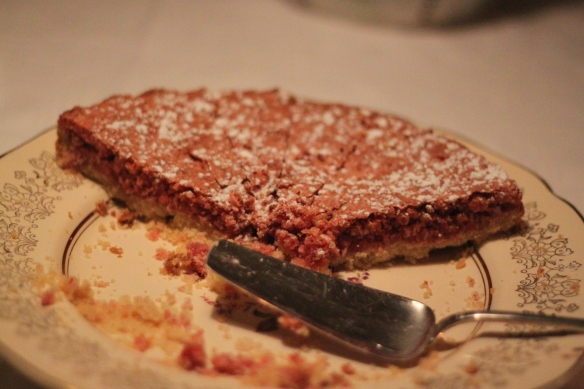
My mother associates this cake with Christmas because her grandmother used to bake it for the holidays. And the red colour helps with that association too, I’m sure. In general, though, this type of cake has nothing to do with Christmas. It is a cake we eat all year round and it got its name from Cardinal Mazarin.

Consisting of a shortcrust with an almond filling this cake is chewy and not too sweet. It also has the unusual addition of desiccated coconut, and although I’m not a fan in general, it really works here.

Mazarin cake, serves 8-10

Short crust:

75 g butter

35 g caster sugar

1 egg white

100 g plain flour

 1 1/2 tsp baking powder

Filling:

100 g almonds

50 g desiccated coconut

100 g butter

150 g caster sugar

3 eggs

red food colouring

Cream butter and sugar for the shortcrust. Add the egg white, flour and baking powder. Incorporate and cover a baking tin with the dough. 

Blanch the almonds and grind them finely. Add coconut, butter and sugar. Add the eggs and colouring. Pour into the tin and bake in 175C about 20-30 minutes. Leave to cool and dust with icing sugar. 

Butternut squash and ricotta ravioli with lemon and nutmeg

IMG_3090

When I went to school back in Sweden I was a very fussy eater when it came to school dinners. The food was just so far away from the made from scratch kind of food my mother and grandmothers cooked.

I remember my mother being very concerned, and on a school visit she made sure she had lunch with me. I was so glad that it was ravioli that day – one of my least favourite dishes, so my mother could see why I was so fussy. And she too, struggled to eat it. And from then on she always made sure to send lots of buns, crisp breads and fruit with me to school, just in case I didn’t like the lunch.

Nowadays I don’t think I am considered a fussy eater, but I still don’t eat ‘bad’ food, like those school dinners. They put me off things like lasagne and ravioli for years.

This ravioli however, is as far away as possible from the school version. Instead it is light and fresh with the sweet butternut marrying the earthy nutmeg and sharp lemon. The ricotta I think, add balance to the flavours.

IMG_3083

Butternut squash and ricotta ravioli with lemon and nutmeg,  serves 4

Pasta dough:

200 g 00-flour

2 eggs

Filling:

1/2 butternut squash

plenty of freshly grated nutmeg

approx 125 g ricotta

ca 1 tsp lemon zest

salt, black pepper

Sage butter:

50 g salted butter

5 large sage leaves, more to decorate

Cut the butternut squash in half and remove the seeds. Place skinside down on a roasting tray. Drizzle with olive oil and season. Roast until soft, about 40 mins, 180C. Scrape out the soft flesh and place it in a bowl. Mush it up with a spoon or a stick blender. Add nutmeg and seasoning. Leave to cool completely. 

Weigh up the flour in a mixing bowl. Make a well in the middle and add the eggs. Knead into a dough. If too dry, add a tsp of olive oil, if too sticky add more flour. Shape into a ball and cover with cling. Let it rest for 30 minutes.

Mix the butternut squash mash with roughly the same amount of ricotta. Add the lemon zest, season to taste and if you like, add some more nutmeg.

Divide the dough into 4 pieces and roll it out using a pasta machine. Let the dough go through the widest setting three times while folding in between, then once on each setting until as thin as you prefer. I stopped at setting 7. 

Place the thin pasta sheets on a floured surface.  Place a teaspoonful of the filling on one of the pasta sheets with the same space in between the dollops. Brush the pasta with water all around the fillings. Cover with another pasta sheet, non-floured side down. Start at one end and flatten the pasta sheet on top of the other using your hand to protect the filling and to avoid air bubbles. Either cut into ravioli with a knife or use a ravioli cutter. If any excess dough is left over just roll it out again. 

Bring a large pan of water to the boil and add plenty of salt to it. Add the pasta pieces 8-1o at the time. Remove with a slotted spoon once the pasta pillows have surfaced. This takes about a minute. 

In the meantime melt the butter in a pan and add the sage leaves. 

To serve, place 6-8 ravioli on each plate. Drizzle with the sage butter, add a sage leaf as decoration and serve with plenty of grated parmesan.

A Swedish sponge cake

sponge

Today on my Swedish blog, I share an adapted version of Delia’s recipe for a sponge cake with passionfruit filling which feels like old news, yet I know it will be appreciated by my Swedish followers.

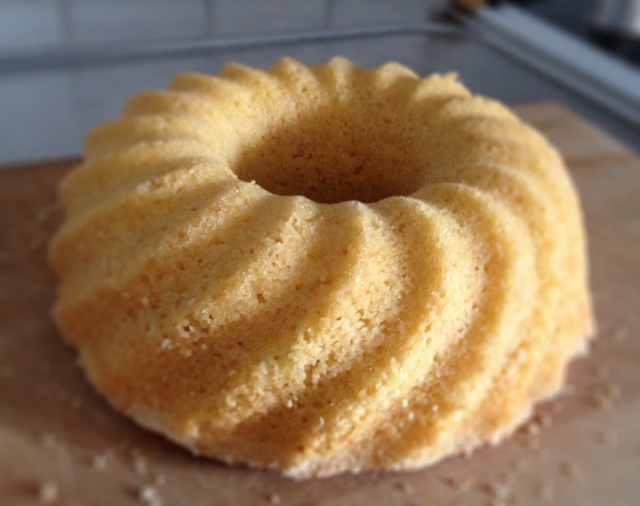
A sponge cake is as common in Sweden as here in Britain, but they do differ a bit. The sponge cake recipe I grew up with is such an old recipe we measure it in cups. Not imperial cups, but a specific coffee cup we use for baking.

You start by beating eggs and sugar pale and fluffy and without butter the batter is light and runny which in the oven transforms into an airy moist sponge covered in breadcrumbs.

That cake was probably the first recipe I mastered on my own, and as it also was the way to my daddy’s heart I have made it many many times.

When arriving in the UK a few years ago now, I realised a sponge here was something different. A buttery, sturdier version of what I knew. Of course we have buttery sponges in Sweden too, but in my family they’re not that common, and we don’t really do the sandwich thing either.

The English varieties I am sure you know, but below is that old family recipe of a very simple sponge.

My family sponge, serves 8

3 eggs

150 g caster sugar

1 tbsp water

120 g plain flour

1 1/2 tsp baking powder

melted butter for coating tin

breadcrumbs for coating tin

Brush a little melted butter in a cake tin, prefferably of the bundt variety. Coat with breadcrumbs. Beat eggs and sugar pale and fluffy with an electric whisk. Add the water. Mix flour and baking powder and incorporate into the batter. Pour into the tin and bake in 175C for 25-30 minutes or until a toothpick/skewer comes out dry. 

Supper at John Salt, Islington

The ever-changing restaurant scene is definitely a thing about London I LOVE. Even someone who gets bored easily can’t be bored with food here.

One restaurant I’ve heard a lot of buzz about is John Salt in Islington, which re-opened a couple of weeks ago with a new chef. Neil Rankin, the current master of the stove, earlier worked at the much hyped Pitt Cue Co and that heritage is definitely visible in the barbecue elements of the menu.

JS4

Laura and I settled for small plates to share so we could taste as many dishes as possible.First up was fried oysters with beef fat mayo served in oyster shells on a bed of ash. Utterly delicious and it gave us a promise of what would follow…

JS2

Like the exceedingly delicious squid with caramel. Juicy, charred and sweet it melted in the mouth. And we definitely did the right thing ordering a plate each-  this dish is too good to share with anyone, even a significant other.

JS3

Next up was what I guess is one of their signature dishes; crab and fennel on pig’s skin. The skin was fried and puffy like scratchings and served as a plate for the creamy salad of crab and fennel. Absolutely lovely but almost too rich.

JS1

We also had raw red mullet with black sesame seeds. Yummy but not my favourite.

JS

Last we had frites with pulled pork, kimchi and cheese. We expected this to be full-on heavy and greasy, but it wasn’t. The kimchi was light and consisted if very thin strips of cabbage and had a nice kick to it. The frites were crispy and the pork soft and stringy and the cheese almost not noticeable.

After all this we were far too full to even consider pudding, although I am still curious of the bacon pannacotta.

We ate our meal in the course of an hour, and although it was quick we didn’t feel rushed at all. The staff was friendly and relaxed but still had full control over the service. We stayed on for a while longer just digesting the food and chatting and it was pleasant to just sit there and people watch.

It is safe to say we will definitely be back, and I so wish I had a restaurant like this on my doorstep. Luckily Laura does, and I hope she won’t be surprised if she sees a lot more of me in the months to come…

John Salt

131 Upper Street

London N1 1QP

Black salsify and feta fritters with wild garlic mayo

IMG_3066

While preparing my supper quite late last night my flatmate asked me what I was making. He looked puzzled when I said I was cooking with salsify and showed him the long dark sticks. He still didn’t know what it was, and I realised then that it is a rather unusual vegetable.

But it shouldn’t be. It grows in Britain and similar climates (like Sweden and Southern Europe), it is nutrious and as it is a root vegetable it makes this time of year a whole lot more interesting (as it is mainly root vegetables and cabbage that grows locally in winter).

In Sweden it is knows as poor man’s asparagus as it is similar in taste, and I read that it is also said to taste similar to oysters.

In this recipe I paired it with feta and lemon juice and added the subtle garlic flavour of the wild garlic in the mayonnaise. The whole dish feels like a promise of spring. Utterly delicious! I had it as a light supper but it also works as a lunch, brunch or even breakfast.

PS. If you haven’t got flavoured oil at hand, you can make the mayonnaise from fresh wild garlic instead.

Black salsify and feta fritters with wild garlic mayo, serves 1

3 black salsify, peeled and coarsely grated 

3 tbsp feta

1 egg white

4-5 tbsp plain flour

1 tsp lemon juice

salt, black pepper

butter and oil for frying

Fry the grated salsify in butter for a few minutes to soften. Then transfer to a mixing bowl. Add the crumbled feta, egg white (save the yolk for the mayo), flour, lemon juice and seasoning. Mix well. Heat up butter and oil in a frying pan on medium heat. Spoon the mixture into the pan shaping four fritters. Fry until golden brown on both sides.  

Wild garlic mayonnaise, serves 1

1 egg yolk, at room temperature 

ca 100 ml wild garlic flavoured oil

1 lemon wedge, the juice

salt, white pepper

Beat the egg yolk and add the oil drop by drop while whisking until you have a thick mayonnaise. Add lemon juice and seasoning.