Eggs Benedict

This morning I have learned three new things! How to poach eggs (can’t believe I haven’t done that before), clarify butter and whisk hollandaise away from the heat. It all turned out rather well, thanks to the great guidance from the book Breakfast at the Wolseley, that I got for my birthday. The Wolseley is a great restaurant, which I haven’t yet written about, even though it is one of my favourite places in the whole world. I promise to tell you about it soon!

The Wolseley is the kind of restaurant where you could eat every meal in. Their breakfasts are superb, they’re fully booked for lunch and dinner, and you can pop in for afternoon tea or a light bite at any time of the day.

The book is also amazing, so of course I had to try their recipe for my favourite breakfast – Eggs Benedict. It is not the easiest, quickest breakfast you can make, but it is worth the extra effort. Eggs Benedict are for those days without an agenda, the lazy Sunday mornings that suddenly continues into the afternoon without you realising how much time has passed.

Eggs Benedict, serves 2

4 eggs, for poaching

4  English muffins

4 slices of ham

chopped chives and cayenne pepper (which I didn’t have any, black pepper worked fine too)

Hollandaise sauce:

4 tbsp white-wine vinegar

2 shallots, coarsely chopped

10 peppercorns

175 g butter, cut into cubes

3 egg yolks

juice of 1/2 lemon

salt

Start by making the sauce: put the vinegar, shallots and peppercorns in a pan and boil until it is reduced by two-thirds. Strain the reduction into a glass bowl.

Clarify the butter by melting it in another pan over low heat. Skim the surface until only clear liquid remains. Remove from the heat and let it cool, then carefully pour the butter into a clean bowl, leaving the residue in the pan.

Place a glass bowl over a pan of simmering water. Add the yolks and vinegar reduction and beat with a wire-whisk until it smooth, thick and pale.

Remove from the heat and whisk vigorously adding the butter little by little. Season with salt and lemon juice.

Poach the eggs by simmer water in a large pan, pour in 1-2 spoonfuls of vinegar, this will make the egg form a tight shape in the water. Crack the eggs into cups or mugs and lower them into the water, if you’re only poaching 1-2 at the time, you can swirl the water around to help shape the eggs. Put the lid onto the pan, and leave for three minutes. Then lift the eggs out with a perforated spoon and into a bowl of cold water to stop the cooking.

Toast the muffins while the eggs are poaching, spread with butter, place the ham on top and put them on plates. Make a little imprint in the middle of the muffin, for the egg to lie, drain the eggs and put them onto the imprints, spoon the hollandaise over the eggs and sprinkle cayenne pepper and chopped chives over the it (black pepper will do too).

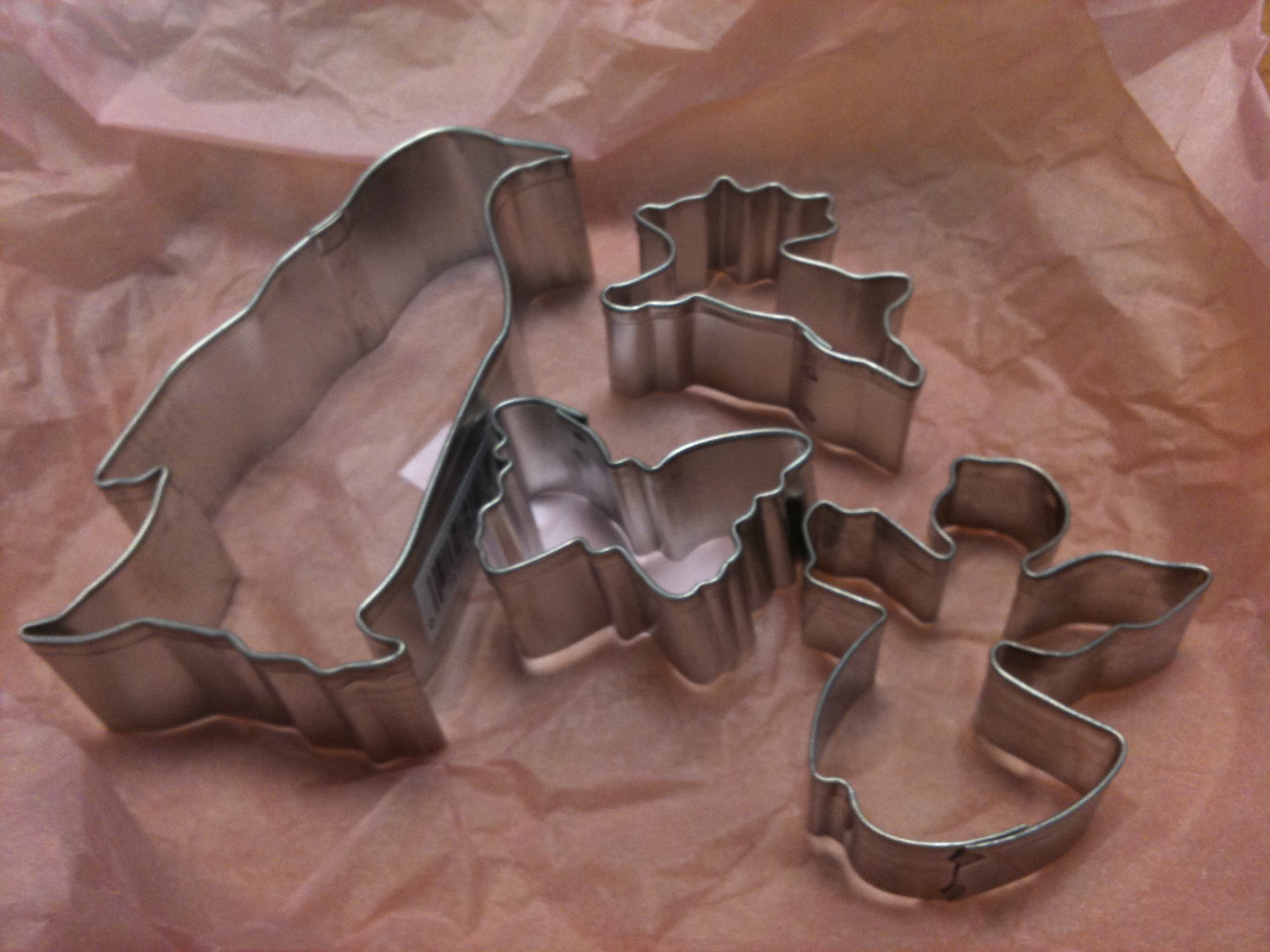
Cut out cookies

 Remember these?


They came to good use when I baked Nigella’s cut out cookies from How to be a domestic goddess.  It is the first time I’ve baked these type of biscuits, the only thing I use my cookie cutters for is ginger bread cookies once a year. It was a really good recipe, easy to make, easy to roll, easy to cut out and transfer to a baking sheet, and thankfully they were very tasty too. I will definitely make them again, and I know that for sure because I put half the dough in the freezer. 🙂

Cut out cookies, plenty

180 g softened butter

200 g caster sugar

2 eggs

1 tsp vanilla essence

400 g plain flour

1 tsp baking powder

1 tsp salt

Beat the butter and sugar fluffy, then add the eggs and vanilla. Mix the dry ingredients in another bowl and fold it into the mixture. Knead the dough in the bowl and add more flour if it feels too sticky. Cut the dough in half, wrap with clingfilm and put in the fridge for an hour (or freeze one half). Later roll out the dough on a flour-spinkled surface and make sure you sprinkle flour on the rolling pin too. I thought 2-3mm was a good thickness, but you can have the cookies thinner or thicker if you like. Transfer the cookies to a baking sheet and bake in 180C for 8-12 minutes. Leave to cool on a wire rack completely before icing them.

Icing

1 tbsp milk

royal icing sugar

Pour the milk into a bowl and add icing sugar little by little while whisking away until you have the consistency you like. Add some food colouring to make it more interesting.

Chicken cannelloni with bacon

Cannelloni is great to serve at dinner parties, it is tasty and you can prepare it the day before and have time to greet your guests. Served with garlic bread and a nice salad it can be a feast!

Chicken cannelloni with bacon, 2-3 portions

350-400 g chicken fillet

4 slices of bacon

1 packet ricotta

3-4 tsp italian herb seasoning

1 tsp chilli flakes

1 tsp persillade

a knob of butter

plain flour/sauce flour

chicken or vegetable stock

400-500 ml milk

grated cheese

about 15 cannelloni tubes

Cook the chickem in a pan or in the oven with some olive oil and maybe some barbecue seasoning, salt and pepper, leave to cool a little and cut into small cubes. Fry the bacon cut into pieces, and drain off the excess fat on some kitchen towel. In a bowl, mix the ricotta with the herbs and spices, and plenty of salt and pepper. Fold in the chicken and bacon and fill the tubes with the ricotta-mixture. It takes a bit of time, but after a while you get the hang of it. I use a teaspoon. You can also use fresh lasagne sheets that you roll up, but they usually break quite easy. Drizzle some olive oil onto an oven proof dish and place the filled tubes in it. Next make a roux by melting the butter, adding enough flour for the butter to soak up and adding the milk. Whisk the whole time on low heat. It takes a while for the sauce to thicken, season with some stock, throw in some of the grated cheese and some salt and pepper. Some grated nutmeg will be nice too. When the sauce is thick, pour it over the pasta tubes and sprinkle some cheese on top. Bake in 180-200 degree oven for about 20 minutes.


‘Plock’ as a starter

Remember the Swedish word plock? Basically serving different bits as a meal or a starter, not quite tapas but something similar. I like to eat plock a lot and think it is a good way to clear out the fridge as well. This is what we had before the lamb on Sunday:

From the top:

Somerset gold -Christopher’s new favourite

Prosciutto, served with crema di balsamico – yum!

Ossau-Iraty – my new favourite cheese

Small chorizos

Matured Gouda with cumin – from Borough Market


Shoulder of lamb with root vegetable hash and parsnip puree

I’ve wanted to try this recipe for a while, and finally got around to it on Sunday, but I exchanged the beef for lamb. For once I actually followed the recipes but I was slightly disappointed. I think I just require more flavours in my cooking to be satisfied. But on paper it is a good idea, so I am sure I will modify it and make it more flavoursome! Stay tuned… The lamb however was really good!

Shoulder of lamb with root vegetable hash and parsnip puree, 2 portions

Half shoulder of lamb

olive oil

salt & black pepper

1 packet fresh rosemary

3 small parsnips

butter, softened

cream

root vegetables (I chose potato, carrot, celeriac and swede)

rye bread

Rub the lamb in olive oil and season with salt and pepper. Make small cuts in the meat and stick the rosemary into the meat. Add some garlic too if you like, I had ran out. Place the meat in a oven dish and cover with tin foil, place in 180 C oven for about 2 hours. After 1,5 hours, start cooking the trimmings.

Crumble the bread onto a hot but dry pan and make it crispy (I think it will be nicer to fry it crispy in butter though), leave for now. Peel the parsnips and cut them into pieces, place in a pan and cover with water, cook until soft. Peel the vegetables and cut them into small cubes, feel free to chop an onion too, try it all in butter until soft, season with plenty of salt and perhaps some herbs. Drain the parsnips and mix with butter and cream, season. Take the meat out of the oven when it is ready, it should be very tender at the ends. Leave to rest in the tin foil for about 10 minutes until serving. Serve with the trimmings, and sprinkle the breadcrumbs over the puree.

Amazing pear cake

I think the girls yesterday will agree when I call this cake amazing! It just is and always has been… 😉

I got the recipe from a chef called Måns one summer when I was working in his café, where it also was a success. Hope you enjoy it too!

Pear cake

1 can tinned pears

2 eggs

300 ml granulated sugar

200 ml plain flour

150 g melted butter

Beat the eggs and sugar fluffy, fold in the flour and then the butter. Pour into a springform which is greased and coated with flour. Slice the pears and put them into the batter in a circle, and put some in the middle of the cake. Push the pear slices down as far as possible. Bake for about 30 minutes in 175 degrees. The cake should be a little runny in the middle. Serve with whipped cream flavoured by some vanilla sugar or St Germain. Enjoy!

Crumbly vanilla cookies

These crumbly cookies are called Drömmar (dreams) in Swedish. My grandmother used to bake these a lot (but another recipe) and serve them together with six other kinds of cakes and cookies when it was her or my grandfather’s birthday. It is old-fashioned Swedish tradition to serve 7 types of cakes and cookies in a specific order. It always started off with her cinnamon wreath (like cinnamon buns but shaped like a wreath and cut into pieces), then a type of sponge cake, then four types of smaller cookies, like these, followed by the grande finale – the cake. These parties were held in the afternoon and needed plenty of coffee and liqueur.

Crumbly vanilla cookies (Drömmar), 20

40 g softened butter

75 ml granulated sugar

3 tbsp cooking oil

200 ml plain flour

4 ml baking ammonia (hartshorn)

1/2 tbsp vanilla sugar

Put the oven on 200 C. Beat butter and sugar fluffy, then beat in the oil. Mix the dry ingredients and fold them in, make sure the batter is thoroughly mixed. Divide the batter into pieces and roll them into balls, carefully as the batter is quite crumbly. Put the balls onto parchment paper and turn the oven down to 175 C when putting the cookies in the oven. Bake for 10 minutes, leave to cool on a wire rack.

Another crayfish party!

Yesterday I had my girls (Jenny, Jenny and Laura) around for some Swedish crayfish. It was so much fun and they really seemed to enjoyed it! They were also excellent students in how to peel the little animals, to drink snaps and how to place the shell on the plate afterwards.

This is what we had:

  • Rocket with cherry tomatoes, spring onions and vinegrette
  • Västerbotten cheese quiche, with my dough recipe
  • Omelette rolls with goat’s cheese and bacon
  • Crayfish of course
  • Baguettes and cheese
  • Pear cake for dessert

I also made omelette rolls with goat’s cheese and bacon, served bread and two cheeses and of course crayfish! It is soooo good, I could eat it every week!

Västerbotten quiche – the GOOD one

Dough:

120 g softened butter

300 ml plain flour

1/2 whipped up egg

Filling:

250 g grated Västerbotten cheese

200 ml cream

2 eggs

2 egg yolks

Combine the ingredients for the dough and knead it a little, press out with your thumbs onto a quiche dish, pick wholes with a fork and pre-bake for 10 minutes in 180-200 C oven. Mix the ingredients for the filling together in a bowl, throw in some salt and pepper. When the shell is pre-baked, just fill it up with the cheese mixture and bake for another 20 minutes or so, until the filling has set and the quiche looks nice and golden. Serve hot, lukewarm or cold. If cold it’s great to decorate it with some creme fraiche and caviar, lemon slices, dill, chopped red onions etc.

Omelette rolls

2 eggs

4 tbsp soy cream or cream

salt and white pepper

soft goat’s cheese with herbs (or a normal cream cheese with herbs)

6 slices bacon

Fry the bacon in small pieces, drain from excess fat on kitchen towel and leave to cool. Mix one egg and half the cream together in a bowl, season and fry in some butter in an omelette pan (small frying pan), on low heat until it is done, flip it over for a minute so both sides are cooked. Leave on a plate with the darker side down. Repeat the procedure with another omelette and place on a seperate plate. Once they have cooled, spread some cheese on both omelettes, sprinkle with bacon and roll them up. Cut into 2 cm wide pieces and serve on a buffet or as a light snack.

Oat crisps

This is neither a cookie nor a biscuit, but still something sweet to eat with your coffee, a ritual we in Sweden call fika. In my family we do it all the time! And this recipe is the best one I’ve ever come across on these crisps, havreflarn in Swedish, it is of course my mother’s recipe and the reason it is so great is because the outsides are very crisp and the middle is a bit chewy. You can eat them as they are, or roll them around a wooden spoon handle when warm to make them look fancy, stick one into a sundae, put vanilla ice cream or butter cream or whipped cream with vanilla in between two to make a sandwich, and all ways are good! 🙂

Oat crisps (Havreflarn), about 50

300 ml oats

200 ml granulated sugar

50 ml syrup

150 g melted butter

50 ml cream

150 ml plain flour

1/2 tsp baking powder

Combine all the ingredients and place dollops the size of a teaspoon on parchment paper on a baking tray quite far apart, they expand a lot in the oven. I only placed 9 on each sheet and that worked perfectly. Bake in 175 C oven for 8 minutes. Leave to cool on a wire rack.

Spaghetti with scallops

Scallops is another one of my favourite foods. I like both the silky smooth texture and the nice flavour that is very different to any other seafood. Together with pasta it makes a nice light main course.

Spaghetti with scallops, 2 portions

spaghetti (my favourite is De Cecco linguine)

8 king scallops (more if you buy smaller ones)

5-6 sunblush tomatoes in olive oil

1 clove garlic (or more), pressed

some chopped parsley

1 tsp chilli flakes

1/2 lemon, the juice

salt

extra virgin olive oil

Start off my removing the small muscles on the scallops that are too chewy to eat. Next chop the parsley and tomatoes. Cook the pasta, and then get started on the rest. In a small frying pan heat up a knob of butter and some olive oil, medium-medium high heat. Cook the scallops, first 2-3 minutes on one side and when they have got some colour and you can see that they are cooked halfway through or so, turn over for another 2-3 minutes. You don’t want to cook them for too long and you don’t want them underdone, so check by making a small cut with a knife if you need too. Season the scallops with salt and white pepper. Remove the scallops onto a sideplate and rinse the frying pan quickly. Pour in some fresh olive oil (quite a lot) and turn the heat down, throw in the garlic and tomatoes, chilli flakes and parsley and squeeze out the lemon juice. Put some salt and pepper in there too. Let it cook for 1-2 minutes and then turn the heat off. Drain the pasta, pour in the tomato mixture and if it feels dry pour in some more olive oil. Plate the pasta and place four scallops on every plate. Drizzle on some more olive oil and sprinkle on some salt.