Chicken liver mousse with white wine and rosemary

IMG_7448

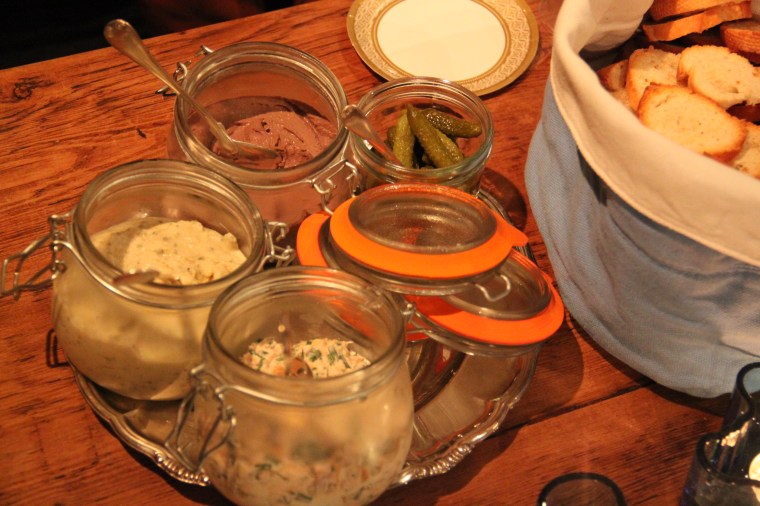
I like some DIY action when I host parties, like the blini table I had one year, and the crostinis with different spreads in jars in December.

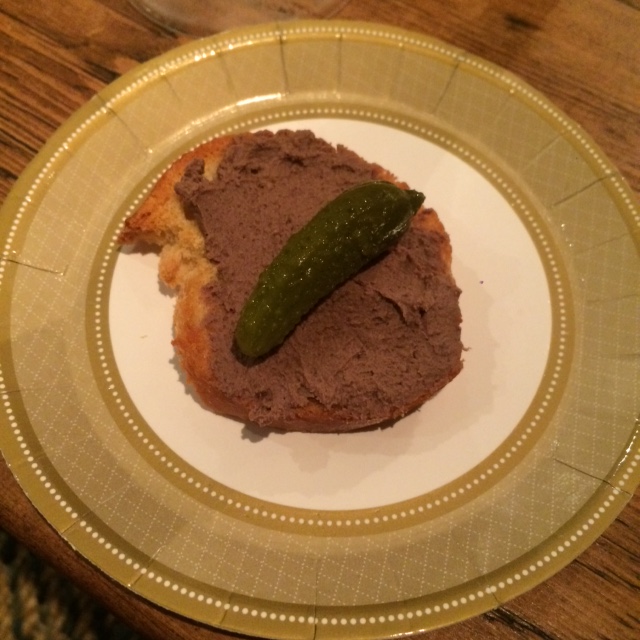
Not surprisingly, my friends loved the smoked salmon spread (this is like the essence of Scandinavia, Hanna – oh yes!), whereas I prefer the deeper, more complex flavours of the chicken liver mousse. But when my friends had overcome the hurdle of the brown dull colour and tasted it, they also really enjoyed it!

IMG_0732

Chicken liver mousse with white wine and rosemary 

400 g chicken liver (approx 375 g with tendons removed)

1 shallots, finely chopped

1 clove of garlic, chopped

1 tbsp chopped rosemary

100 ml dry white wine

4 anchovies from a tin

100 ml homemade chicken stock

50-100 ml cream


Remove all tendons and chop the liver coarsely. Fry the onion until soft in butter and oil on medium heat. Add the garlic and rosemary, making sure the garlic does not burn. Add the wine and let some of it evaporate. Add the anchovies and let them melt. Turn up the heat and add the liver and fry until cooked through. Add the stock and let some evaporate but still keeping a good amount of liquid in the pan. 

Mix until smooth in a food processor. Add the cream little by little until desired consistency. Push through a fine sieve. Leave to cool and refrigerate. 

New Years Eve 2015

IMG_7740

New Year’s Eve. A bit like Marmite – some people hate it, some people like it. I’m definitely in the latter category. I like all the cosiness Christmas brings, but I’m not a fan of the stodgy food that we traditionally eat in Scandinavia, so New Year’s is for me the perfect opportunity to cook and eat food I really like. Food worthy to end the year.

The last few years I’ve spent the evening with my closest friends and we have worked out the perfect New Year’s Eve menu, for us at least.
IMG_7752

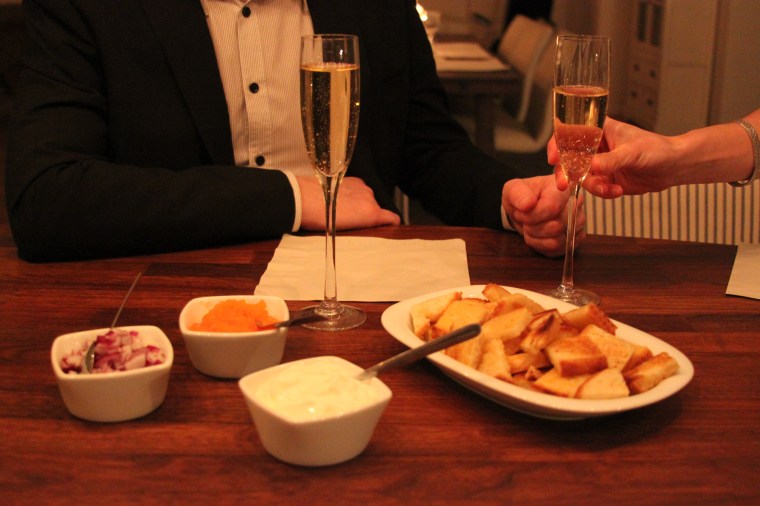
We start off with champagne, Swedish Kalix (bleak) roe, butter-fried bread, creme fraiche and chopped red onion., with champagne. It’s the most simple thing – yet incredibly delicious (and very Scandi!).

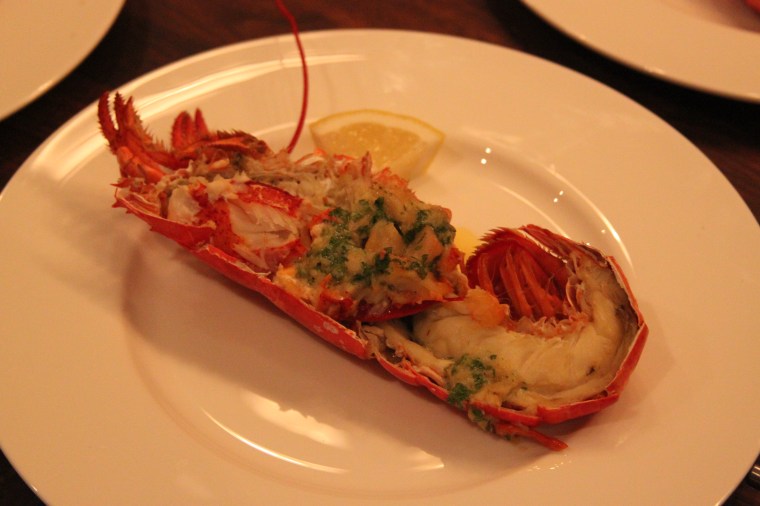
Next we have lobster, usually with melted garlic butter, and this year I opted for caramelised garlic butter – another simple and delicious dish!
IMG_7771

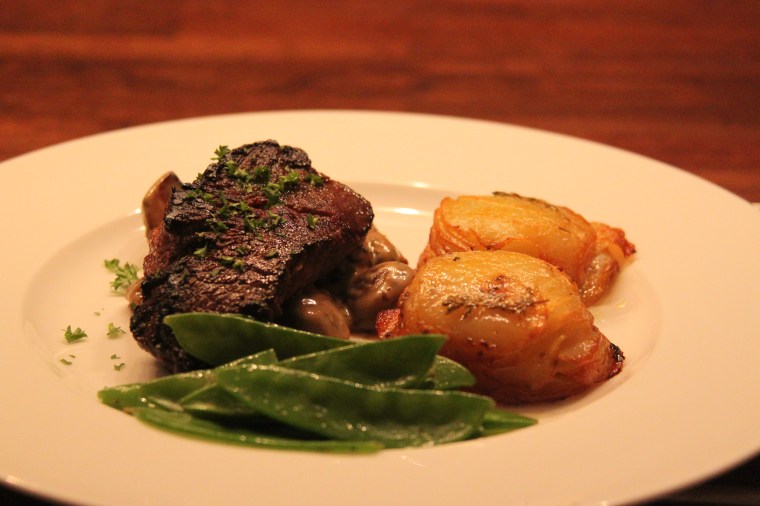
For mains we usually have fillet of beef, with potatoes and greens. This year the beef fillet was served with mini Pommes Anna (made in a muffin tin), mange tout and a mushroom sauce with Dijon mustard.

IMG_7810

For pudding we had individual chocolate pavlovas with chocolate crème and creme fraiche (whipped cream would be better but I forgot it), decorated with daim and Noblesse chocolate thins. A jug of chocolate sauce was put on the table so everyone could help themselves.

Lobster with caramelized garlic butter, serve 4

2 lobsters, cooked 

1 whole garlic

100 g salted butter, at room temperature

a bunch of parsley 

1 slice of lemon, cut into 4

4 slices of baguette

The day before (or at least a few hours ahead of) serving: Wrap the garlic in tin foil and bake for 40 mins in 180C oven (until soft). Leave to cool.

Mix the butter with as much caramelized garlic you like. It’s sweeter and not as strong as fresh garlic, so I thought 5 cloves was a good amount. Chop the parsley and mix in. Add pepper too. Roll into a roll and cover with cling. Place in the fridge to set. 

To serve: Cut the lobsters in half lengthways, remove the gooey bits in the head and the bowel string. Rinse the shell with the meat still inside. Crack the claws and get the meat out. Place in the shells and place the shells in an ovenproof dish. Cut the butter into thick slices and distribute on the lobster halves. Place in 180C oven for approx 10 mins until the lobsters are hot and the butter has melted. Serve immediately with a piece of lemon and a slice of baguette. 

Mini Pommes Anna with thyme, serve 4

Adapted from Bon Appetit’s recipe.

850 g potato of a firm variety (Maris Piper works well)

100 g butter

a bunch of fresh thyme 

salt, black pepper

Preheat oven to 180°C . Melt butter in a small saucepan over medium heat. Brush 8-10 wholes in the muffin tin all over with butter. Line bottoms with parchment-paper rounds. Arrange 1-2 small thyme sprigs in center of each round. Drizzle 1/2 teaspoon butter into bottom of each cup.


Add chopped thyme and garlic to remaining butter in saucepan. Stir over medium-low heat until fragrant, about 2 minutes. Remove from heat.


Using food processor, moulinex or mandoline, slice potatoes crosswise into very thin rounds , placing them in a large bowl as you work. Pour herb butter over and season with salt and pepper; toss to coat well.


Divide potato slices among muffin cups, layering overlapping slices to create a circular pattern. Lightly press center of each to make compact. Drizzle any remaining butter and seasoning from bowl over.


Cover muffin pan tightly with foil and place in the oven. Bake until potatoes can be pierced easily with the tip of a knife and are golden brown, about 35 minutes.
Remove foil; invert a rimmed baking sheet over pan. Turn, lightly tapping on counter, releasing potatoes onto sheet. Rearrange any slices that may have fallen out. Discard parchment.
Individual chocolate pavlovas, served 4

Translated from and Adapted after Roy Fares’ recipe.

Chocolate crème:

50 g dark chocolate

30 g (3) egg yolks

37,5 g caster sugar

15 g maizena corn starch

1/2 tsp vanilla

175 ml milk

10 g butter

Pavlovas:

37,5 g dark chocolate

70 g (2) egg whites

110 g caster sugar

4 g maizena corn starch

1/2 tsp white wine vinegar 

Chocolate sauce:

50 ml caster sugar

50 ml cocoa

50 ml cream

15 g butter

To decorate:

300 ml lightly whipped cream

1/2 packet daim balls (or a chocolate bar, chopped)

12 Noblesse chocolate thins or similar 

4 sparklers

Chocolate cream: Chop the chocolate and place in a bowl. Mix egg yolks, sugar, corn starch and vanilla in another bowl. Bring the milk to the boil in a saucepan and mix it into the egg yolk mixture (little by little as to not scramble the eggs). Pour the egg yolk milk mixture into the saucepan on medium heat, stirring constantly, until the mixture has thickened. Cook for another 2 minutes, on low heat, to get rid of the corn starch flavour. Pour the custard over the chocolate, add the butter and mix until the chocolate has melted. Cover with cling and place in fridge until cold. 

Pavlovas: Chop the chocolate and place in a bowl, melt either over boiling water or in the microwave. Pre-heat oven to 150C. 

Beat the egg whites until foamy and add the sugar bit by it while beating until stiff and glossy. Add the corn flour and vinegar and mix carefully with a spatula. Drizzle with the melted chocolate and create a marbled effect by folding the mixture 2-3 times with a spatula. Divide the meringue mixture into four small rounds on a lined baking tray. 

Bake in the middle of the oven for 60 minutes. Turn the oven off and leave the meringues in the oven while cooling. Let the meringue discs cool completely. 

Chocolate sauce: Mix sugar, cocoa and cream in a saucepan. Bring to the boil. Let the mixture simmer for 3-5 minutes. Leave to cool completely. 

Assembling: Place a meringue disc on each plate. Fill up with the crème and top with whipped cream. Decorate with daim, noblesse and sparklers. Heat up the sauce and serve it in a jug on the side.  


Butternut squash with Persian pesto, feta and pomegranate seeds

IMG_8528

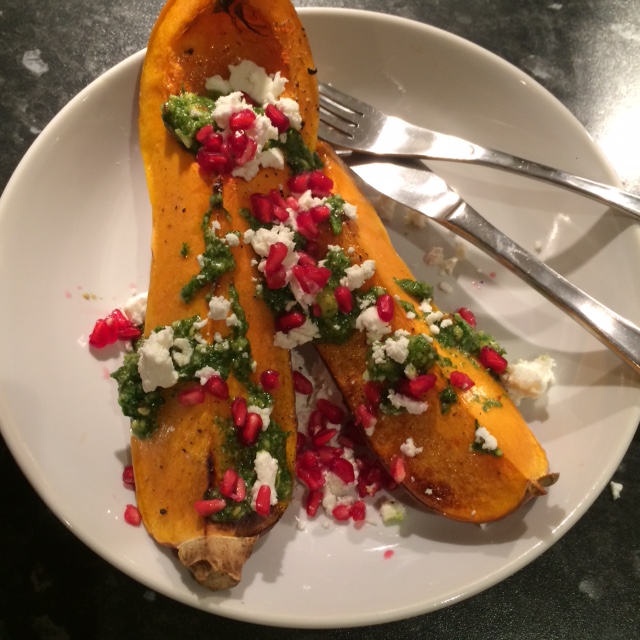
I found this gorgeous (and easy!) recipe on the BBC Food website and just instantly knew I had to make it. It’s courtesy of Sabrina Ghayour who’s lovely cookbook Persiana I absolutely adore. The Persian pesto with pistachios contains dill, a herb that’s very Scandinavian for me, and I like exploring new ways of using it.

I had this for supper one day, but it works just as well at a mezze table, as a starter or on a buffet.

Butternut squash with Persian pesto, feta and pomegranate seeds, serves 4

Adapted from Sabrina Ghayour’s recipe

1 large butternut squash, quartered lengthways (skin-on), and seeds removed 

4 tbsp olive oil

salt and pepper

150 g feta

100 g pomegranate seeds

For the pesto:

100 g pistachios

70 g parmesan

100 ml olive oil

1 small bunch coriander

1 small bunch parsley

1 small bunch dill

1 red chilli

1 lemon, juice only

2 tsp salt

Preheat the oven to 200C and line a baking tray with parchment paper. Rub each wedge of butternut squash with oil and season generously. Place on the lined baking tray. Roast the squash for about 45-50 minutes, just until the edges have begun to brown slightly. Check the squash is cooked by inserting a knife – if it slides in easily the squash is cooked.  

For the pesto, add the pistachios and cheese to a food processor. Pulse to break them into small pieces and add enough olive oil to slacken the mixture to your desired consistency (you may not need all the oil). Add all the herbs and a little more olive oil. Season generously with sea salt and give the mixture one last pulse. Taste the pesto, to make sure it has enough salt and acidity, and allow it to rest in the fridge until you need it. 

To serve, place the butternut squash on plates, drizzled generously with the pesto. Crumble your feta over the top and scatter some pomegranate seeds over to finish. 

More tapas: Croquetas de jamon

IMG_6688

I really wanted to make croquetas de jamon (Spanish ham croquettes) when I made the other tapas dishes, but sadly didn’t have time. But that didn’t stop me. Instead I made them the day after when I had more time on my hands and served them appropriately as a starter snack with a nice bottle of cava.

IMG_6694

It was the first time I made croquetas and it wasn’t difficult at all. Much easier than I expected actually, and lots of fun! But it does take a while to make them. About 45 minutes to make the bechamel, three hours to rest and then another 30 minutes to fry them. But it’s completely worth it.

I halved the recipe from the book Tapas Revolution by Omar Allibhoy, making 12 instead of 24 croquetas, but they are quite large so you could easily make 16 from the recipe.

Croquetas de Jamon, makes 12-16

Adapted from Tapas Revolution by Omar Allibhoy.

25 g butter

1/4 onion, finely chopped

35 g cured ham, preferably Spanish Jamon Iberico, chopped

400 ml whole milk

30 plain flour 

grated nutmeg

1 tsp salt

a pinch white pepper

1 egg

breadcrumbs 

500 ml neutral oil for frying

Melt the butter in a nonstick pan over medium heat. Add the chopped onion and ham. Cook for a few minutes until the onion turns translucent but not coloured. Meanwhile, in a separate pan, bring the milk almost to the boil and set aside. 

Add the flour to the onions and cook for 5 minutes, stirring, until the flour has toasted a bit. Add the hot milk little by little, whisking all the time, to make a thick roux. Keep going until you have added all the milk and you have a smooth and silky bechamel. When it comes to the boil reduce the heat to low and add nutmeg, salt and pepper. Leave to simmer for about 40 minutes, whisking to make sure it doesn’t stick to the bottom of the pan. 

Line the bottom of a baking tray with baking parchment and then pour the bechamel into the baking tray. Spread it out and then immediately place a layer of cling film directly on top, making sure the cling is touching the surface of the bechamel as this will stop a skin from forming. Transfer to the fridge and chill completely. 

After three hours the bechamel should be firm enough to handle. Peel off the cling film, turn the bechamel out on to a floured surface and carefully peel away the baking parchment. Sprinkle with more flour and use a knife to cut the bechamel into 12-16 equal squares. Dust hands with flour and roll the squares into balls between your hands.

Beat the egg in a bowl and pour the breadcrumbs out onto a plate. Dip each ball in the egg and then roll in the breadcrumbs.

Heat up the oil in a large deep pan until it reaches 180C. Fry the croquetas in small batches until golden and crisp (takes about 1 1/2 minutes). Remove with a slotted spoon and drain on kitchen towel before serving.

Poached egg with girolles, Västerbotten cheese and toasted hazelnuts

IMG_9704

My first attempt at cooking a 63C egg didn’t work too well, as I tried to multitask and wasn’t paying attention the whole time. Big mistake. Huge. So instead I poached eggs. And served it with butter-fried girolles, Västerbotten cheese and toasted hazelnuts. It was delicious but I still dream of perfecting that 63C egg and serve it with girolles. I mean, is there anything better than a runny egg yolk with garlicky mushrooms?! I don’t think so.

Listening to my favourite food podcast (in Swedish) I learnt a new way to toast nuts, in the oven. So much better than in a dry frying pan. It will change your life. I promise. All you need to remember is 150C for 15 minutes.

IMG_9712

Poached egg with girolles, Västerbotten cheese and toasted hazelnuts, serves 2

2 fresh eggs

a splash of vinegar 

200 g girolles

1 tbsp butter

1 garlic clove, chopped

salt, pepper

chopped parsley

2 tbsp grated Västerbotten cheese (or comté)  

20 hazelnuts

Pre-heat the oven to 150C. Pour the nuts into an oven-proof tray and toast for 15 minutes. Clean the mushrooms and fry in butter with the garlic until golden brown. Add salt, pepper and parsley and put aside. 

Take a large saucepan and fill half of it with water from a just boiled kettle. Bring the water to a gentle simmer (it should not boil) and add the vinegar. Pour ice cold water into a bowl and have a slotted spoon at hand. Crack and egg into a mug or cup. With a spoon, create a whirl in the pan and lower the mug/cup with the egg into the water and pour it out. Repeat with a second egg and let them poach for 3 minutes. Remove with the slotted spoon and place in the cold water for a few minutes. Remove with the slotted spoon and drain on kitchen towel. 

Re-heat the mushrooms is needed. Divide them between to plates, leaving a hole in the middle for the egg. Scatter with grated cheese. Chop the nuts and scatter. Serve immediately. 

Tapas at home

IMG_6663

We had some wonderful summer evenings in Sweden and on one of them, we pretended we were in Spain, eating a few homemade tapas dishes. Washing it down with a glass of rosé it was easy to imagine us being near the Mediterranean, instead of the Baltic.

We started with a few pinxtos with salmon and mayonnaise. I’ve eaten many of these in Spain, but they look a bit different in the Basque pinxtos bar, with the salmon chopped and mixed in with the mayonnaise. Flavour wise they’re the same though, and the reason I skipped the shopping was because I was already hangry and prolonging the intake of food would just make matters worse.

IMG_6664

I also made my first ever tortilla! It tasted wonderful, but it’s much flatter than they usually are because I halved the recipe as it was for 6 people. I recommend you make the full recipe so it looks proper though, and the leftovers are yummy to eat the following day too.

IMG_6672

My dad LOVES chorizo so we decided to fry some and serve it with soft peppers in oil. This worked perfectly together with the eggy tortilla.

IMG_6678

Another favourite of ours is the garlicky prawns we order every time we have tapas. This was the first time I made them at home and thought they tasted ‘right’, which just proves how good the cookbook I found the recipe in actually is. Large prawns are best for this dish, but as Sweden has lots of the smaller cold water prawns we used mainly those and it still tasted great!

We also had some other nibbly bits like olives, cured ham (sadly not Spanish Jamon but prosciutto works too) and pickled garlic. I had the intention of making ham croquetas as well but they take a while to make and we were out and about during the day. Instead I made them the day after as a starter and they were divine. Recipe to follow in a separate post.

IMG_8087

Tortilla de patatas (Spanish tortilla), serves 6

Adapted from Tapas Revolution by Omar Allibhoy.

4 medium potatoes, peeled and halved 

1 onion, peeled and halved 

8 eggs

sea salt 

400 ml olive oil

Thinly slice the potato halves, cut  side down. Do the same with the onion.

Pour the olive oil into a deep frying pan and add the thinly sliced onion. Place over a high heat. Once the onion starts to sizzle (this should take about 5 minutes), add the sliced potatoes. Cook for about 15 minutes, stirring from time to time, until they are soft and cooked through. The potatoes and onions should have browned on the edges. Remove the potatoes and onions from the pan and set aside. 

Break the eggs into a large bowl but don’t whisk them. Add the hot potatoes and onions to the eggs season with salt while the potatoes are sitting on top. Carefully mix through; use a fork to break up the eggs but don’t over-mix – just give the mixture a few loops with a fork. If you can, leave the mixture to rest for half an hour to allow the flavours to develop. 

To make the tortilla place a non-stick pan over a medium heat and add a drizzle of olive oil. When the pan is hot add the egg mixture. Do not stir the contents of the pan! 

After about 3 minutes you should be able to ease the tortilla from the edge of the pan using a spatula. At this point, cover the pan with a plate (it needs to be larger than the pan). Hold firmly with both hands and flip the pan over on to the plate. Slide the tortilla back into the pan for the other side to cook. Place back on the heat for another 2 minutes (the inside will then be a little runny, but if you want it cooked through, just lower the heat and cook for a few more minutes). 

Chorizo with peppers, serves 3

1 chorizo ring 

oil for frying 

1/2 jar grilled peppers in oil

Remove the skin on the chorizo and cut into 7 cm long pieces. Cut in half lenthways and fry for about 5 minutes on both sides in some oil. Drain the peppers and cut into strips. Add to the chorizo in the pan until warm. Transfer to a bowl and serve. 

Gambas al ajillo (garlic prawns), serves 2

Adapted from Tapas Revolution by Omar Allibhoy.

12 raw king prawns 

3 garlic cloves, thinly sliced

100 ml olive oil

3 dried chillies (I didn’t have any so used a pinch of cayenne pepper instead)

sea salt

1 tbsp chopped parsley

Peel the prawns and sprinkle with salt. Add oil, garlic and chilli to a frying pan and place over high heat. When the garlic starts to turn golden, add the prawns. Cook for 1 minute on each side, until they just turn pink. Sprinkle with chopped parsley and served immediately in a bowl. Preferably with some bread to dip in the lovely oil. 

Puff pastry squares with girolles and Västerbotten cheese

IMG_9449

The second nibble we had with the pre-crayfish prosecco was these lovely puff pastry squares with fried girolles and Swedish Västerbotten cheese (any other sharp cheese will do, but Västerbotten is a must with crayfish). I’m so pleased I can now by girolles with my food orders from a decent supermarket I come up with any excuse to buy them and this is a good way to use them. But to make them go a bit further (as they’re not the cheapest of shrooms) I threw in some chestnut mushrooms as well.

Puff pastry squares with girolles and Västerbotten cheese, serves 5 people as only nibble

1 roll  all butter puff

600 g mushrooms (I had approx 400 g girolles and 200 g chestnut mushrooms) 

a knob of butter for frying 

1 garlic clove, chopped 

1 bunch parsley, chopped

30 g Västerbotten cheese, finely grated

Pre-heat oven to 200C. Roll out the puff onto a parchment paper covered baking tray and cut into squares. Clean the mushrooms and slice. Melt the butter in a frying pan on medium heat and fry the mushrooms until golden in batches. Add the garlic towards the end. Add salt, pepper and parsley. Leave to cool. 

Distribute the mushrooms on the puff. Scatter grated Västerbotten cheese on top and bake until golden. Serve immediately. 

Hot smoked salmon spread for crostinis

IMG_9453

The London crayfish party was a success and so much fun! There was only ten of us but we managed to demolish 5 kgs crayfish and drink two bottles of snaps (as well as beer and wine) and sing snaps songs. Thank you to everyone involved for embracing my country’s silly traditions and being such fun guests!

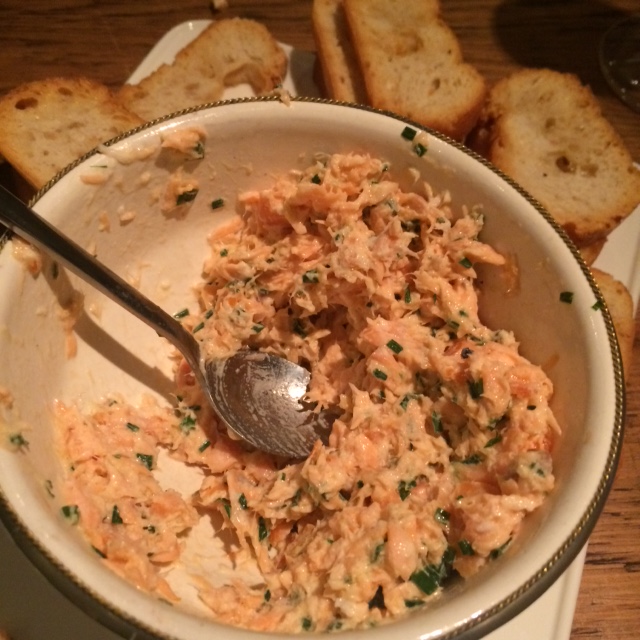
Before we started on the crayfish though, we had some prosecco and nibbles. I usually start a dinner party with nibbles as I think it’s such a nice informal way to start the evening and get people chatting. One of the nibbles I made was this hot smoked salmon spread. I just put it in a bowl and the guests assembled their own crostinis.

Hot smoked salmon spread, enough for 5 people as a nibble

Adapted after and translated from Arla’s recipe.

350 g hot smoked salmon fillets (no bones)

200 ml soured cream

2 tbsp freshly grated horseradish

1/2 bunch chives

1/2 lemon, the juice

salt, black pepper

Check the salmon for bones and remove them and any skin. Place in a bowl and mush it with a fork. Add soured cream, horseradish (Ocado has the fresh stuff) and lemon juice. Add the lemon juice and season to taste. Keep refrigerated until serving. 

Ricotta, peach and prosciutto crostini

photo 7

I know, I know, I could soon rename this blog The Crostini Blog, but I just love to start a dinner party with a crunchy little sandwich. Crostinis are so versatile, delicious and you can top them with just about anything. In August I made these with ricotta, prosciutto, peach and basil and they were just delicious. Remember to make these often when ripe peaches are in abundance!

Crostini with ricotta, prosciutto and peach, serves 4

8-12 baguette slices

olive oil

ricotta

1-2 ripe peaches

4-6 prosciutto slices, cut in half

basil leaves

olive oil

black pepper

Place the baguette slices (slightly stale bread works well here) on a parchment covered baking tray. Drizzle with olive oil and roast in 180-200C for 10 minutes or until golden. Leave to cool completely. 

To serve: Remove the pips from the peaches and cut into wedges. Spread ricotta on the crostinis and top with ham and a peach wedge. Add a basil leaf, black pepper and drizzle with olive oil.

Burrata with slow roasted tomatoes

IMG_1587

I love burrata, the creamier cousin of mozzarella,  a lot  but I struggle to find it in Sweden. I’m sure they have it in some of Malmö’s better cheese shops but I thought it easier to bring a fresh one with me from my local Whole Foods.

We had it as a starter one evening soon after arrived to Sweden, together with slow roasted tomatoes, a nice olive oil, grilled bread and a bowl of buttery nocellara olives.

IMG_1593

It almost felt like we were by the Mediterranean; being sat outside, next to a fig tree, sipping rosé and eating the creamy burrata with slow roasted tomatoes. Such a lovely evening.

IMG_1602

Slow roasted tomatoes, serves 3 as a starter

150-200 g small tomatoes, halved

1 clove of garlic, sliced

1/2 red onion, thinly sliced

some chopped basil

a splash of olive oil 

salt, black pepper

fresh basil to garnish

Pre-heat the oven to 125C. Place tomatoes, onion, garlic, and basil in an oven-proof tray. Add olive oil, salt and pepper and stir so the oil coats everything evenly. Place in the oven and leave for 2-3 hours. Remove the (now brown) basil from the tray. Plate the rest, garnish with fresh basil leaves and a good splash or olive oil.