Perfect pork belly

Crackling. One of my favourite English words actually. I just think it describes exactly what a crackling is. You totally get that it is something crispy that cracks, but it still sounds appealing.

And crackling certainly is appealing. I LOVE that British people in general fight over the crakling when they eat pork belly for Sunday lunch. In Sweden animal fat has been taboo for a while, but it is coming back now. And in Denmark you can buy cracklings in bags, just like crisps, with different seasonings. Love it!

I have cooked pork belly a few times now, as it was totally new to me when I moved here, it has been a bit trial an error. I have learnt though, that the key is to cook the meat slowly on low heat for a few hours, then turn the heat up to crisp up the crackling even further. Then it helps to let the meat rest for a while before serving and fighting over the crackling.

Porkbelly with roasted root vegetables, broccoli and a creamy sauce.

The perfect porkbelly, serves 2

ca 400 g porkbelly

salt, herb salt or ground herbs (like sage, oregano, parsley)

white pepper

Heat up the oven to 125C. Cut lines in the fat  in a check pattern if this is not done already. Rub with plenty of salt and the herbs. Make sure it goes down in the cracks. Season the meat all around. Cover a roasting tin with tin foil and place the meat, fat up in it. Place in oven and cook for 2-3 hours. When the meat is really tender, turn the heat up to 180C for 10 minutes to crisp up the crackling even more. Let the meat rest, covered in tin foil, for a few minutes before serving. 

Duck leg confit with roasted new potatoes and dijonnaise

I had the intention on Sunday to try Thomas Keller’s recipe for duck leg confit from the book Ad Hoc At Home. But when I read the recipe it was like a two-day project, so I willsave that until later. I still wanted to make a confit though, so this is my own version. At turned out really good too!

I served it with simple yet wonderful compliments; roast new potatoes with thyme, crunchy tenderstem broccoli and dijonnaise with wholegrain mustard. I faked the sauce this time though, mixing Hellman’s with wholegrain Maille, but it is easily done to make your own mayonnaise.

Duck leg confit, serves 2

2 duck legs

300 ml goose fat

salt, black pepper

Season the legs. Place in an oven proof dish and cover the legs with the fat. Place in 125C oven for abour 3 hours. Turn the legs around a few times while cooking. Remove from the oven when the meat is tender. Place the legs in a clean dish and let them cool down. Refridgerate for an hour or over night. Place in 200C oven covered with tin foil to heat them up while serving. about 20 minutes in 200C. (Chilling the meat makes it even tender.)

Roasted new potatoes, serves 2

500 g new potatoes

mild oil

salt, black pepper

5 sprigs fresh thyme

Place the potatoes in an oven tray and pour over 1-2 tbsp of oil, mix to coat evenly. Season and add the thyme. Roast in the oven for 25-30 minutes in 200C.

Cheat dijonnaise, 2 portioner

150 ml hellman’s mayonnaise

1-2 tbsp wholegrain dijon mustard

Mix. Leave for a few minutes for the flavours to marry. Serve.

Chorizo meatball carbonara

I found this recipe in River Cottage Everyday, one of Hugh Fearnley-Whittingstall’s cookcooks.

Pork mince seasoned with paprika and fennel, then shaped into meatballs and together with cream, egg yolks and spaghetti, this is a fab pasta dish. Especially when served with heaps of freshly grated parmesan.

The Swedish way to make meatballs is to add breadcrumbs and an egg to the mixture, which makes the meatballs less compact and juicer, and I think I will apply this next time as these meatballs turned out a bit compact, but the seasoning was spot on.

Chorizo meatballs, makes 15-20

Adapted after Hugh Fearnley-Whittingstall’s recipe.

500 g pork mince

2 tsp sweet smoked paprika

1,5 tsp hot smoked paprika

1-2 garlic cloves, minced

salt

1 tsp fennel seeds

1/8 tsp cayennepepper

30 ml red wine

black pepper

olja for frying

Mix all the ingredients in a bowl. This is easily done using your hands or a wooden spoon. Roll into small meatballs. Fry in oil.

Carbonara, serves 2

300 g spaghetti

2 egg yolks

50 ml double cream

parmesan

salt, black pepper

Cook the spaghetti al dente. Drain. Mix egg yolks with cream. Add the pasta, salt and pepper. Serve with the meatballs and parmesan. 


Pulled pork in the slowcooker, and what to serve with it

I have made pulled pork a few times now and I am, to say the least, addicted to it. And it works best to do it in the slowcooker. Just load it in the morning, turn it on low and you will have the most tender meat by the time you get home from work. When home in the evening, I removed the meat from the sauce and reduced the sauce, pulled the meat apart with forks and mixed it with the sauce. That took five minutes so I could concentrate on the trimmings instead. We had Nick over for dinner when I cooked this last so I might have gone a bit crazy with the trimmings. But this is what I like to serve it with every time:

  • homemade salsa
  • guacemole
  • grated cheese, like Monterey Jack
  • greens; little gem, cucumber, tomatoes, red bell peppers
  • slaw
  • nice bread
  • wheat tortilla triangles fried in butter – yum yum!
  • nachos
  • sour cream

We were so full afterwards we didn’t even contemplated the dessert I had lined up. So DO try this if you haven’t already. It is so so good! för guds skull det. Så grymt gott!

My everyday chilli

I adore comfort food, and I love when eating something makes you feel better. Sometimes you notice the physical effects straight away; your belly feels full, you get energy again and you stop feeling dizzy. But it almost always, at least if it is well cooked food, makes you happier. If I am down it helps to eat. Not for the sake of eating, but everything feels a bit better after you have eaten something warming and your belly is full.

With the autumn, or nearly winter, hitting London, I feel I need something comforting for supper almost everyday. That warm embrace of hearty food is difficult to beat and for me a few things hits the bull’s eye. Creamy dishes and casseroles or soup. This is from the latter category and really does the trick. With a bit of a kick to it as well as the melted cheese on top and the bread to soak up the juices in the bowl this qualifies as one of the best autumnal comfort dishes out there, don’t you think?!

My everyday chilli, serves 6

1 kg beef mince

2 cans á 400 g chopped tomatoes (of good quality), one with chilli if available

100 ml water

1/2 onion, chopped

2 garlic cloves

3 tsp cumin

3-4 tsp chipotle paste

1/2 tsp chilli flakes

6-7 drops tabasco

2 tbsp mild chilli sauce

1 tbsp tomato purée

a pinch of brown sugar

2 tbsp  balsamic vinegar

1 tsp worcestershire sauce

400 g kidney beans, canned – rinsed and drained

Fry the meat in a large pan. Add salt and pepper. Remove the meat and pour out the meat juices. Fry the onions and garlic until soft but not browned in olive oil. Add the meat, chopped tomatoes and water. Bring to the boil. Add everything but the beans. Season and add more spices if needed. Let it boil until the sauce has thickened. Add the beans and cook for another few minutes to warm up the beans.

Serve with grated cheese, sourcream and bread. And perhaps some salad.

Lamb stew with red wine, cream, mushrooms and thyme

Last week I did what one is suppose to do with a slowcooker – I made it cook dinner for me while I was at work. And it worked a charm.

I browned the meat the night before and seasoned it. The following morning I added the meat, red wine, water , garlic and a bay leaf, put it on the lowest setting and left it for 10 hours.

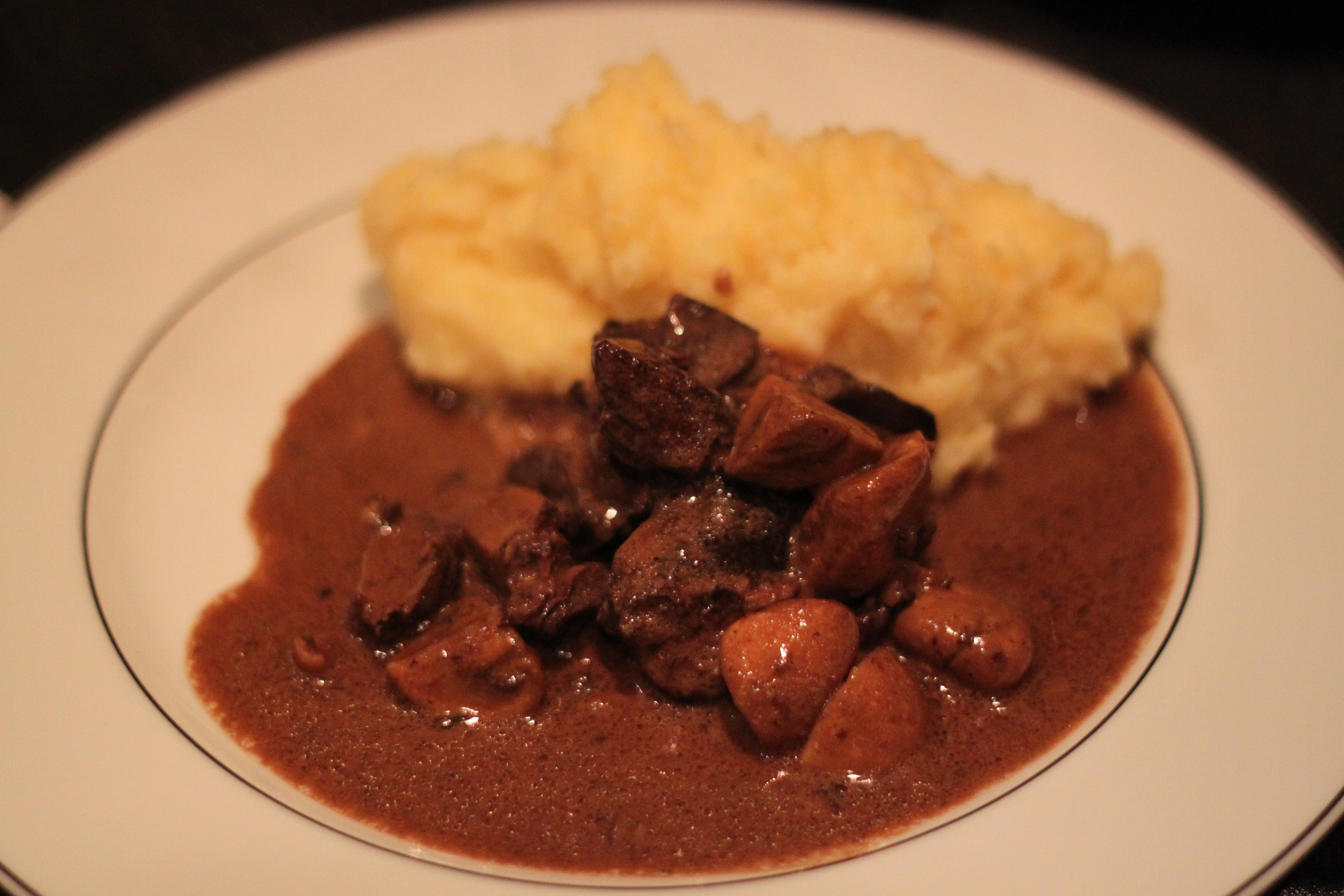
When I opened the door to the flat in the evening, it smelt wonderful. I just reduced the sauce, added cream, thyme and fried mushrooms and served it with a swede and potato mash.

It was absolutely wonderful and the meat just fell apart it was so tender. I highly recommending a slowcooker, as it takes less energy than having the oven on, and it feels safer leaving it on during the day. But you can make this stew in a regular oven too, I would probably put the temperature to 80C maximum and leave it in there for at least 5-6 hours.

Because of the low cooking temperature, the meat releases a lot of liquid, so I highly recommend to take out the mat and reduce the sauce on the hob until it has thickened up. This also concentrates the flavour and I would recommend this with all kinds of dishes, including i.e. pulled pork, where you shred the meat and mix it with the juices. It works better when it is less watery.

Lamb stew with red wine, cream, mushrooms and thyme, serves 3-4

500 g stewing lamb (on the bone, in pieces)

butter for frying

salt, black pepper

400 ml red wine (for cooking you can use old opened bottles, so don’t throw any leftover wine away, save it for a stew instead)

1 garlic clove

1 bayleaf

100 ml water

200 g button mushrooms, cut in four

200 ml single cream

50 ml red wine

1 tsp fresh thyme

1/2 tbsp mild chilli sauce

1/2 tbsp dark soy sauce

colouring agent

salt, pepper

Brown the meat in the morning or the night before, in butter. Season. Before leaving the house in the morning, add the meat, wine and water to the Crockpot . Also add garlic and a bay leaf. Stir and turn the slowcooker on at the lowest heat. Put the lid on and leave it until you come home 9-10 hours later.

Then fry the mushrooms ans season. Remove the meat from the sauce and put the whole casserole on the hob (if you have a gas hob at least) or use a small sauce pan to redue the sauce on high heat. Stir occasionally and once it has thickened add the spices and seasonings. Colour until light brown. Add the meat and mushrooms. Heat ut up again if necessary and serve. A root mash, potato mash or boiled potatoes work well. 

Smoky polenta chips (and burgers)

We had burgers and chips for dinner one day last week. With one big twist; it was polenta chips. And they tasted of smoked cheese.

Unfortunately I can’t take credit for this amazing recipe, that fame belongs to Yotam Ottolenghi, but I am very happy to spread the word.

OK, they’re probably worse to eat from a health perspective than regular chips, but they are so so SO very good. They melt in your mouth and the smokiness is just perfect with the mellow texture. In grams, they contain just as much cheese as polenta, plus they are dipped in flour and then deep-fried, so not exactly healthy. But who cares?!

Smoky polenta chips, serves 3

Adapted from Yotam Ottolenghi’s recipe.

375 ml vegetable stock

60 g quick polenta

20 g butter

60 g smoked cheese (the recipe calls for scamorza affumicata, but I used ‘Bavarian smoked cheese’)

salt, pepper

1 dl plain flour

500 ml vegetable (or other neutral) oil

Bring the stock to the boil and add the polenta bit by bit while stirring. Let it simmer for 5 minutes while continue to stir. Remove from the heat and add butter and cheese. Stir to incorporate evenly.

Line a square or rectangular dish (mine was 20 cm and square) with clingfilm and spread the polenta into it, evenly. Leave to cool and place in fridge for at least an hour to set. Remove from the fridge, place the polenta square onto a chopping board and cut it into chip-size pieces. Coat these with flour. Heat up 1-2 cm high with oil in a frying or sauteuse pan until very hot. Deep fry the chips until golden. Drain on kitchen towel. Sprinkle with salt and serve.

Burgers, makes 5

500 g lean beef mince

1 egg

50 ml breadcrumbs or one slice of white bread, edges removed and crumbled

1 tsp onion granules

salt, white pepper

2 tbsp  Reggae Reggae sauce or similar

Add egg and breadcrumbs to a bowl. Add the onions, seasoning and sauce. Stir and leave it to swell for a few minutes. Add the mince and mix well with a wooden fork. Divide the meat into 5 even pieces and shape liek burgers. Fry in butter and oil until either medium or well done, according to taste. 

Roast topside of beef with bearnaise sauce

My little autumn cooking project will be to master all kinds of roasts and casseroles, ans it is so much fun.

We had this for supper last Saturday and it was lovely. If we have steak I prefer mine blue, basically just turned in a hot pan, but I prefer a roast rare, as topside needs longer to cook. And this was cooked to perfection with my references. It was a little bloody, proper red meat and still tender and juicy.

I served it with bèarnaise sauce, which I love and the recipe below is both easy and makes the perfectly balanced sauce. In restaurants you often get a terrible vinegary runny sauce, and this it is counterpart. The sauce is thick and velvety, has enough vinegar to not be buttery, but not so much that it takes over. I’m salivating just thinking about it…

Further, I served potato wedges and purple sprouting with the meal and red wine is almost compulsory.

Roast topside of beef, serves 4

600-800 g topside of beef

salt, black pepper

butter and oil for frying

Trim the meat and pat it with plenty of salt and pepper. Brown it in a hot frying pan in the butter and oil until nice and brown on all sides. Place in an oven dish or put the pan (no plastic handles) straight in the oven. Place a meat thermometer in the thickest part of the meat. Place it in a 150C oven for about 20 minutes or until the inner temperature is 43C. Remove the meat from the dish/frying pan and cover wuth tin foil. Let it rest for at least 10 minutes before serving in slices.

Bèarnaise sauce 2.0, serves 2-4

2,5 tbsp white wine vinegar

1,75 tsp dried tarragon

2 tbsp water

3 egg yolks

150 g butter cold or at room temperature, cut into small cubes

Add the vinegar and tarragon to a nonstick saucepan. Reduce on high heat while stirring and the fan on full until most of the liquid has evaporated. Make sure not to burn the herbs. Remove from heat and add the water. Add the egg yolks and stir. Place the pan on low heat and stir until it starts to thicken slightly, add a butter cube and while stirring, watch it melt. Add another and repeat. Remember to stir/whisk all the time. After a few cubes you can a few at the time. Repeat until all the butter has melted. Let it thicken some more if needed, and remember that it will keep cooking even when you remove the pan from the heat. Season with salt and white pepper if needed. Pour into a cold sauce bowl straight away and serve.

Roast lamb shoulder with roast potatoes and red wine and porcini sauce

I thoroughly enjoy the Sunday roasts so common in this country, and it is certainly the season for it again now. So last Sunday we had the frist roast with roast potatoes for a while, and it was lovely!

I used a half shoulder of Welsh lamb and was actually really pleased with the result. The oven was only on 150C, and I browned it before roasting to give it more flavour, and to get tender meat I rested it for 30 minutes. This left crispy bits on the outside and pink tender meat on the inside.

We also had perfect roast potatoes, red wine sauce with porcini and roasted root veg. A perfect Sunday supper!

Roast shoulder of lamb , serves 2

whole or half shoulder of lamb, bone in. (mine weighed around 800 g)

butter/oil for frying

4 rosemary sprigs

2 whole garlic cloves

a splash of red wine

Season the meat on all sides, don’t be shy with the salt. Brown it in a hot frying pan with the rosemary and garlic in the pan as well as oil/butter. Place it on a wire rack over a tinfoiled-lined roasting tray. Add the wine and place a meat thermometer in the thickest part of the meat (not by the bone). Place in 150C oven until it reaches 58C inside. Wrap in tin foil and let it rest for 30 minutes.

Roast potatoes, serves 2

ca 6 large Maris Piper potatoes, peeled and cut in half

2 tbsp duck or goose fat

salt, white pepper

Place the potatoes in a pan and add biling water just to cover them. Parboil for 5 minutes. Add the fat to a roasting tray and let it heat up in the oven. Place the drained potatoes on the tray and turn to coat them with fat. Season. Roast for about 35 minutes or until crisp and golden in 175-200 C oven.

Red wine sauc with porcini mushrooms, serves 2

a handful dried porcini mushrooms

water

200 ml red wine

meat juices

200 ml single cream

1-2 tsp concentrated beef stock

1 tsp mild chilli sauce, a pinch of sugar or a spoonful jelly

salt, pepper

Cover the mushrooms with water. Squeeze to get rid of excess water, but keep the water. Chop roughly and fry in oil (in a non-stick saucepan) until browned. Add the water from the mushrooms, red wine and meat juices into the pan and let it reduce for 5-10 minutes. Add the other ingredients and season to taste. Bring to the boil and let it thicken slightly before serving.

Roasted root vegetables, serves 2

2 parsnips

2 carrots

a chunk of swede

1/2 red onion

2 sprigs thyme or rosemary

2 tbsp olive oil

salt, pepper

Peel and dice the root vegetables. Peel and cut the onion into wedges. Mix it all in an small roasting tin with the olive oil. Add the herbs/salt and pepper (a lot). Place in 175C oven, preferrably covered with a baking tray not to brown, until soft. 

Caramelised pork fillet, potatoes with tomatoes and parmesan, and a cold dijon and honey sauce

In Sweden pork fillet is the most common cut of meat for dinner parties. I state that as a fact, and I am convinced I am right, but with no real research to back it up apart from my own experience.

What’s so good about the pork fillet it that it is lean meat that when cooked right is very soft and tender. And because of the cut being lean it means less flavour in the meat than tougher cuts, which then means that this is a very versatile cut. You can flavour it with anything you like.

I have come across thousands after thousands of recipes for this particular fillet in Sweden, but hardly any here in the UK. But then I found one, by Gary Rhodes. And it was just too tempting not to try it.

It is incredibly simple, but leaves a very tender meat. First you caramelise it whole in a frying pan, then transfer it to an oven until just done. Let it rest. Slice and serve.

Because this cooking approach leaves a fairly bland (but delicious) meat it needs soemthing more flavoursome to go with it. I opted for thick potato slices, cooked in the oven with chopped sunblush tomatoes, thyme and grated parmesan. And with a cold dijon and honey sauce, this is a perfect dish for this time of year; the transition between summer and autumn.

Caramelised pork fillet, serves 2-3

Adapted after Gary Rhode’s recipe

1 pork fillet, trimmed, about 400 g

salt, black pepper

butter

50 ml caster sugar

Season the meat well on all sides. Pat it with some of the sugar. Place the fillet in a hot frying pan with the butter in. Add the remaining sugar and fry the meat until caramelised all around. Then either transfer the meat to an oven tray or place the frying pan (if it does not have a plastic handle) in a 200C oven for 12 minutes. Leave to rest in tin foil for at least 5 mins before slicing.

Potato slices with tomatoes, thyme and parmesan, serves 2

3 large maris piper potatoes or baking potatoes, washed

1/2 jar  sunblush tomatoes

a few sprigs of thyme, just the leaves

50 ml grated parmesan

olive oil, salt and pepper

Cut the potatoes into 1 cm thick slices and place on a baking tray. Chop the tomatoes finely and mix with the thyme. Place some of the mixture on each potato slice. Drizzle with olive oil, sprinkle with parmesan and add salt and pepper. Place in a low oven, 300 C for about 35 minutes or until the potatoes are cooked.

Cold dijonand honey sauce, serves 2

200 ml half fat creme fraiche or regular sour cream

1-2 tsp dijon

2 tsp squeezy honey (Acacia)

salt, white pepper

Mix all the ingredients. Leave for 10 minutes to intense the flavours.