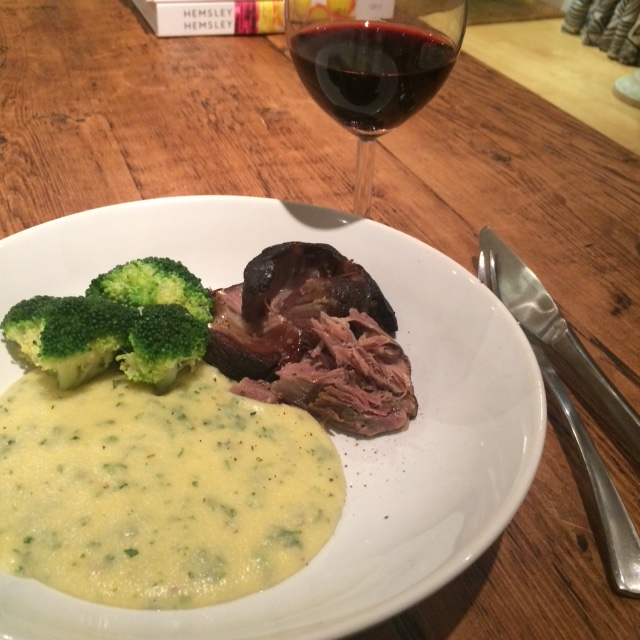
Slow cooked lamb shank with herb polenta

IMG_8673

This autumn is the strangest I’ve ever experienced, weather-wise. Apart from the dip in temperature at the beginning of this week it’s been very warm for November. Not that I’m complaining (I hate the cold!), it just feels strange not having to wear gloves when Christmas is just around the corner!

The warmth outside hasn’t really put me in the mood for warming soups and hearty stews, in fact this recipe of slow cooked lamb shank is the most autumnal dish I have accomplished the last few months.

The recipe for herb polenta is courtesy of my Swedish food blogger colleague Annika and works with all sorts of tender meats.
IMG_8689

Slow cooked lamb shank, serves 2

1 lamb shank

a knob of butter

1 onion, unpeeled, cut into wedges

1 carrot, cut into chunks

2 bay leaves

salt, pepper

1/2 bottle red wine

Pre-heat the oven to 150C. Melt a knob of butter in an oven-proof casserole dish with a lid. Brown the meat on all sides and season. Remove from the pan and add the onion and carrot pieces. Fry for a few minutes then remove from the heat. Put the lamb shank back into the casserole dish and add the wine and bay leaves. Put the lid on and place in the oven for 2 1/1 hours; you want the meat to be very tender and fall off the bone. Check on the meat every half an hour. Add more liquid if needed and turn the shank once in a while. To serve, take the meat off the bone and serve in chunks with polenta and vegetables.

Creamy herb polenta, serves 3

Translated from and adapted after Annika’s recipe (which I have halved)

700 ml vegetable stock

50 g butter

300 ml polenta

a handful finely chopped mixed herbs (rosemary, oregano, sage etc)

150 ml finely grated parmesan 

Bring the stock to simmer (not boil) in a large saucepan. Add the polenta while whisking. Add butter. Whisk until the polenta starts to boil. Whisk regularly while the polenta cooks for another 15-20 minutes. Add the herbs but save some for decoration. Add more stock if needed. The polenta needs to be thinner than you think as the parmesan will thicken it. Add the parmesan when the polenta is cooked. Season to taste and maybe add another knob of butter. Serve immediately.

Baked Jerusalem artichoke salad with Parma ham and parmesan

IMG_4388

Salads when the weather’s hot is a must, but despite the warmth I am still as hungry as usual, so for me a salad needs to be filling. I also like contrasting textures and temperatures. Something needs to happen in a salad for me to really enjoy it.

That’s why I like this salad, it has the warmth element of soft baked Jerusalem artichokes, pepperiness from the rocket, saltiness from the parmesan, umami from the ham and some zing and sweetness from the dressing with lemon and honey. Really tasty – and filling!

IMG_4376

Baked Jerusalem artichoke salad with Parma ham and parmesan, per portion

4-5 Jerusalem artichokes

3 slices Parma ham

2 handfuls rocket

Parmesan shavings

Dressing:

4 tbsp rapeseed oil

2 tsp honey

1/2 tsp lemon zest

1/2 lemon, the juice

salt, black pepper

Wash the Jerusalem artichokes and cut each into four wedges. Place in a roasting tray and drizzle with rapeseed oil and season. Bake in 180C until soft about 30-40 minutes depending on the size. Leave to cool slightly. 

Whisk together the dressing and season with salt and pepper. To plate the salad, start with the rocket, then the artichokes, Parma ham and drizzle with dressing. Finally top with plenty of Parmesan shavings.

Simple asparagus salad with Dijon vinaigrette and Parmesan

1

This incredibly simple, yet very tasty, asparagus salad went down really well with the book club on Monday. I invaded Charlotte’s kitchen (sorry and thanks!) and made this at her house while chatting and making tea. We always have a potluck supper at our book club gatherings and the spread this time consisted of salad with feta and tomatoes, crusty bread and baked camembert, pizza and olives. And choccies for pudding.

Asparagus salad with dijon vinaigrette and parmesan, serves 4

3 bunches green asparagus

80 g rocket

1 lemon

1 tsp Dijon mustard

4 tbsp olive oil

salt, black pepper

oil for frying

Break off the wooden ends of the asparagus and wash them. Sauté in batches in oil on medium heat, it takes about 5-10 minutes. Season.

Mix the mustard with the juice from half the lemon and add the oil while whisking. Season. 

Spread the rocket onto a serving plate, add the asparagus, drizzle with the vinaigrette and scatter with parmesan shavings. Cut the rest of the lemon into wedges and serve with the asparagus. 

Homemade pasta!

IMG_3003

Monday last week was a historic day. It was the day when I finally made my own pasta.

I used a recipe from Simply Italian, a series that really inspired me to try it. Michaela in the show just make it seem so easy. And it was!

I will definitely make use of my handsome pasta maker on a regular basis. There are so many things I would like to try.

But for that first time last Monday, I stuck to what I knew; the amazing tagliatelle with browned butter, truffle oil and heaps of grated parmesan.

IMG_3020

Homemade pasta, basic recipe

This is just a basic recipe that you can double, quadruple etcetera depending on how much you want to make.

100 g 00 flour

1egg

polenta

Pour the flour into a bowl or place in a heap on a surface. Make a dent in the flour and crack the egg. Combine with your hands or a wooden fork and knead into an elastic dough. If it is too crumbly, add 1 tsp olive oil, if too sticky add some more flour. Shape into a ball, wrap with cling and leave to rest for 30 minutes. 

Divide the dough into three pieces and flatted. While working with one, make sure the other two are covered with cling as not to dry out. Run the dough piece through the pasta machine, 3 times on the widest setting, then 1-2 times per setting as working your way down to the thickness you prefer. Repeat with the other dough pieces and cut into tagliatelle using the machine. Place on a plate and sprinkle with polenta (to stop them sticking to each other) and leave to uncovered to dry for 5 minutes. Bring a large pan of water to the boil and add salt. Add the pasta and let it cook for about a minute. When the strands surface they’re done. Drain and serve. 

Roasted Jerusalem artichokes with lemon and parmesan

IMG_2915

This might sounds like something out of a rom-com, but sometimes I think some things are just meant to be.

And no, I am not referring to meeting Mr. Right (Darcy of course) or anything like that.

Instead I am referring to one Sunday when I watched a BBC re-run of Nigel Slater’s Simple Suppers and came across this recipe when I at the same time was contemplating how to use up my last Jerusalem artichokes.

Since I made (well, asked) my mother grow them for me, I feel I need to make them into something really nice every time I cook with them so it is worth the effort of her growing them, and pruning as they grow like weed, and me transporting them home.

This is a fabulously frugal dish (as long as you already have Parmesan at hand) and so delicious. But because it is a typical ‘less is more’ dish you need a really nice oil. I used coldpressed rapeseed oil but Nigel prefers a nice olive oil.

Roasted winter roots with lemon and parmesan, serves 4

Adapted from Nigel Slaters receipe.

750 g Jerusalem artichokes

250 g potatoes

penty of rapeseed or olive oil 

2 lemons

salt and black pepper

2 handfuls parsley

Parmesan

Pre-heat the oven to 200C. Wash the root vegetables but leave the skin on. Cut the Jerusalem artichokes in half lenghtways and cut the potatoes in similar size pieces. Parboil for about 10 minutes (I skipped this step). Place in a roasting tin and toss with oil. Halve the lemons and squeeze the juice of one and a half lemon into the tray and place the empty lemons in it. Season well and roast for 30-35 minutes (about 45 minutes without parboiling). The root vegetables should be soft and sticky. 

Plate, toss with more oil and squeeze with fresh lemon. Add more seasoning, parsley and shavings of parmesan.

Broccoli parmesan fritters

Just like Deb at Smitten Kitchen I love fritters and her recipe for broccoli parmesan ones is really good. Eating them on their own their nice enough, but serve with a super easy sauce with creme fraiche, parmesan and lemon zest and this is amazing. Promise!

Eat these for lunch, supper or cook them for your friends at brunch. Just make them, ok?!

Broccoli parmesan fritter, serves 4

Adapted after  Smitten Kitchen’s recipe.

ca 225 g broccoli

1 egg

65 g plain flour

30 g grated parmesan

1 small garlic clove

1/2 tsp salt

black pepper

oil for frying

Cut the broccoli stem into pieces and divide the crown into florets. Bring to the boil in salted water and let it cook for 3-4 minutes if you like them firm, a few more minutes if a bit softer. Drain. 

Beat the egg in a bowl and add the cheese, garlic, flour, salt and pepper. Mix the broccoli in a food processor or mash with a potato masher. Add to the mixture.

Fry in oil on medium heat. Serve with a cold sauce. 

Cold sauce with parmesan and lemon

200 ml creme fraiche

2 tbsp grated parmesan

1/2 lemon, the zest

salt and pepper

Mix and serve. 

Fast food: creamy polenta with sausage casserole

Polenta was non-existant in Sweden in the 80s when I grew up. We only had locally sourced food and anything ‘exotic’ was canned pineapple, bananas and peanuts. Several dishes from the 80s combine all three.

No, polenta I discovered on my own and loved from the first bite. I like the texture and the fact that it tastes of nothing until you’ve added butter and parmesan, and it is such a wonderful transformation.

I sometimes serve it simply with fried mushrooms or fried chorizo, but this time I wanted something even more soothing and comforting. The casserole is a cheat, but tastes lovely. Using French Toulouse sausages makes it as unauthentic as serving it with Spanish chorizo, but both versions work – believe me.

Just use good quality sausages as most of the flavour comes from them and season the sauce sauce to your own taste.

Creamy polenta with sausage casserole, serves 2

2 portions creamy polenta

4 Toulouse sausages

200 g tinned chopped tomatoes

50 ml water

balsamic vinegar after taste

1 pinch of sugar

salt, black pepper

grated parmesan to serve

oil for frying

Cut the skin of the sausages and push our the sausage meat. Fry it until cooked through in some oil. Add the tomatoes and water and bring to the boil and let thicken. Add balsamic vinegar, sugar and seasoning to your taste. Maybe also add some garlic. Plate the polenta and casserole, top with grated parmesan and enjoy.


Roast beef and venison with potato parcels and Madeira sauce

The main course at my birthday party consisted of two types of roast meat; beef and venison, puff pastry and potato parcels and a creamy Madeira sauce.

The meat was simply prepared by trimming it, letting it reach room temperature, season and sear it all around in a hot pan and then transfer to the oven until pinkish red in the middle. Cover and let rest for 10 minutes and then slice finely.

Served with a simple yet delicious Madeira sauce (reduce Madeira wine and beef stock with fried onions, then add cream and Maizena starch to thicken, season to taste) this was a wonderful meal. But what really made it come together were the puff pastry and new potato parcels with parmesan and parsley. So yummy!

Puff pastry and potato parcels with parmesan and parsley, serves 3-4 portioner

6-8 large new potatoes, diced and par-boiled

1 roll all-butter puff pastry

100 ml grated parmesan + extra to top

2-3 tbsp creme fraiche

1 tbsp chopped parsley

salt and pepper

Roll out the puff pastry and divide it into six squares. Use a cupcake tin and place cover six of the holes with the puff pastry squares. Mix parmesan, creme fraiche and parsley in a bowl, season. Press as much of the potato you can into the buff pastry shells and top with a dollop of the parmesan mixture. Add some grated parmesan on top. Season and bake in 200C for about 20 minutes. Can be reheated.

Steak sandwich with spinach and parmesan

During the two weeks I stayed with my friend Nick while waiting to move into the new place, I did cook a bit although I missed my own larder and equipment. I mainly re-used old favourites requiring only ordinary ingredients found in any corner shop, but you can still make some really nice things out of basic ingredients.

Like this steak sandwich for example. The taste of crispy buttery bread and rare steak is divine, and with some green leaves, mayonnaise and good parmesan this a true delight.

Steak sandwich with spinach and parmesan, serves 1

200-300 g sirloin steak

1 ciabatta

salted butter and oil for frying

1-2 tbsp good mayonnaise, like Hellman’s or homemade

1 handful baby spinach

parmesan shavings

salt, black pepper

extra virgin olive oil

Season the meat. Cut the ciabatta in half. Heat up a frying pan with butter and oil on medium heat. Fry the bread crispy and golden and remove to a plate. Turn the heat up to high and fry the meat for a minute on either side. Remove to another plate and let the meat rest for at least 5 minutes.

Spread mayonnaise on the breads and top with spinach. Trim the meat and slice it. Divide the meat slices between the breads and top with parmesan shavings, ground black pepper and a drizzle of olive oil.

Tuck in!

Already updated: pasta with truffle oil and parmesan

It was not long ago at all that I declared that the nicest pasta dish is served with butter, truffle oil and parmesan, perfect for a quiet night in. That it is still true. But. It gets even better if said butter is browned butter. You will almost faint while eating this – it is that good!

Pasta with truffle oil, browned butter and parmesan, serves 2

3oo g good tagliatelle

1-2 tbsp browned butter

truffle oil

plenty of grated parmesan

black pepper

Browned butter: Melt butter in a saucepan while whisking until the colour turns brown. Remove from heat and pour through a muslin cloth. Keep in the fridge.

Cook the pasta al dente. Drain in a colander. Pour the pasta back to the pan and add the browned butter. Flavour with truffle oil and plate in bowls. Add plenty of grated parmesan, black pepper and maybe a pinch of salt.